by Nick Gutteridge, Chief Political Correspondent and Joe Barnes in Yerevan
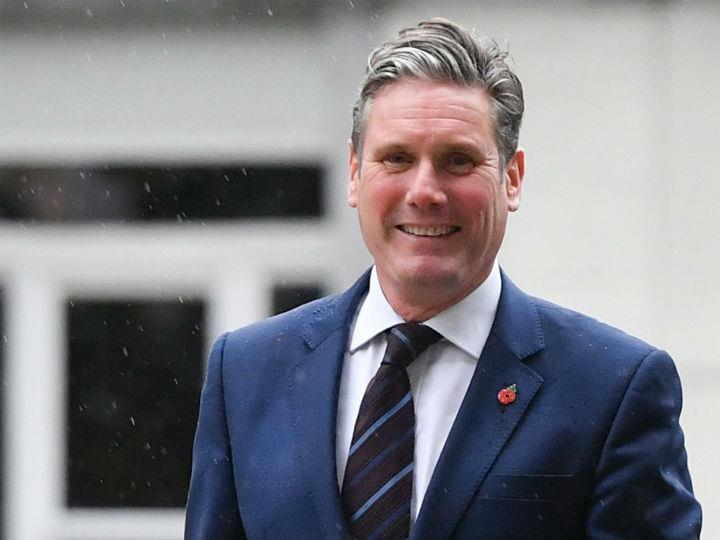
Sir Keir Starmer will lobby Emmanuel Macron for closer British-EU ties during a summit with European leaders.
The Prime Minister is set to use a series of meetings at the European Political Community (EPC) summit in Armenia on Monday to press for greater integration.
Before the trip, Sir Keir blamed the war in Iran for “slowing our nation’s progress” and increasing the need to “deepen our economic relationship with the EU”.
The Tories accused him of “trying to re-open old debates for political gain” as he faces the growing prospect of a Labour leadership challenge.
Sir Keir is attending the gathering in Yerevan, the Armenian capital, just days before Labour is expected to suffer significant losses in the local elections.
Over recent months the Prime Minister has taken an increasingly strident stance on Brexit in an apparent attempt to appeal to Labour MPs and members.
He has suggested that Britain should voluntarily align with swathes of EU law, which critics have described as a de facto return to the Single Market.
Next week’s King’s Speech is expected to include legislation that would give ministers the powers to import large areas of European regulation.
Writing before the trip on his Substack page, Sir Keir said: “Let’s face it – the world has changed fundamentally since 2016. We can see now that Brexit has damaged the economy.
“So there’s no doubt in my mind where the national interest lies today, and that is in closer economic ties with Europe.
“I will be driving this forward with leaders at the European Political Community meeting in the coming days.”
Sir Keir is expected to co-host two meetings with Mr Macron, the French president, and to meet several other senior EU leaders at the event.
The EPC was set up in 2022 to offer European nations a chance to discuss major issues affecting the Continent outside the structure of the EU.
It was founded in large part as a way of re-establishing contact between Britain and the Continent following the fractious years of Brexit negotiations.
Dame Priti Patel, the shadow foreign secretary, accused Sir Keir of hijacking the Armenia summit to “use it as a backdrop for a Brexit re-run”.
“We have a Prime Minister so weak and badly wounded at home that he has flown to Yerevan to find an audience that will still listen to him,” she said.
“Starmer is driving forward the systematic reversal of the 2016 referendum from foreign capitals, trailing it on Substack, and never once submitting it to the country he is supposed to serve because he is so terrified of the public.”
Andrew Griffith, the shadow business secretary, said the Prime Minister “should look closer to home for the wreckage this Labour Government has made of the economy”.
At the gathering Sir Keir will also formally open talks with European leaders about Britain joining the EU’s £78bn (€90bn) loan scheme for Ukraine.
If the Prime Minister eventually brokers a deal, Britain will be expected to help foot the bill for the interest payments in exchange for access to £52bn worth of arms contracts for domestic producers.
Sir Keir’s opening offer will come at the meeting of more than 45 European leaders, including Volodymyr Zelensky, the Ukrainian president.
The Telegraph has previously reported that France proposed a fee close to £2bn to guarantee the UK’s participation.
“When the UK and the European Union work together, we all reap the benefits – and in these volatile times we need to go further and faster on defence to keep people safe,” said Sir Keir.
“We need to be stronger. We bring a lot to the table when it comes to defence but, for 20 years at least, European countries have not done enough, and it falls upon us as leaders to step up into that space.”
Britain can open formal negotiations about joining the loan scheme after the EU and Ukraine overcame opposition from Viktor Orbán, Hungary’s outgoing prime minister.
After months of impasse, Mr Orbán – considered the Kremlin’s closest European ally – gave the go-ahead when Kyiv agreed to resume supplies of Russian oil to Hungary and Slovakia via the Druzhba pipeline.
The loan, two-thirds of which will be channelled into military aid, provides Ukraine with significant financial support over the next two years.
When the scheme was originally negotiated, many European leaders pushed for terms that allowed Britain to participate.
Their final agreement stated that “third countries” outside the EU, such as the UK, could join only if their governments agreed to “provide a fair and proportionate financial contribution to the costs arising from borrowing”.
The European Commission has estimated that interest payments could be as high as £17bn. Ukraine has been told it only needs to pay back the debt if it receives reparations from Russia.
A British negotiator told The Telegraph that informal talks had started during the months-long impasse, but they had to wait for Brussels to conclude its final steps to provide an official basis for real negotiations.
UK officials see joining the loan as an opportunity not only to support Ukraine but also to generate business for domestic weapons producers.
“I will always act in our national interest – protecting our security, supporting our allies, and delivering jobs and stability at home,” Sir Keir said in a veiled swipe at would-be critics of the move.
Any agreement with Brussels could be unveiled at a landmark summit with EU leaders, expected later this year.
The Prime Minister has embarked on an effort to reset post-Brexit relations with the bloc by agreeing to align with its rules to boost trade. This includes following EU rules on food safety, carbon emissions and electricity markets.
The Government insists any decisions to hand back sovereignty to Brussels are taken purely to boost economic growth.
Sir Keir becomes only the second British leader to visit Armenia since Margaret Thatcher in 1990, when the country confirmed its independence from the Soviet Union.
He will join the eighth meeting of the EPC, formed in part in response to Russia’s invasion of Ukraine.
For the first time since its conception, Mark Carney, Canada’s prime minister, will join the biannual gathering, suggesting it could also provide a platform for reducing dependencies on Donald Trump’s US. He becomes the first non-European leader to be invited.
Mr Trump has clashed with numerous Continental leaders over their perceived lack of support for, and criticism of, his war in Iran.
Sir Keir hopes to use the EPC meeting to further discussions on Anglo-French plans to unblock the Strait of Hormuz, which carries one-fifth of global energy exports, after any Iran deal.
The EU wants to use the gathering to push back against Russian influence in Armenia before the country’s elections next month.
*Published first on The Telegraph
 By: N. Peter Kramer