Innovation high up in the European agenda - Steve Jobs: lesson for Europe
By: EBR | Wednesday, October 12, 2011
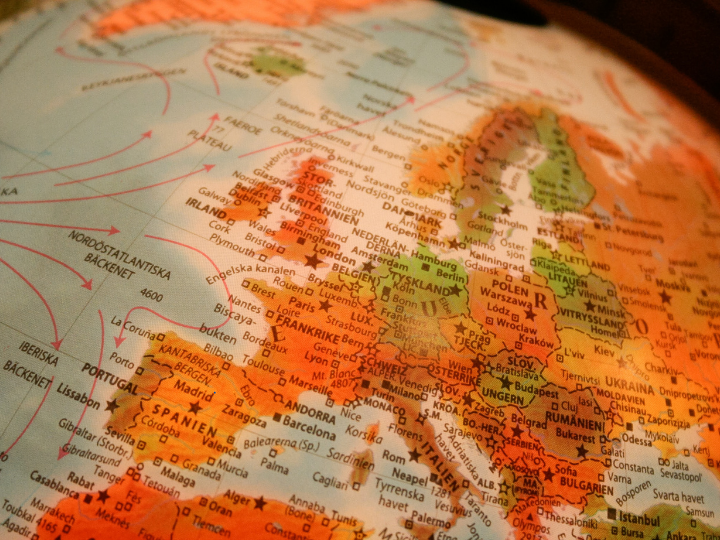
How to facilitate researchers to implement their ideas? Could there be a Steve Jobs in Europe? These questions arise immediately when one realises that Europe has a high level of human potential in research and science.

Complexity Mathematics, the EU and Global Governance
By: The Globalist | Thursday, October 6, 2011
Linear thinking is no longer sufficient when it comes to global governance. As Andrea Illy, the chairman and CEO of illycaffe S.p.A., explains, supranational governance — such as that practiced in the EU — is a real-world exercise in non-linear complexity management.

Beijing wary of bankrolling a lost cause, as it should be
By: EBR | Friday, September 23, 2011
The mix of cultures within the 27-member European Union and the enforcing of monetary union with all its ramifications have caused the present-day crisis. Clear leadership is lacking, as is any determination to stand up to protesters be they workers unions or the general population.
Inspiring a New Generation of Sino-European Entrepreneurs
By: EBR | Monday, September 19, 2011
The Power of Youth (POY) will host a conference in Tianjin, China later this year in which top young entrepreneurs from all 27 EU member states will meet their Chinese counterparts to discuss everything from collaborative projects to economic policy.

German hotheads are close to destroying the euro
By: The Financial Times | Thursday, September 15, 2011
German tabloids and much of European public opinion seem fixated on Greece as an object of scorn. The fact that the Greek government is pushing through the toughest of austerity measures in the face of mass demonstrations seems to be of no import.

Growth Reigniting in Greece: Enterprising Youth Refuse to Accept Defeat
By: EBR | Wednesday, September 7, 2011
In an inspiring defiance of defeat, young Greeks are taking their economy into their own hands and rebuilding its backbone in record numbers. Regional Development Ministry data released recently showed that during the first half of this year, 28,603 new businesses opened in Greece.

Can you innovate your business model?
By: EBR | Thursday, July 28, 2011
Business models help support strategic goals, but too often executives don't inject them with the necessary dose of creativity to bring about real success, according to new research by two INSEAD professors
The U.S. Debt Crisis: An American Perspective
By: Giles Merritt | Wednesday, July 27, 2011
Why can’t the Democrats and Republicans come to an agreement on the US debt crisis even with the generous intervention of President Obama and Treasury Secretary Geithner along with the rating agency choir, in a supporting role, singing the refrain of “enough already”?
Preparing today for the energy networks of tomorrow
By: EBR | Wednesday, July 20, 2011
It is unclear what the energy mix of the future will be; one thing is clear, however: energy infrastructure will be key to optimise any energy mix. Without secure, intelligent and sustainable energy networks we cannot meet our energy and climate targets in Europe.

Will Europe′s Solution to the Debt Crisis Lead to the Break-Up of the European Union? An American Perspective
By: EBR | Friday, July 15, 2011
If Greece and the other “crisis countries” continue to pull financial and political capital from the EU, what is the likelihood that the Euro-zone would remain intact? Does the thesis for the continued existence of the EU crumble?
Beyond expats: Better managers for emerging markets
By: EBR | Wednesday, July 13, 2011
The CEO of Manpower argues that the era of the Western expatriate manager is ending. It’s time for a local approach.

The Solution to the Greek Crisis - Buy Greece!
By: EBR | Monday, July 4, 2011
Since the advent of the Euro-zone and the Euro, there has been a noticeable absence of solidarity among Europeans around the future of Europe. If this is heresy, so be it. Will Greece’s politicians survive the confidence vote to continue the good fight?
Global recovery firmly underway but surrounded by risks, says OECD Economic Outlook
By: EBR | Wednesday, May 25, 2011
The global recovery is firmly under way, but is taking place at different speeds across countries and regions, according to the OECD’s latest Economic Outlook. World gross domestic product (GDP) is projected to increase by 4.2% this year and by 4.6% in 2012.

The Elusive Quest for Energy Security
By: The Globalist | Tuesday, May 24, 2011
The price and security of foreign oil has Western policymakers talking more urgently about energy independence again. But according to Prakash Loungani, an economist and advisor to the IMF, to insulate themselves from the effects of oil spikes, countries are going to have to learn to work together.
European Business Summit paves way for European Growth in the Global Economy
By: EBR | Monday, May 23, 2011
The 9th European Business Summit, a key meeting place and networking platform for the EU’s business and political elite, concluded on a note of optimism. The summit, discussed the internal and external challenges that lie ahead for Europe in maintaining its position in the global economy.
Now Is Not the Time To Bet Against Greece
By: The Globalist | Monday, May 16, 2011
The Greek government is seeking additional concessions from the EU to prevent a fiscal collapse. If its efforts fail, many analysts reason, the risk of Greece defaulting on its sovereign debt is high. But betting against Greece right now is not a smart bet, writes Greek MP Elena Panaritis.
Trade after the crisis: what is Europe′s global role?
By: EBR | Friday, May 13, 2011
Trade flows may have bounced back from pre-crisis levels but the crisis invites us to shift the focus of trade policy. I would argue that the crisis has indeed changed the landscape for trade policy. So, I would like to draw three lessons of the crisis.
10,000 km rail link the Port of Antwerp to China
By: N. Peter Kramer | Tuesday, May 10, 2011
No government in Belgium (just a care taking one, since more than a year) but a blossoming economy for the small country that lodges the capital of the European Union, Brussels. The second Belgian city, Antwerp, now has a direct rail link to Chongqing, one of the world’s biggest industrial regions

The Green Energy Economy Reconsidered
By: EBR | Wednesday, May 4, 2011
The fundamental question that green energy proponents must answer is this: if green energy is so inevitable and such a great investment, why do we need to subsidize it?
Greece′s Rule of Lawlessness
By: EBR | Thursday, April 14, 2011
Greece’s public debt may reach 150% of GDP this year, an alarming possibility that has captivated outside observers. But in the final analysis, the major issue confronting Greece may not be its solvency, but its governance.
 By: N. Peter Kramer