Edition: International | Greek
MENU

Home » Business

Romania’s IT services exports have grown at rates that consistently outpace GDP, Bucharest and Cluj-Napoca have established genuine technology ecosystems rather than just outsourcing hubs, and Romanian engineers are present in significant numbers at the upper levels of global technology firms.

Where Romania can build excellence: the sources of future competitiveness

Romania has been, for most of its recent history, a story of potential deferred. The standard account of Romanian competitiveness, to the extent one exists in international business literature, is a cost story: cheap labor, low corporate taxes, a large domestic market for Central and Eastern European standards.

Many emerging market champions practice what the specialty literature calls “strategic ambidexterity”: they extract returns from existing low-cost advantages while simultaneously testing new regional technologies to stay ahead of local competitors who would otherwise copy their model within a few product cycles.

Emerging market champions pioneering new business models

By: Radu Magdin | Wednesday, April 1, 2026

The growth of the developing world, which often overlaps with the Global South, is a story that can be read not just in GDP statistics, productivity growth or infrastructure access, but also in the development of local champions.

The departure of hundreds of thousands of skilled workers, medical professionals, engineers, and entrepreneurs over the past two decades imposed real costs on the Romanian economy and society—costs that continue to be felt in underfunded public services and persistent skill gaps in specific sectors. Brain drain is not a metaphor; it has been a measurable structural drag.

Romania’s Upgrade: From EU/CEE Manufacturing Base to Emerging Innovation Hub

By: Radu Magdin | Thursday, March 26, 2026

For much of the past two decades, Romania has been described—accurately, but with growing inadequacy—as one of Central and Eastern Europe’s most competitive manufacturing platforms.

Under EUDR, countries are classified as low, standard, and high risk of deforestation, with the US falling under the low-risk category, which already eases compliance requirements.

EU risks losing US soy imports under deforestation rules, Washington warns

By: Euractiv | Monday, March 16, 2026

The regulation would make the bloc less attractive for American exporters, a senior USDA official said
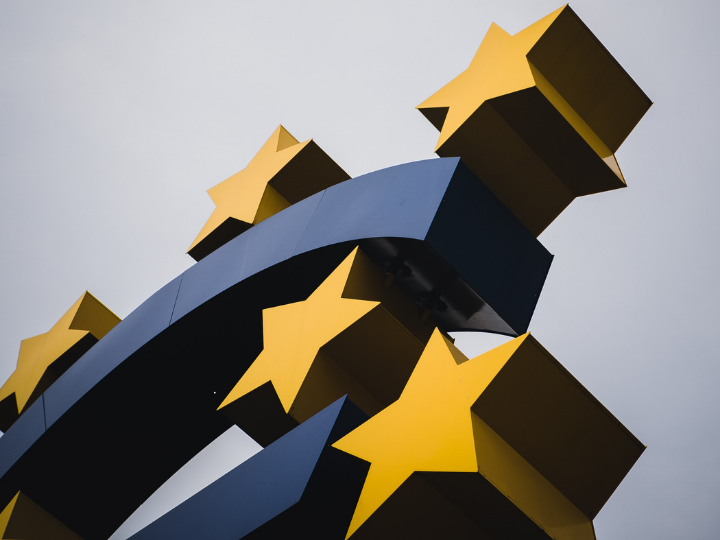
Europe’s banks are happy with risk-averse customers. Their own healthy profits come from re-investing low-interest deposits into more profitable activities. Being risk-averse themselves, they starve small and medium-sized companies of loans, and this year have begun squeezing credit even tighter. The EU Commission is trying to encourage a shift into investment of the €10tn in cash held by the big retail banks, but it’s an uphill struggle.

The EU’s zig-zag road towards stronger financial markets

By: Carnegie - Strategic Europe | Tuesday, February 24, 2026

Giles Merritt delves into the confusing welter of efforts to streamline Europe’s national financial players into a more dynamic single capital market

AI disruption is unlikely to manifest as sudden mass redundancy. It is more likely to take the form of incremental task substitution and workflow automation that progressively reduce the scope of existing roles. Jobs would be hollowed out before being eliminated, creating prolonged insecurity rather than immediate unemployment.

How the EU Can Survive the AI Labor Transition

By: Carnegie - Strategic Europe | Friday, February 20, 2026

Integrating AI into the workplace will increase job insecurity, fundamentally reshaping labor markets. To anticipate and manage this transition, the EU must build public trust, provide training infrastructures, and establish social protections.

MORE ARTICLES

For Europe, the lesson is pointed. Eight European leaders in New Delhi this week is more than optics. It is recognition that India’s AI ecosystem — its engineering depth, its digital public infrastructure, its billion-plus user base, its IndiaAI Mission — is significantly more than a supporting character in the global AI story.

The Week That Changed Everything: EU–India After the FTA, the AI Summit and the End of Strategic Ambiguity

By: Radu Magdin | Wednesday, February 18, 2026

What New Delhi’s February Moment Means for Europe — and Why Central and Eastern Europe Must Now Step Forward
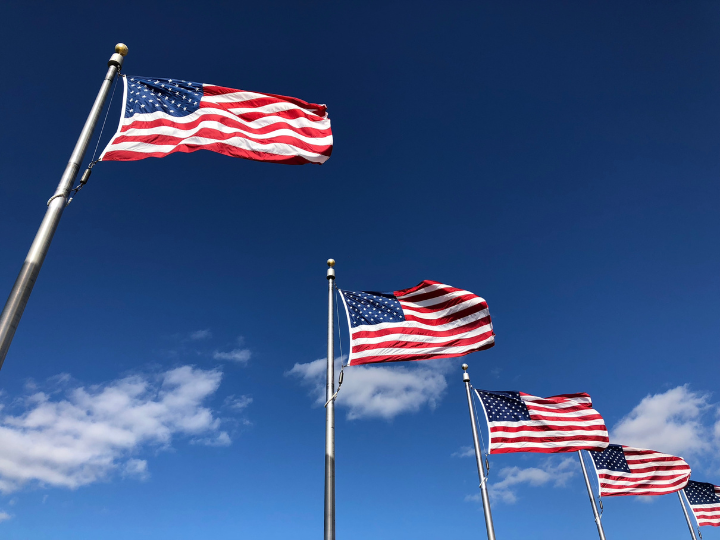
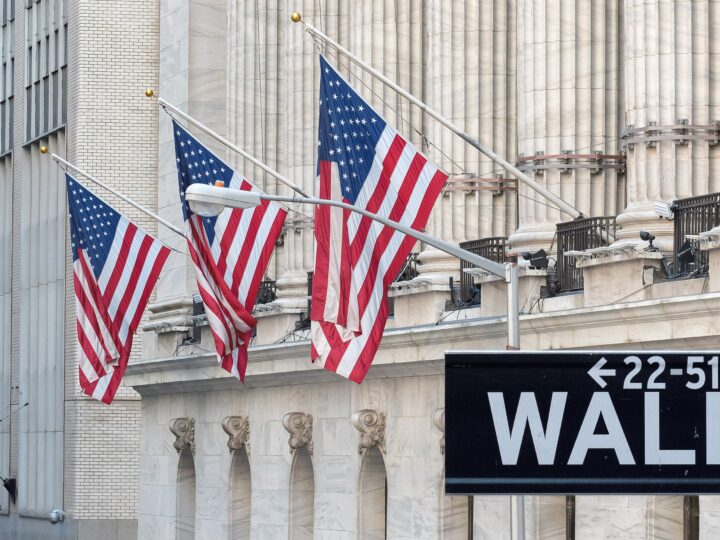
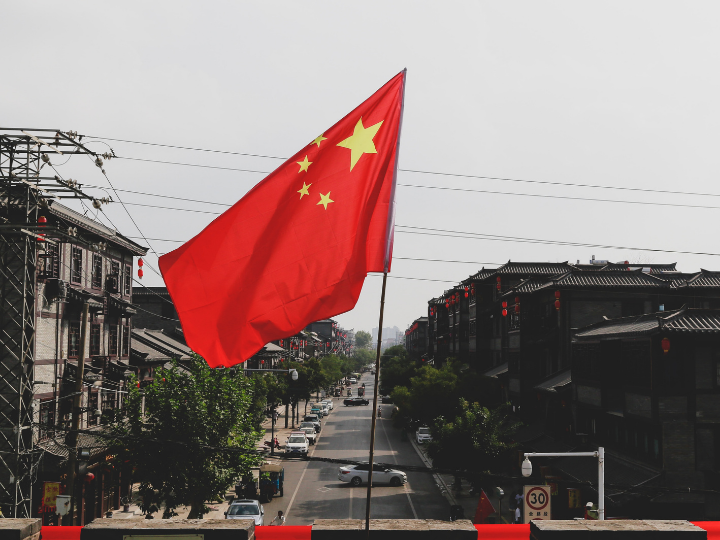
USA@250 is not, formally, a grand strategy. It is a commemorative platform. Yet its timing matters. The United States enters its 250th year while the global system is being reshaped by industrial policy, technological rivalry, demographic divergence, and security fragmentation. Domestically, the anniversary is an attempt to rebuild civic confidence and institutional legitimacy. Externally, it unfolds in direct comparison with long-horizon projects elsewhere, most notably China’s 2049 goal of national rejuvenation.

USA@250 and the Rising World’s Agendas and Visions: EU lessons

By: Radu Magdin | Tuesday, February 10, 2026

In 2026, the United States will mark a symbolic milestone: 250 years since 1776. The official “America250” framework presents the semiquincentennial as a civic moment, a pause for reflection, renewal, and national storytelling. For Europeans, it may appear as an inward-looking exercise, heavy on symbolism and light on strategy.

Firms across the world have been changing their production lines and investing billions as governments try to persuade people to drive greener cars to meet environmental targets.

EU waters down plans to end new petrol and diesel car sales by 2035

By: BBC News | Friday, December 19, 2025

Current rules state that new vehicles sold from that date should be "zero emission", but carmakers, particularly in Germany, have lobbied heavily for concessions.

The US has long maintained that taxes on digital services - which typically charge levies on revenue from streaming or digital advertising companies above a certain size - unfairly target American firms.

US presses Europe on rules for big tech companies

By: BBC News | Tuesday, November 25, 2025

Europe should "reconsider" its rules for big tech companies if it wants to see lower US tariff rates on its steel and aluminium exports, US Commerce Secretary Howard Lutnick has said.

The latest plans by Beijing to relax its export controls have emerged after US President Donald Trump and Chinese counterpart Xi Jinping met in South Korea earlier this week.

China to loosen chip export ban to Europe after Netherlands row

By: BBC News | Monday, November 3, 2025

Beijing has said it will loosen a chip export ban it imposed after Dutch authorities took over Nexperia, a Chinese-owned chipmaker based in the Netherlands.
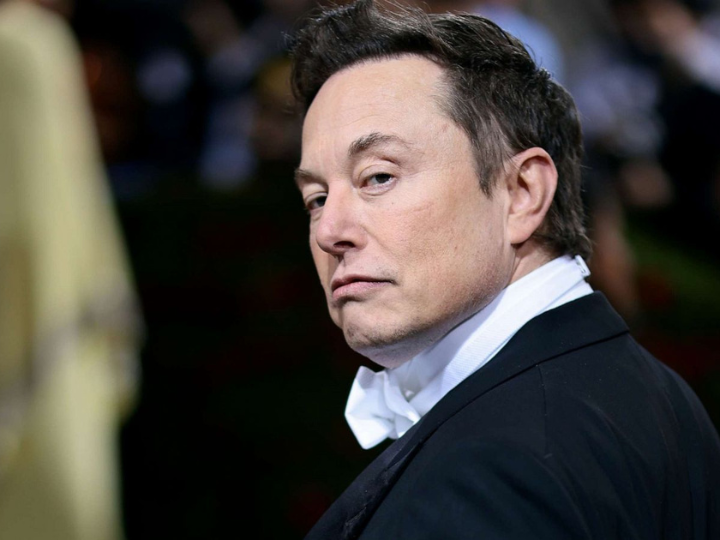
States still legislate, but often govern through corporate intermediaries. Decisions about data storage, online speech, or network access depend as much on the internal rules of digital giants as they do on national law.

Corporate Geopolitics: When Billionaires Rival States

By: Carnegie - Strategic Europe | Thursday, October 30, 2025

Tech giants are increasingly able to wield significant geopolitical influence. To ensure digital sovereignty, governments must insist on transparency and accountability.
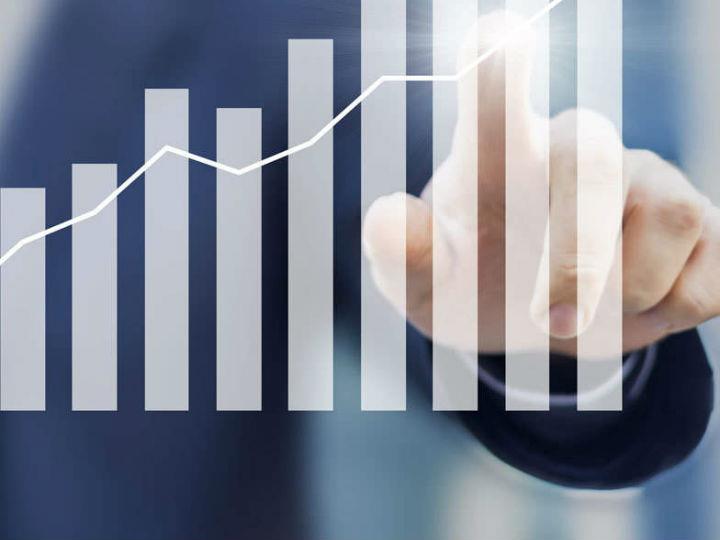
Thai agribusiness groups, for example, have used partnerships to secure technology and market access while preserving decisive family influence. In Africa and Brazil, several industrial families have relied on temporary instruments such as preference shares, which allow them to raise capital and still reclaim full control once expansion pays off. The lesson is clear: external resources can accelerate ambition, provided the family sets the terms.

The Next Chapter: Governance and Growth for Global South families

By: EBR | Friday, August 29, 2025

In much of the Global South, family-owned businesses are not a side story
Historically, services expanded precisely because human labor was needed to navigate informational asymmetries — such as those between patients and doctors, consumers and retailers or clients and legal advisors.Today, algorithmic systems can increasingly automate these tasks, diagnosing conditions, matching supply and demand and optimizing legal and financial transactions.

Are we navigating the end of the market era?

By: EBR | Thursday, July 17, 2025

We are entering a data-driven world where democratic governance struggles to catch up with the hybridization of power between states, platforms and private data monopolies

Fourth, by understanding the functioning of the global supply chain in combination with the ESG (environment-society-government) legislative framework that will necessarily lead to a new more resilient and sustainable operating model; and Fifth , with the changing nature of competition and market over-concentration. Competition is primarily about prices and is likely to lead to a reduction in profit margins but it is also about quality, service and the overall service provided to the customer.

Τhe Retail market for 2025 and challenges for the day after

By: EBR | Wednesday, July 9, 2025

Estimates for global retail turnover for the year are around $30 trillion and the contribution of e-commerce will be remarkable with over 25% of total turnover and with the dominant markets in e-commerce being those of North America, Asia and Europe

However, the UK says it’s not planning to follow suit - making it an attractive market for firms like XPeng, which started delivering its G6 model to British consumers in March, and BYD, which launched its Dolphin Surf model this month in the UK, and is available for as little as $26,100.

How China made electric vehicles mainstream

By: EBR | Tuesday, June 24, 2025

"I drive an electric vehicle because I am poor," says Lu Yunfeng, a private hire driver

Ursula von der Leyen’s Commission is increasingly criticised for a reluctance to pursue member states that dilute or openly flout the rules. The internal market, say critics, now exists in name only. A new IMF report agrees, reckoning the hidden costs of trading across Europe’s national frontiers to be equivalent to a tariff of 45% on goods and 110% on services.

To save the Single Market, bring back Delors’ 1992 playbook

By: EBR | Tuesday, June 3, 2025

Most people familiar with EU affairs know the single market is a myth. Hailed as the bedrock of the European Union, it was never completed and is now crumbling.

“It has since emerged that the invitation came from a person who is currently under investigation by the Belgian authorities and who intended to speak to me about Huawei during the match,” Attard wrote. The MEP discussed Huawei with the person in question and later met them in Strasbourg.

Belgian prosecutors target MEPs in Huawei probe

By: EBR | Wednesday, May 21, 2025

So far three MEPs have confirmed that the Belgians want Parliament to lift their immunity

But internal wisdom alone rarely suffices. The most profound innovations often arise when organizations open themselves to external ecosystems – whether through strategic partnerships, cross-industry learning or engagement with thought leaders who challenge conventional wisdom. This is exemplified by how Buurtzorg’s model of self-managing nursing teams has influenced healthcare organizations globally.

Why the best companies don’t just innovate – they reinvent how they manage

By: EBR | Tuesday, March 18, 2025

In 2005, Chinese home appliances giant Haier faced a defining moment

Today 35 per cent of senior management positions are held by women. But across heavy industries such as construction, manufacturing and STEM, the picture is very different - representation falls to 12%.

Female empowerment in the workplace, it’s more than equality, it’s leadership

By: EBR | Friday, December 20, 2024

Europe’s rules for improving gender balance in the hierarchy of listed companies are paying dividends

Pages: Next

EU Actually

In foreign affairs, the EU is on the sidelines

N. Peter KramerBy: N. Peter Kramer

The European Union is increasingly on the sidelines. After the Russian invasion of Ukraine in 2022, the EU seemed to regain its role. It reacted quickly and unanimously with heavy sanctions against Russia.

Europe

Europe has ’maybe 6 weeks of jet fuel left’, energy boss warns

Europe has ’maybe 6 weeks of jet fuel left’, energy boss warns

Europe has "maybe 6 weeks of jet fuel left", the head of the International Energy Agency (IEA) has warned.

Business

Where Romania can build excellence: the sources of future competitiveness

Where Romania can build excellence: the sources of future competitiveness

Romania has been, for most of its recent history, a story of potential deferred. The standard account of Romanian competitiveness, to the extent one exists in international business literature, is a cost story: cheap labor, low corporate taxes, a large domestic market for Central and Eastern European standards.

MARKET INDICES

Powered by Investing.com
All contents © Copyright EMG Strategic Consulting Ltd. 1997-2026. All Rights Reserved   |   Home Page  |   Disclaimer  |   Website by Theratron