Edition: International | Greek
MENU

Home » Analyses

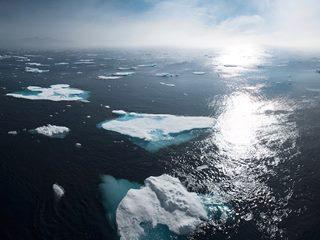
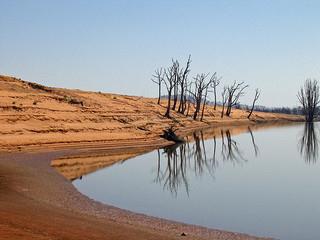
What we don’t have are reliable and widely useable ways to store renewable energy sources for days, weeks, or months. We need to be prepared for seasonal changes (when we have short days during the winter) or worse case scenarios when there are long periods of cloud cover or no wind for weeks or months.

Bill Gates: This is what we need to do to tackle climate change

By: EBR | Friday, May 24, 2019

Wind and solar power generation is expanding around the globe at record rates, allowing more people to get their electricity from clean, renewable sources than ever before. This is great news

The university is near one of Canada’s largest Indigenous communities and academics at the institution are “working shoulder to shoulder with these communities to identify causes and develop programmes to improve prevention” of critical health issues including type 2 diabetes and cardiovascular disease, he said.

These universities are making the most impact on society

By: EBR | Friday, May 24, 2019

The University of Auckland has topped a pioneering new ranking that assesses the social and economic impact of universities based on the United Nations’ Sustainable Development Goals (SDGs)

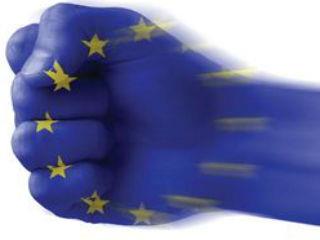
Climate change is hugely important. But there is something just as urgent that leaders across Europe need to talk about. This is the necessity to think and act strategically if Europeans are to defend their political, economic, and trade interests. This means taking an unjaundiced look at the condition of the transatlantic relationship, the role of China, and the persistent menacing interference of Russia in the EU.

Europeans Go to the Polls

By: EBR | Tuesday, May 21, 2019

The new members of the European Parliament and leaders of the EU’s institutions need to think strategically if the continent is to defend its political, economic, and security interests

Governments have been proactive in their efforts to improve framework conditions and address size-related barriers for SMEs. The 36 country profiles in the OECD SME and Entrepreneurship Outlook show that, in the OECD area, governments are focused on accelerating innovation diffusion to SMEs; ensuring SMEs keep pace with the digital transformation; engaging SMEs in upskilling; scaling-up innovation networks and MNE-SME linkages; and levelling the playing field in product markets, public procurement and ‘lead’ innovative markets.

SMEs are driving job growth, but need higher investment in skills, innovation and tech to boost wages and productivity

By: EBR | Tuesday, May 21, 2019

36 country profiles in new OECD report highlight progress and potential for improvement

It is difficult to know anymore what to expect when countries undergo changes – the West is no better example either, with the unexpected and unmanaged rise of populism and Euroscepticism, which only now we are addressing and it is a tough process. So when such significant changes happen in Kazakhstan and the international economic community credits you with continued support, that is significant.Second, we see a current president running to be confirmed in office, that has relevant personal and professional ties not only with two of the great powers of the world - but also the two bigger and more powerful neighbours - both of whom vie for the attention, economic and demographic opportunity, and territorial access of Kazakhstan.

KAZAKH PROSPECTS: stability, continuity, security

By: EBR | Monday, May 20, 2019

There is nothing like an unmanaged transition of the leadership of a large or populous country to remind us how important it is both internally and internationally that change is good, but quakes are not so good

Weber believes that heads of state and government of the European Union should propose him to the European Parliament as Jean-Claude Juncker’s successor. This position should go to the successful spitzenkandidat of the strongest political group.But Weber and his political friends are making two mistakes in their calculations. On the one hand, they overlook the fact that the key passage of the Lisbon Treaty is vague. On the other hand, the mood in Europe has changed. Germany no longer has the support it once had, as they have acted as permanent ‘blockers’ and ‘objectors’.

Why Manfred Weber will probably not be elected

By: EBR | Monday, May 20, 2019

It is unlikely that Manfred Weber will become the president of the next European Commission. This is also because Germany has often acted as a ‘blocker’

Taiwan Representative Harry Tseng headed up the procession. His message was: “We’re taking to the streets to demonstrate that Taiwan is a democratic, free, law-based and human-rights respecting nation, a like-minded partner for the EU. At the same time we call on the international community to recognise the political pressure that Taiwan operates under, which even now is preventing it from participating in the World Health Assembly.”

“Walk With Taiwan” for its participation in World Health Organisation

By: N. Peter Kramer | Friday, May 17, 2019

The World Health Assembly (WHA) will be held on May 20th. Taiwan has not been invited to participate under pressure from China. This in contravention of the WHO constitutional statement that health is a human right

The changes at Richer Sounds do not mean the Yorkshire-based entrepreneur, who is currently advising Marks & Spencer on how to change its dysfunctional business culture, is about to retire.He is financing Taxwatch, a non-profit organisation which pores over the opaque finances of multinational companies, and is considering funding a test case against zero-hours contracts.

Richer Sounds founder hands over control of hi-fi and TV firm to staff

By: EBR | Friday, May 17, 2019

Chain joins John Lewis in employee ownership as staff get £1,000 for each year they have worked

France understands the crucial importance of having allies in the Indian Ocean to protect strategic shipping lanes as well as the internet cables and other communication lines that run along the seabed. The global role of these sea lines of communication (SLOCs) should not be underestimated. Trade, especially between Europe, Asia, and the Middle East, relies on the security of the SLOCs. Any disruption to the movement of oil or goods across this part of the world would have a devastating impact on economies in the region and in Europe.

France’s Strategic Footprint in the Indian Ocean

By: EBR | Tuesday, May 14, 2019

As China asserts its growing military, political, and economic power, European countries should follow Paris’s lead by deepening ties with India and other democracies

Trade unions are calling for the Centenary Declaration to define the parameters of a new social contract between governments, businesses and workers, recognising that the future of production is not something that will be determined by technology, rather that it will be shaped by political, social and economic choices.The context for these choices is indeed troubling. There are 300 million “working poor” – people who are in work but don’t earn enough to lift them out of poverty. Official unemployment globally is around 190 million people, with large numbers of younger people entering the labour market only to find there is no job for them.

It’s people, not technology, that will decide the future of work

By: EBR | Friday, May 10, 2019

Nothing is written in stone. Technology itself will not determine the way forward. It’s all about the choices that governments, businesses, workers and their unions and societies as a whole make

Global median age is projected to surpass 40 years by the end of the century, and it will be considerably higher in many Western nations, especially in Japan and Europe.With the future demographic composition looking very different than today, it will be fascinating to see how the economy responds to these potential tailwinds. Further, it will be even more interesting to see what role automation will play as the old-age dependency ratio hits historic highs.

Longer lifespans are changing the shape of the world’s population pyramid

By: EBR | Friday, May 10, 2019

The world is in the midst of a notable period of demographic transition

The technological innovation ameliorates the asymmetric information constraint faced by conventional banks in lending to the collateral-less poor. The movement of cash into electronic accounts tracks, for the first time for the unbanked, the real-time history of their financial transactions. Using algorithms, these records provide evolving individual credit-scores that eventually allow users to obtain a pathway to formal financial services accessed only through a mobile phone, e.g. to interest-bearing savings accounts, small loans, and insurance products. Hire purchase credit is possible through mobile money, permitting secure, remote purchases of costly durable items on a pay-as-you-use basis.

The economics of mobile money: Harnessing the transformative power of technology to benefit the global poor

By: EBR | Friday, May 10, 2019

Mobile money has transformed the landscape of financial inclusion in developing and emerging market countries, leapfrogging the provision of formal banking services

NATO and the US are not any longer important to Germany as they used to be. Irritation about President Trump influences German foreign politics. But the recent decision by the Merkel government is more profound. Not only Republicans as President Bush Jr and late Senator John McCain called Germany to show its commitment to NATO by spending 2% of GDP on defence, as the NATO rule is. But also Democrats including President Obama asked for it.

Wants Germany to get rid of NATO?

By: N. Peter Kramer | Friday, May 3, 2019

Is NATO dying? Walter Russel Mead, leading columnist of the Wall Street Journal, says yes

The bar is even higher for the banking sector, which has always struggled, some would say understandably, to escape the mistrust of the public. My point is that, more than ever, a reputation shock could be enough to bring down even MNCs whose resilience has never been questioned before. We speak maybe too much about unicorns these days, but we forget the other side of the "creative destruction": there are not only unicorns, but also "dinosaurs" on the brink of business extinction.

Nordic banks, scandals and reputation rebuilding

By: EBR | Thursday, May 2, 2019

The story is simple: the most important Nordic banks are involved in a Baltic money laundering scandal that saw hundreds of billions of Russian-tainted euros flooding the international market in the absence of proper supervision and risk assessment

Against the backdrop, Taiwan urges WHO to respond favorably to the widespread calls for Taiwan’s inclusion in the World Health Assembly and related technical meetings, mechanisms and activities. WHO should abide by its own principles of inclusiveness and universal participation. Taiwan is a worthy and reliable partner that can help countries around the world achieve the meaningful goal of universal health coverage by 2030.

Taiwan can help countries around the world achieve universal health coverage by 2030

By: EBR | Thursday, May 2, 2019

At a time when achieving universal health coverage has never been more urgent and important, Taiwan has actively sought to share its first-rate experience in healthcare reform

Success rests on the ability to engage the entire leadership team and other key stakeholders around a common vision and shared goals. This becomes critically important at various points throughout planning and execution. These groups will not only help to solve problems and navigate roadblocks, but they will also become evangelizers of your strategic vision, helping to communicate it broadly and inspire greater followership among stakeholders.

7 skills every leader needs in times of disruption

By: EBR | Tuesday, April 23, 2019

In our current times of great change, people are questioning what it means to be a leader and rethinking what we expect from those chosen to lead

Greenpeace was among the enterprises from which we abstracted our business model of SDM. They exist to protect and promote the interests of specific communities. SDM are not primarily in the business of telling the public what matters. They tell people who already know what matters how they can deal with it. We’ve heard such audiences referred to as “silos” by journalists. Greenpeace has 2.8 million donating members and millions of social media followers. That looked to us like a major core audience.

How Strategic Alliances Can Strengthen Investigative Journalism

By: EBR | Tuesday, April 23, 2019

Collaborations between journalists and NGOs forge new avenues for mutual value creation – and social impact

According to Bank of England Governor Mark Carney, FinTech’s potential is to unbundle banking into its core functions - such as settling payments and allocating capital. For central bankers and regulators who are monitoring the sector, the growth of fintech is akin to any other disruptive technology - that is, will it lead to financial instability? Most fintech start-ups are not regulated as much as traditional financial institutions.

Don’t underestimate the power of the fintech revolution

By: EBR | Friday, April 19, 2019

History is replete with people’s failures to anticipate the impact of technological change. Are we making the same mistake with financial technology (fintech)?

Certainly, education does involve mastering the essential body of knowledge and skills in the student’s field of interest. Students doing a Business degree, for example, will need to know how to put together a marketing plan, analyze financial statements and construct budgets. I believe, however, that there are several reasons why students should not base their decision about where to study too narrowly on what they’ll learn and forget about how they’ll learn.The most important skills companies are looking are the ones that cut across disciplines.

Fostering Tomorrow’s Agile Self-Learners

By: EBR | Friday, April 19, 2019

Students in Greece and their parents tend to ask the same questions when they investigate options for higher education

The Fourth Industrial Revolution is causing a large-scale decline in some roles as they become redundant or automated. According to the 2018 Future of Jobs Report, 75 million jobs are expected to be displaced by 2022 in 20 major economies. At the same time, technological advances and new ways of working could also create 133 million new roles, driven by large-scale growth in new products and services that would allow people to work with machines and algorithms to meet the demands of demographic shifts and economic changes.

We need a reskilling revolution. Here’s how to make it happen

By: EBR | Friday, April 19, 2019

As the world faces the transformative economic, social and environmental challenges of Globalization 4.0, it has never been more important to invest in people

Pages: Previous Next

EU Actually

An as usual divided EU is looking for a more assertive China strategy

N. Peter KramerBy: N. Peter Kramer

In his weekly column, N. Peter Kramer writes about the laborious efforts of the EU member states to find a more assertive China strategy.

Europe

EU hails Hungary’s ’wind of change’ and unlocks €16.4bn for new PM Magyar

EU hails Hungary’s ’wind of change’ and unlocks €16.4bn for new PM Magyar

European Commission President Ursula von der Leyen has told Hungary’s new prime minister that billions of euros in EU funding are to be unlocked subject to his government pushing through a raft of "long-overdue reforms".

Business

Hotpot, bubble tea and sportswear: China’s new exports take on the world

Hotpot, bubble tea and sportswear: China’s new exports take on the world

Step into pretty much any shopping mall in Singapore and you’re likely to find queues snaking outside shops with catchy names and bright-coloured branding.

MARKET INDICES

Powered by Investing.com
All contents © Copyright EMG Strategic Consulting Ltd. 1997-2026. All Rights Reserved   |   Home Page  |   Disclaimer  |   Website by Theratron