Edition: International | Greek
MENU

Home » EU Actually

‘For the UK, no deal is better than a bad deal’

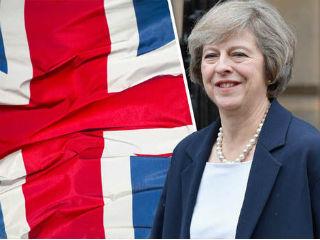
Last week Prime Minister May introduced the Conservative Party election manifesto, that kills off any lingering hope of a soft, half-in-half-out Brexit

By: N. Peter Kramer - Posted: Monday, May 22, 2017

Regarding the ‘divorce bill’ or ‘Brexit bill’, the manifesto’s echoes the language of May’s March 29 letter that triggered Article 50: a settlement will be reached ‘in accordance with the law and in the spirit of the UK’s continuing partnership with the EU’. Much work is left for UK chief Brexit negotiator David Davis, who introduced Theresa May on stage at the manifesto launch in Halifax. He has to trash out the specific details with EU chief Brexit negotiator Michel Barnier.

by N. Peter Kramer

The manifesto is clearly founded on the concept that leaving the EU means a golden opportunity to reshape Britain for the better. It will not become a reluctant Brexit, for the Conservatives it is a necessary one, to remake Britain. For instance, coastal towns will win back their historic fishing rights and deprived towns and cities outside London and the South East will get funds clawed back from Brussels. 

Mrs. May said, ‘The next five years are the most challenging that Britain has faced in my life time. Brexit will define us: our place in the world, our economic security and our future prosperity.’  She repeated previous pledges to withdraw from the Single Market and EU Customs Union, to end ‘vast annual contributions’ to the EU budget but reserved the possibility of participating in ‘specific European programmes’. 

PM May also renewed the Conservative commitment to reduce net migration to ‘sustainable levels’. ‘When immigration is too fast and too high, it’s difficult to build a cohesive society’, she said. But separate references to EU and non-EU migration give her an option of offering some form of preferential access to the UK labour market for citizens of the EU-27 countries; presumably as an incentive for the EU to grant other UK demands. 

Regarding the ‘divorce bill’ or ‘Brexit bill’, the manifesto’s echoes the language of May’s March 29 letter that triggered Article 50: a settlement will be reached ‘in accordance with the law and in the spirit of the UK’s continuing partnership with the EU’. Much work is left for UK chief Brexit negotiator David Davis, who introduced Theresa May on stage at the manifesto launch in Halifax. He has to trash out the specific details with EU chief Brexit negotiator Michel Barnier. 

According to the minutes of a recent European Commission meeting, Mr Barnier told EU Commissioners and Commission President Juncker, that the issue of the Brexit bill ‘would doubtless be one of the most difficult in the negotiations’. The reason for it could be that ‘the European Council wanted a single settlement to cover all the financial relations’. ‘Should there be no agreement on this point, Barnier believed, that the risk of failing to reach an orderly withdrawal becomes real.’

During the presentation of the Conservative manifesto, Theresa May seemed to be prepared for the risk of failing: ‘We continue to believe that no deal is better than a bad deal for the UK’!

READ ALSO

EU Actually

European Parliament challenges member-states with an additional budget increase of 10 percent

N. Peter KramerBy: N. Peter Kramer

In his weekly column, N. Peter Kramer writes how the EP opposes Commission’s proposal to cut back on traditional programmes such as agriculture and cohesion

Europe

The EU–India Deal Is Done. Africa Must Be Next

The EU–India Deal Is Done. Africa Must Be Next

The EU-India FTA deal showed Brussels can move when the stakes are high; Africa is the real test of whether Europe can protect its economic security in a more fractured world.

Business

Where Romania can build excellence: the sources of future competitiveness

Where Romania can build excellence: the sources of future competitiveness

Romania has been, for most of its recent history, a story of potential deferred. The standard account of Romanian competitiveness, to the extent one exists in international business literature, is a cost story: cheap labor, low corporate taxes, a large domestic market for Central and Eastern European standards.

MARKET INDICES

Powered by Investing.com
All contents © Copyright EMG Strategic Consulting Ltd. 1997-2026. All Rights Reserved   |   Home Page  |   Disclaimer  |   Website by Theratron