Edition: International | Greek
MENU

Home » EU Actually

In a ‘constructive’ Brexit spirit May repeats: ‘better no deal than a bad deal’

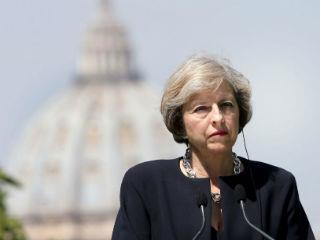
In her speech in Florence (Italy) at the end of September, UK Prime Minister May made clear that Britain will not leave the EU on March 30 2019, the date that the EU Withdrawal Bill will be enacted and the UK membership will be terminated officially

By: N. Peter Kramer - Posted: Tuesday, September 26, 2017

Her Florence speech confirmed the UK’s intention to adopt a status quo transition, where the UK continues to operate under ‘the existing structure of EU rules and regulations’, for around two years after March 2019. Mrs May also said that no member state would have to pay more, or receive less from the EU budget until 2020, the end of the current multiannual budget period.

by N. Peter Kramer

But she worked hard to reassure all those who voted to Leave that there will be a ‘strictly time-limited implementation’ period of two years. 

Instead of a grand, detailed vision with her personal stamp upon it, to some extent she tried pleasing all sides. What else could she have done in Florence at that moment? Mrs May was not aiming to get Britain through the next four years but the next five or six months. And in doing so, to unblock negotiations which have stalled, she had to play many trump cards. 

Her Florence speech confirmed the UK’s intention to adopt a status quo transition, where the UK continues to operate under ‘the existing structure of EU rules and regulations', for around two years after March 2019. Mrs May also said that no member state would have to pay more, or receive less from the EU budget until 2020, the end of the current multiannual budget period. 

Did she make too many concessions? Impossible to answer. Everything will be forgotten when there is a bold, flexible final deal. The Prime Minister, much too vaguely, tried to outline one in her speech. And do not overlook that she repeated: better no deal than a bad deal. Anyhow, Mrs May made a reasonable offer and the EU must respond. 

The question now whether the EU will be reasonable as well. Not many EU watchers outside the Brussels bubble are expecting that. The ‘war’ will go on. It looks as though the EU negotiators don’t want to negotiate at all. Under the guise of negotiations, Barnier and his team want to force May to give, unconditionally, everything that Brussels wants. After that, they, perhaps, might be willing to hear what she wants….

READ ALSO

EU Actually

It is high time to rein in AI

N. Peter KramerBy: N. Peter Kramer

In his weekly column N. Peter Kramer writes about the global discussion about Artificial Intelligence, the need for quick regulation, and points to international treaties from the 20th century.

Europe

EU Fails to Learn the Lessons from Ceuta

EU Fails to Learn the Lessons from Ceuta

The aftermath of the Ceuta crisis shows Europe has drawn the wrong lessons. Rather than doubling down on failed migration policies, the EU needs to address the underlying roots of such episodes.

Business

Businesscraft: Japan’s Quiet Discipline for a Fractured World

Businesscraft: Japan’s Quiet Discipline for a Fractured World

For almost thirty years after the end of the Cold War, geopolitics stayed away from the corporate boardroom. Geopolitical considerations belonged to the foreign ministry or to a dedicated risk committee back at headquarters, and rarely crossed a CEO’s desk.

MARKET INDICES

Powered by Investing.com
All contents © Copyright EMG Strategic Consulting Ltd. 1997-2026. All Rights Reserved   |   Home Page  |   Disclaimer  |   Website by Theratron