Edition: International | Greek
MENU

Home » Business

Huawei takes U.S. government to court

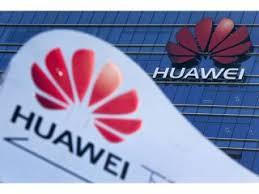
Huawei takes further action against the U.S. government to halt illegal proceedings against the company by filing a motion for summary judgment as part of the process to challenge the constitutionality of Section 889 of the 2019 National Defense Authorization Act (2019 NDAA)

By: N. Peter Kramer - Posted: Wednesday, May 29, 2019

Glen Nager, Huawei’s lead counsel for the case, said Section 889 of the 2019 NDAA violates the Bill of Attainder, Due Process, and Vesting Clauses of the United States Constitution. Thus, the case is purely “a matter of law” as there are no facts at issue, thereby justifying the motion for a summary judgement to speed up the process.

by N. Peter Kramer

It also called on the U.S. government to halt its state-sanctioned campaign against Huawei because it will not deliver more cybersecurity. Banning Huawei using cybersecurity as an excuse “will do nothing to make networks more secure. It provides a false sense of security, and distract attention from the real challenges we face,” said Song Liuping, Huawei’s chief legal officer.

“Politicians in the U.S. are using the strength of an entire nation to come after a private company,” Song noted. “This is not normal. Almost never seen in history.” “The U.S. government has provided no evidence to show that Huawei is a security threat. There is no gun, no smoke. Only speculation,” Song added. In the complaint, Huawei argues that Section 889 of the 2019 NDAA singles out Huawei by name and not only bars U.S. government agencies from buying Huawei equipment and services, but also bars them from contracting with or awarding grants or loans to third parties who buy Huawei equipment or services—even if there is no impact or connection to the U.S. government.

Song also addressed the addition of Huawei to the “Entity List” by the U.S. Commerce Department two weeks ago. “This sets a dangerous precedent. Today it’s telecoms and Huawei. Tomorrow it could be your industry, your company, your consumers,” he said. “The judicial system is the last line of defense for justice. Huawei has confidence in the independence and integrity of the U.S. judicial system. We hope that mistakes in the NDAA can be corrected by the court,” Song added.

Glen Nager, Huawei’s lead counsel for the case, said Section 889 of the 2019 NDAA violates the Bill of Attainder, Due Process, and Vesting Clauses of the United States Constitution. Thus, the case is purely “a matter of law” as there are no facts at issue, thereby justifying the motion for a summary judgement to speed up the process.

Huawei believes that U.S. suppression of Huawei will not help make networks more secure. Huawei expects the U.S. to take the right approach and adopt honest and effective measures to enhance cybersecurity for everyone, if the U.S. government’s real goal is security. In line with a court scheduling order, a hearing on the motion is set for September 19.


READ ALSO

EU Actually

Is a new euro crisis looming?

N. Peter KramerBy: N. Peter Kramer

In his weekly column N. Peter Kramer writes the interest rate differential between French, Belgian and Italian bonds and German is widening rapidly. The markets are targeting the eurozone countries with the highest debt. Is a new euro crisis looming?

Europe

How the EU’s Single Market Could Unlock Enlargement

How the EU’s Single Market Could Unlock Enlargement

Much has been said of the changes Brussels is trying to make to the EU enlargement process. Here’s why gradual integration might—or might not—be the answer.

Business

Businesscraft: Japan’s Quiet Discipline for a Fractured World

Businesscraft: Japan’s Quiet Discipline for a Fractured World

For almost thirty years after the end of the Cold War, geopolitics stayed away from the corporate boardroom. Geopolitical considerations belonged to the foreign ministry or to a dedicated risk committee back at headquarters, and rarely crossed a CEO’s desk.

MARKET INDICES

Powered by Investing.com
All contents © Copyright EMG Strategic Consulting Ltd. 1997-2026. All Rights Reserved   |   Home Page  |   Disclaimer  |   Website by Theratron