by Guy Ryder*
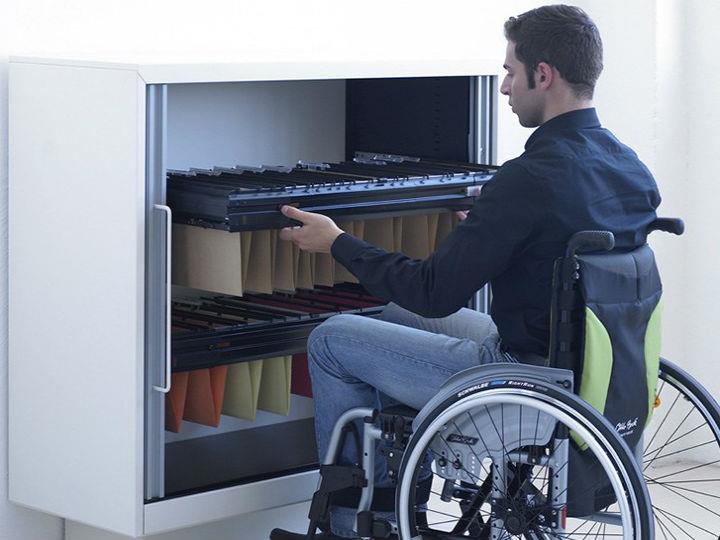
People with disabilities – estimated to be about 15% of the world population – constitute a largely untapped pool of talent in the labour market. And they face a high risk of being marginalized further as the world of work undergoes rapid transformations, including technological developments, climate change and demographic shifts. As a result, existing inequalities may increase – unless countries implement a range of measures to tackle the issue.
In the European Union, 60% of people with disabilities have jobs, while the rate for the rest of the population is 82%. In the United States, it is 37% compared to 77%. On average, workers with disabilities earn less than workers without disabilities and are often denied access to education, technologies and social protection, among other essentials.
But at the same time, an increasing number of companies are revising their policies and practices, including those relating to diversity and inclusion, human resources and accessibility, so that people with disabilities have better access to employment opportunities.
“The Valuable 500” campaign was launched a year ago at the 2019 World Economic Forum meeting in Davos. Supported by the International Labour Organization (ILO) Global Business and Disability Network, the campaign calls on the CEOs of 500 companies to put disability on their board agendas. Since then more than 240 companies have made the commitment. At this year’s WEF meeting, there was overwhelming agreement that we need to take more action on disability inclusion.
However, alongside all the initiatives, there need to be mechanisms in place to allow us to monitor progress and to see whether we are actually following up on the “Leave no one behind” commitment that we all made in the 2030 Sustainable Development Agenda. The key to this is having data that is disaggregated by disability.
This is sometimes seen as being complicated because of diverse national definitions and issues relating to confidentiality and other factors.
The good news is that there is international agreement on how to identify people with disabilities so that we can have reliable and comparable statistics that will allow us to track the inclusion gap.
This agreed methodology – the Washington Group set of questions – allows mainstream surveys, like labour force surveys, to include six short questions to identify the population with disabilities in a given context. The International Labour Organization has built on this with a module that allows countries to gain more in-depth information on the situation of people with disabilities and the root causes that prevent them from accessing the labour market.
In the ILO Centenary Declaration for the Future of Work, governments, workers’ and employers’ representatives of the ILO’s 187 member states declared that the ILO must direct its efforts to “ensuring equal opportunities and treatment in the world of work for persons with disabilities”.
The ILO is committed to drive the discussion on disability inclusion. Measuring and monitoring progress will be vital if we are to go beyond words.
*Director-General, International Labour Organization (ILO)
**first published in: www.weforum.org
 By: N. Peter Kramer