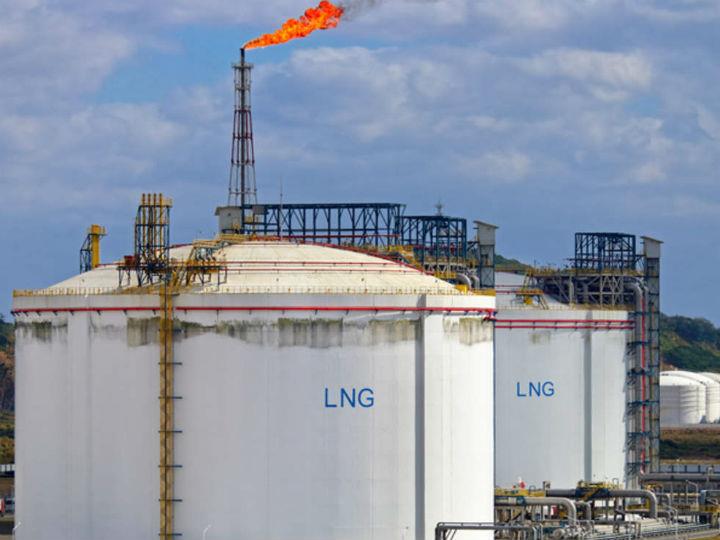
Capital expenditure on liquefied natural gas (LNG) facilities has surged from $82.8 billion to $196.1 billion over the last 12 months, according to a report by Global Energy Monitor.
Following a string of divestments from high-profile LNG funders, the report warned that at least two dozen projects were recently cancelled or are in serious financial difficulty.
“LNG was once considered a safe bet for investors,” said Greg Aitken, research analyst at Global Energy Monitor.
“Not only was it considered a climate-friendly fuel, but there was substantial governmental support to make sure that these mega-projects were shepherded to completion with all the billions they needed.
“Suddenly the industry is beset with problems,” Aitken said.
As the coronavirus pandemic squeezes investors and a growing social movement against new gas projects gathers pace, the report said troubled projects were facing a range of difficulties in sustaining finance.
In the past year Berkshire Hathaway and the governments of Sweden and Ireland were among financiers to drop several billion dollars worth of gas project funding, it noted.
‘Economically unsound decision’
While its proponents push LNG as a “bridge fuel” because it is less polluting than coal, a new gas-fired power plant can have the same environmental impact as a new coal plant, given the leakage of methane throughout the supply line, critics say.
Methane is dozens of times more potent a greenhouse gas than carbon dioxide over a 100-year time scale.
The landmark 2015 Paris climate deal enjoined nations to limit global temperature rises to “well below” 2°C over pre-Industrial Revolution levels.
The accord also commits countries to work towards a safer warming cap of 1.5°C.
According to the Intergovernmental Panel on Climate Change (IPCC), the safest and surest way to reach the 1.5°C goal would require a 15% decline in gas use by 2030 and a fall of 43% by 2040.
Global Energy Monitor said that any new gas infrastructure “directly contradicts the Paris climate goals”.
The European Investment Bank (EIB) – the world’s largest multilateral lender – said last year it was ceasing funding for nearly all new fossil fuel projects.
EIB vice-president Andrew McDowell said investing in new LNG capacity “is increasingly an economically unsound decision”.
“We need to take advantage of opportunities that put us firmly on the path to reaching net-zero by 2050 whilst securing more jobs in the short and long term,” he told AFP.
“This will undoubtedly be challenging, and it can’t be instant. But it must happen.”
*first published in: www.euractiv.com
 By: N. Peter Kramer