The year 2007 exceeded the expectations for international tourism with arrivals reaching new record figures close to 900 million. The results confirm both the sustained growth path of the past years and the resilience of the sector regarding external factors. This development has been supported by a strong world economy, which has experienced its longest period of sustained growth for more than two decades.
According to the latest UNWTO World Tourism Barometer, international tourism arrivals expanded by 6% in 2007, to 898 million international tourist arrivals, as compared to 2006.
“Economic and tourism growth are driven by emerging markets and developing economies. While mature markets remain the leading destinations in the world, the faster growth rate of new markets confirms UNWTO’s main message of tourism’s potential for the developing world”, said UNWTO’s Secretary-General, Francesco Frangialli.
Of the additional 52 million worldwide arrivals, Europe received some 19 million and Asia and the Pacific 17 million. The Americas was up by around six million, Africa by three million and the Middle East by five million.
All the different regions registered increases above their long-term average, with the Middle East leading the regional growth ranking (+13%), followed by Asia and the Pacific (+10%), Africa (+8%), the Americas (+5%) and Europe (+4%).
Inside the regions
The Middle East totalled 46 million international tourist arrivals and continues to be one of the tourism success stories of the decade so far, despite ongoing tensions and threats. The region is emerging as a strong destination with visitor numbers climbing much faster than the world total, with Saudi Arabia and Egypt among the leading destinations in growth in 2007.
Against the background of a strong growth of above 7% per year since 2000, Asia and the Pacific is also pushing international tourism and attracted 185 million visitors. While Japan (+14%) has taken off as a destination, Malaysia (+20%) Cambodia (+19%), Vietnam (+16%), Indonesia (+15%), India (+13%) and China (+10%) keep improving their growth rates.
With an estimated total of 44 million international travellers, Africa confirmed its good momentum, sustaining the growth of 2006 and is now averaging a 7% growth a year since 2000. In 2007, North Africa (+8%) appears to have done slightly better than Subsaharan Africa (+7%), primarily due to Morocco’s 14% rise. While in Subsaharan Africa a number of countries have turned in good results, awareness of South Africa has continued to grow in the build-up to the country’s hosting of the FIFA Soccer World Cup in 2010.
The Americas region regained vigour and more than doubled its growth rate after the 2% growth of 2006. Backed by the rebound of the US inbound market (+10%) and the strong performance of Central and South American destinations which were favoured by the strong euro and a steady tourism flows from the USA.
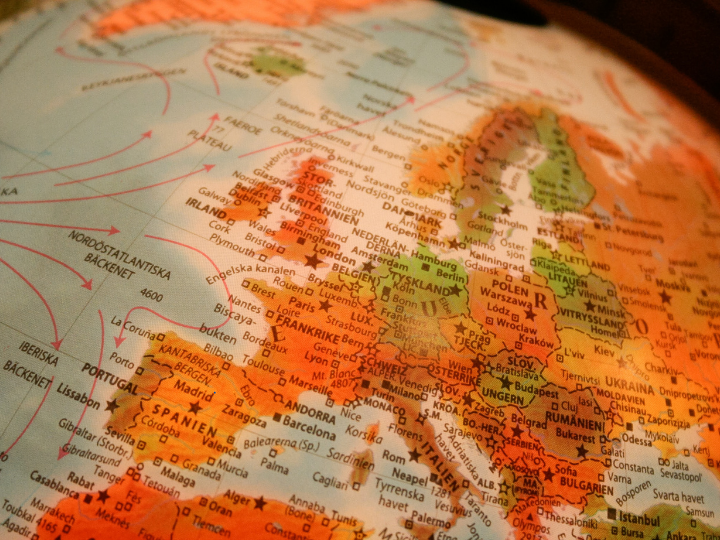
The world’s largest destination region with a share of over 50% of all international tourist arrivals, Europe is growing above average and totalled 480 million tourists in 2007. Destinations like Turkey (+18%), Greece (+12%) and Portugal (+10%) or Italy and Switzerland (both at +7%) are proof of the positive impact of the continued economic pick-up of the region in 2007.
2008 outlook
World Gross Domestic Product (GDP) has experienced its longest period of sustained growth for 25 years, with figures around or above 5% since 2004. Particularly emerging markets and developing economies are driving the global GDP for the most part of this decade. This also correlates to their behaviour as emerging tourism destinations, which on average nearly double the growth of destinations in high income countries.
For 2008, confidence remains high, although this perception might deteriorate. Economies worldwide have shown increased volatility and confidence has weakened in some markets due to uncertainty about the subprime mortgage crises and economic prospects, in particular for the USA, alongside with global imbalances and high oil prices.
International tourism might be affected by this global context. But based on past experience, the sector’s proven resilience and given the current parameters, UNWTO does not expect that growth will come to a halt.
 By: N. Peter Kramer