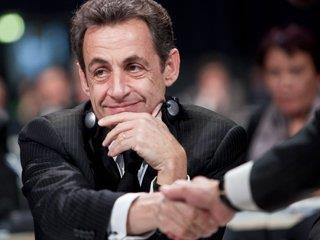
“Countries with trade surpluses must consume more and improve the living standards and social protection of their citizens,” he remarked. “Countries with deficits must make an effort to consume a little less and repay their debts.” The world’s currency regime is central to the issue, Sarkozy argued. Exchange rate instability and the under-valuation of certain currencies lead to unfair trade and competition, he said. “The prosperity of the post-war era owed a great deal to Bretton Woods, to its rules and its institutions. That is exactly what we need today; we need a new Bretton Woods.” Sarkozy said that France would place the reform of the international monetary system on the agenda when it chairs the G8 and G20 next year.
In his address, Sarkozy also called for an examination of the nature of globalization and capitalism. “This is not a crisis in globalization; this is a crisis of globalization,” he said. “Finance, free trade and competition are only means and not ends in themselves.” Sarkozy added that banks should stick to analysing credit risk, assessing the capacity of borrowers to repay loans and finance economic growth. “The role of the bank is not to speculate.” He also questioned the rewarding of high compensation and bonuses for CEOs whose companies lose money. Capitalism should not be replaced but it has to be changed, the French president declared. “We will only save capitalism by reforming it, by making it more moral.”
Speaking before Sarkozy, Doris Leuthard, President of the Swiss Confederation and Federal Councillor of Economic Affairs, told participants that the international community has to bridge the gap between rhetoric and reality as it tackles major challenges such as the global economic crisis, climate change and the Doha Round of multilateral trade negotiations. “We must all sit down together in a responsible manner, bring our part of the solution to the table and allow a conclusion to be reached that benefits us all.” While “rhetoric and reality all too often diverge by large margins,” Leuthard said, the bottom line is that “people need jobs and a salary.” She concluded: “We have talked enough. It is now time to get moving.”
Earlier, World Economic Forum Founder and Executive Chairman Klaus Schwab warned of the consequences if countries are too preoccupied by domestic problems and ignore long-term challenges such as global warming. “We hope that governments don’t become overwhelmed by internal issues and constraints to the detriment of exercising the necessary global stewardship.” Added Schwab: “We run the risk that 2010 becomes the year of the social crisis following the financial crisis of 2008 and the economic crisis of 2009.” He noted that one of the top priorities for this Annual Meeting is to encourage entrepreneurship and job creation.
 By: N. Peter Kramer