by Rajnish Singh
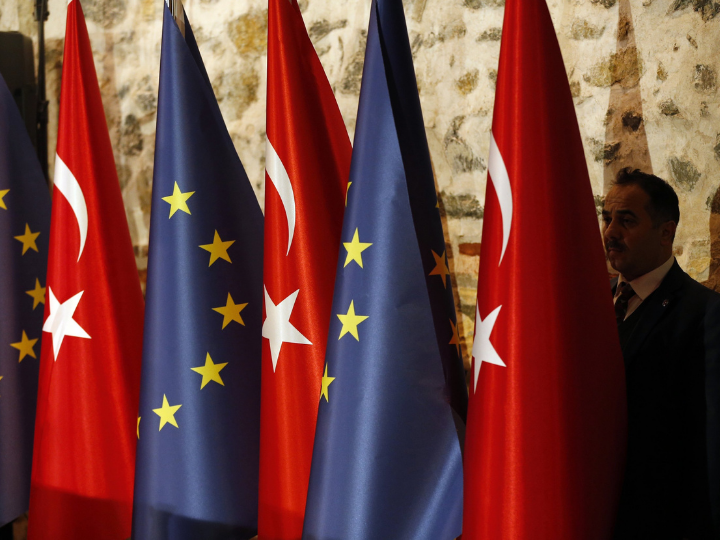
On Tuesday, 27 January 2025, the EU and India signed a long-awaited Free Trade Agreement (FTA) in New Delhi, bringing to a close nearly two decades of stop-start negotiations. The deal links two economies representing a quarter of the world’s population, roughly 25 percent of global GDP and a combined market of almost two billion people. With bilateral trade in goods and services already worth €180 billion, Brussels expects the agreement to double EU exports to India by 2032. Given the scale, European Commission President Ursula von der Leyen’s description of the FTA as the “mother of all deals” was not just hype.
Yet this agreement is less the product of commercial enthusiasm than of geopolitical necessity. Far from being driven by tariff schedules or regulatory harmonisation, the EU–India FTA reflects mounting pressure from Washington and Beijing — and a shared recognition in Brussels and New Delhi that strategic hedging has become unavoidable.
For years, EU–India relations drifted without direction. Trade talks stalled repeatedly, weighed down by regulatory disputes and mutual scepticism. That changed as the global environment hardened. Donald Trump’s return to the White House, combined with China’s growing international assertiveness and dominance over critical supply chains, has forced both sides to reassess their dependencies and exposure to strategic risk.
Nowhere is this clearer than in Europe’s recalibration of its relationship with the United States. The transatlantic partnership has entered a more openly transactional — and at times coercive. Trump’s willingness to weaponise tariffs, most recently by threatening European partners to secure support over Greenland, has revived fears in Brussels of an unpredictable and unilateral US ally. For the EU, securing alternative markets and partners is no longer merely an economic calculation; it is a geostrategic imperative. India, with its vast consumer base and expanding manufacturing ambitions, stands out as a natural counterweight.
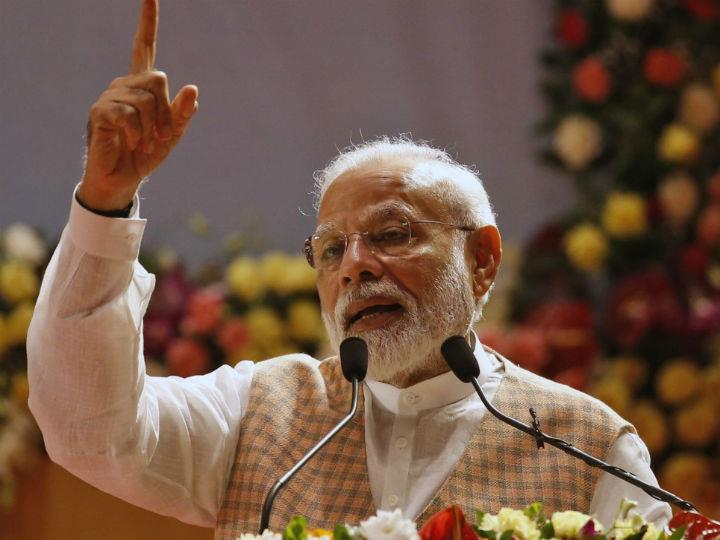
India, meanwhile, has drawn similar conclusions. Long a supporter of a rules-based international order — one that has underpinned its rapid growth — New Delhi has found itself increasingly vulnerable under the revived “America First” agenda. The once-vaunted personal rapport between Prime Minister Narendra Modi and Trump proved a fragile substitute for institutional trust, exposing the limits of personalised diplomacy.
The rupture became unmistakable in June 2025, when Trump claimed credit for “solving” the India–Pakistan military crisis and encouraged both countries to nominate him for the Nobel Peace Prize. Pakistan complied; India did not. For Modi, whose political authority rests heavily on projecting strength towards Islamabad, endorsing Trump’s narrative would have carried significant domestic costs. His refusal signalled a calculated assertion of strategic autonomy.
Washington’s response was swift and punitive. Successive tariffs — including penalties linked to India’s purchases of Russian oil for refining and re-export — ultimately reached a combined rate of 50 percent, delivering a sharp economic shock. In New Delhi, the measures were widely seen as hypocritical, particularly given China’s exemption despite its far larger imports of Russian energy. The episode accelerated India’s strategic recalibration, strengthening the case for diversifying economic partnerships and reducing reliance on an increasingly unreliable US partner.
China looms equally large in the EU–India convergence. Both face mounting challenges from a more assertive Beijing, making the FTA a strategic instrument rather than a purely commercial one. While neither can afford full decoupling, deeper integration offers a way to address trade imbalances and mitigate risks linked to technological dependence and critical digital infrastructure. For India, the stakes are higher still: China remains a principal military backer of Pakistan and an unresolved border dispute dating back to the 1962 war continues to fuel periodic tensions.
Significantly, the New Delhi summit delivered more than an FTA. The two sides also agreed a new security and defence partnership, adding a crucial strategic layer to the relationship. The pact establishes cooperation across maritime security, cyber resilience, counter-terrorism and defence-industrial collaboration. For India, it promises closer coordination with European navies, access to advanced defence technologies and investment, deeper cooperation on hybrid threats and a gradual reduction in dependence on Russian and US arms suppliers. It also elevates India’s standing within the EU’s Indo-Pacific strategy.
Taken together, the FTA and defence partnership represent a strategic bet on a more diversified and resilient global order. They reflect a shared recognition that, as mid-level powers, neither Brussels nor New Delhi can navigate an increasingly fragmented world alone. Whether this moment becomes a turning point will depend on sustained political will — and on whether both sides can match geopolitical ambition with regulatory pragmatism.
 By: N. Peter Kramer