by Rajnish Singh, European Policy Centre
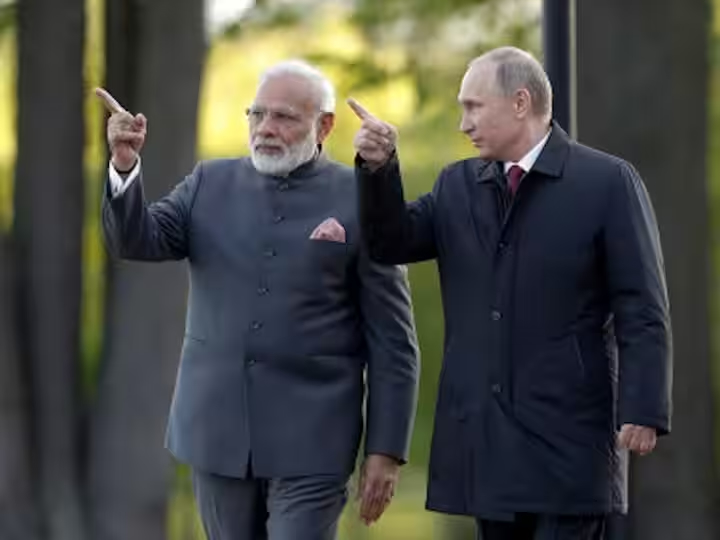
When Indian Prime Minister Narendra Modi stood alongside Russian President Vladimir Putin at the Shanghai Cooperation Organisation (SCO) summit in Bishkek, Kyrgyzstan, and told him to "move from an endless war to the end of war", Western observers took notice. For a country that has steadfastly refused to condemn Russia’s invasion of Ukraine, Modi’s public appeal was seen by some in the US and Europe as evidence of a dramatic strategic shift.
It was certainly an unusually direct message. But it would be a mistake to interpret it as India turning its back on Russia. Modi is trying to achieve something more difficult: ending a war that is increasingly complicating India’s carefully constructed strategic autonomy, while preserving a relationship with Moscow that New Delhi still considers essential.
India’s foreign policy has long been built around maintaining freedom of manoeuvre between competing powers. During the Cold War, that meant non-alignment. Today, it is more commonly described as strategic autonomy. India wants closer economic, technological and security ties with the United States and Europe, while retaining its longstanding partnership with Russia and maintaining room to work with China, Iran and other emerging powers.
The Ukraine War is making that balancing act increasingly difficult.
The most immediate problem is energy. India imports around 85% of its crude oil, making it highly exposed to disruptions and price increases. Russian oil has become an increasingly important source since the invasion of Ukraine. In July, Russian crude accounted for a record 50.83% of India’s oil imports, as disruption to Middle Eastern supplies made Russian barrels particularly attractive.
That dependence has also become a source of friction with Washington. US President Donald Trump has used tariffs and other economic pressure to push India to reduce its reliance on Russian oil. For New Delhi, this creates a difficult choice. Moving too far away from Russian energy could raise costs and undermine energy security. Moving too slowly risks damaging India’s increasingly important relationship with the United States.
Ending the Ukraine war would not solve that dilemma overnight. But it would remove one of the biggest sources of pressure on India’s relationship with both Moscow and Washington.
The strategic problem goes deeper. Russia has been one of India’s most important defence partners for decades. Much of India’s military hardware still has Russian origins, even as New Delhi increasingly diversifies its purchases towards the US, France and Israel. The war has accelerated that diversification, as Russia’s own military needs and the disruption of supply chains have exposed the risks of excessive dependence.
At the same time, the war has pushed Russia closer to China. That matters enormously to India. New Delhi sees Beijing as its principal long-term strategic competitor, and has no interest in seeing Moscow become entirely dependent on China for its economic, diplomatic and security relationships.
This is where Modi’s message to Putin makes strategic sense.
India does not need Russia to win the war. Nor does it need Russia to abandon China. What it needs is a Russia that remains sufficiently independent to be a useful partner for India.
That explains the apparent contradiction in Modi’s position. On the one hand, he is publicly urging Putin to end the war. On the other, India and Russia continue to deepen cooperation in energy, defence, trade and other sectors. At their Bishkek meeting, the two leaders reviewed cooperation across political, economic, defence, energy and space sectors and reaffirmed their "Special and Privileged Strategic Partnership". Modi also invited Putin to India for the BRICS summit later this month.
This is not a relationship in retreat. It is a relationship being recalibrated.
India’s ties with Russia have roots that go far deeper than today’s oil trade. Diplomatic relations with the Soviet Union were established in April 1947, months before Indian independence. During the Cold War, Moscow became a crucial economic, military and diplomatic partner. The Soviet Union also repeatedly used its UN Security Council veto in ways that supported Indian interests, particularly over Kashmir.
That history still matters. Russia’s permanent seat and veto on the UN Security Council remain strategically valuable to New Delhi, particularly as India continues to seek a permanent seat of its own.
But India also knows that strategic autonomy cannot mean dependence on any one partner. The lesson of the Ukraine war is precisely that great-power relationships can change rapidly. Russia’s growing dependence on China has demonstrated that even an historically close partner can become less strategically independent.
For Modi, therefore, the objective is not to choose between Moscow and Washington. It is to ensure that India does not have to choose at all.
India wants the Ukraine war to end because the conflict is becoming increasingly costly for the global economy, complicating its energy security, accelerating Russia’s dependence on China and exposing the limits of India’s ability to balance between competing powers.
Modi may urge Putin to stop the war. But he cannot afford to stop the relationship.
For India, strategic autonomy depends not on choosing sides, but on keeping its options open.
 By: N. Peter Kramer