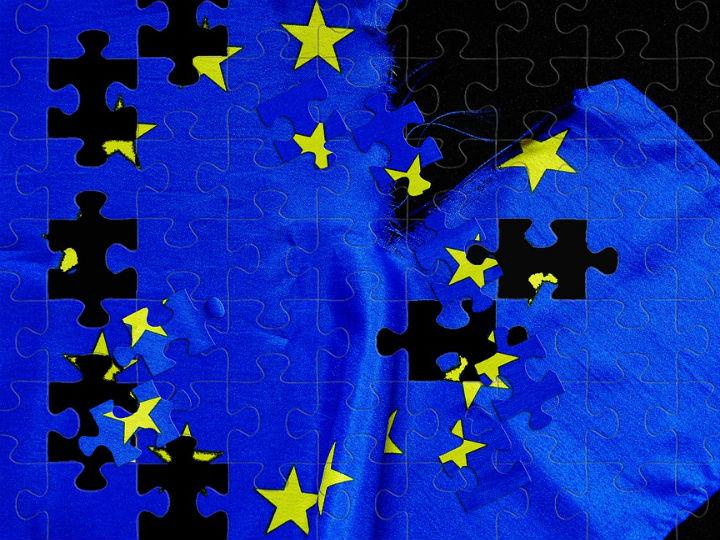
However, according to Professor Tihomir J. Markovitch, from Beograd, the striking thing is that very little is said about a third aspect of this essential union, which seems just as important, if not the most important, element of all. This is the matter of culture. Without the “Europe of Culture”, economic and political union could easily run aground.
We should understand the Europe of Culture to mean the deep-rooted sense of belonging to a common intellectual and spiritual tradition, the possession of a common well of respect for the same values, feeling united in a common desire to defend and spread the ideals of freedom and democracy. In the first place, the Europe of Culture is the Europe of freedom and democracy.
Perhaps so little is said about this Europe of Culture because it is viewed as something which has already been attained? To take such a view would be to commit a grave error. Europe is a long way off from spiritual unity. Europe is still, alas, in a state of pronounced spiritual disarray, irrespective of the fact that it is possible to speak of a genuine European civilization, which essentially means our way of life, the manner in which we behave, our eating habits, and the entire organization of our daily lives. North, South, East and West, this particular European civilization is to be found from one corner of Europe to next.
Under Europe` s present situation, this is very urgent. Because what this European civilization lacks is a people truly breathing as one and characterized by a deep-seated urge to erase the bad memories of the past and an unshakable desire to free themselves of prejudice and the evil propensities which often simmer beneath the surface of human nature. In the final analysis, the Europe of Culture is the cement that holds together the bricks and mortar of European unity, strong enough to withstand the most violent storm in an uncertain future.
The essence of this cultural Europe is the realization by all Europeans, whether from west, east, north, south, or even the center, that they are the founding fathers and standard-bearers of one of the fundamental values of civilization and culture, namely that the freedom of individuals is the democracy of societies. Indeed, it was from Europe that the idea went forth some 25 centuries ago to institute a social order in which citizens would be masters of their own decisions and which would depend on no authority other than their freely expressed common well. This was the greatest revolution in the history of mankind.
The Greeks of ancient times were the first to break the chains of oppression, removing the shackles of both physical and spiritual oppression. At the same time, the ancient Greeks were the first to produce an outline of Europe. These two factors were virtually concomitant. Europe was born at the same time as democracy. Now there is a crucial observation; something often forgotten, if not unbeknown to one and all. Democracy was born in a Balkan peninsula that is itself the peninsula of Europe, which is in turn the peninsula of Asia. It was in this corner of our ancient world that the idea was born of the right of men to self-determination. This idea reached maturity parallel to the creation of the Greek community that was the distant blueprint for our European Community.
It is good to remind ourselves of these things again, especially today, at a time when an important page in history is apparently being turned and when Europe can see its rebuilt unity taking shape on the horizon. This rebuilding process is essential after the enlargement and the EU of 27 countries in the coming years.
Why we need a Europe of Culture
Since the moment the European Union (EU) was sketched out, in 1957, people have contently stressed the economic and political need for it. Goes without saying that these needs are important and it is very easy to understand why efforts in those two difficult directions are strained.

Indeed, it was from Europe that the idea went forth some 25 centuries ago to institute a social order in which citizens would be masters of their own decisions and which would depend on no authority other than their freely expressed common well. This was the greatest revolution in the history of mankind.
 By: N. Peter Kramer