Edition: International | Greek
MENU

Home » Europe

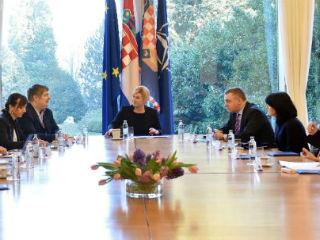
One immediate issue for the new government was Estonia’s European Union Council Presidency, shifted forward six months due to Brexit. Suddenly the new government, and especially the Centre Party, out of power for a decade, had to actively participate in EU-level political processes.

Tallin: Estonia takes on EU Presidency amid national change

By: EBR | Tuesday, November 7, 2017

For Estonia, the first half of 2017 was unexpectedly dynamic

The project will add 1,000 MW of nuclear power to the existing export potential of Burshtinsky Island in Ukraine, which is currently supplied exclusively by thermal generation (550 MW). Energoatom produces up to 65% of Ukraine’s total power requirement, but in recent years total consumption of nuclear power in the country has declined from 88 million kWhs in 2015 to a forecast of 82 million kWh this year. This makes the export of power to neighbouring Poland an attractive commercial opportunity.

New step for EU-Ukraine Energy Cooperation

By: EBR | Friday, November 3, 2017

In terms of economic cooperation between the EU and Ukraine, the most significant sector is energy.

Europe, the US or China?

By: EBR | Monday, October 30, 2017

Which development model today among the Big Three – Europe, the US or China – best fosters economic and environmental sustainability?

The future of the EU: Putting things in perspective

By: EBR | Monday, October 30, 2017

The European Way has great potential to nudge the world forward

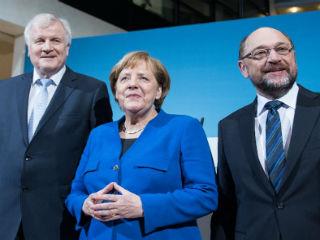
Going Dutch: Why Germany needs others besides France

By: EBR | Thursday, October 26, 2017

The Franco-German engine gets all the media attention, but it is Dutch-German cooperation that has done the important work in recent years. France and Germany can do a lot together, but Germany and France should remember that Berlin has – and needs – other options

Many wonder whether this form of citizen deliberation will be a one-time, constituent opportunity or rather a more permanent exercise, often referred to as ‘mini-publics’ (or citizens’ assemblies). This would entail the participation of randomly selected and demographically representative citizens from various populations tasked with advising elected decision-makers. Given successful experiments in Canada and Australia, the EU would do well to consider how to integrate mini-publics into their decision-making process. A randomly selected group of lay EU citizens could meet in parallel to the EU legislative process and inform it by formulating a set of recommendations. This would have the merit of sparking a EU-wide public debate about the policies discussed, thus underpinning the legitimacy of the EU policy process.

5 big ideas to reboot democracy in the EU

By: EBR | Friday, October 20, 2017

There is a widespread, intensifying belief that without the greater involvement of its citizens, the European Union is condemned to fail. While this realization is far from new, recent events in Catalonia along with Brexit have lent it fresh force

In terms of “Positive image” of the European Parliament, Ireland leads with 54%, followed by Bulgaria 49%, Malta 46%, Luxembourg 46%, Portugal 44%, Romania 43%, Germany 41%, Poland 38%, Netherlands 37%, Hungary 36%, Italy 36%, Sweden 35%, Belgium 34%, Austria 33%, Denmark 33%, Slovakia 32%, Lithuania 31%, Croatia 31%, Slovenia 28%, Cyprus 27%, UK 27%, Greece 27%, Finland 26%, Latvia 25%, France 20% and the Czech Republic is at the lowest with 18% of positive opinions. The EU average is 33%.

Parliament poll: Public confidence in the EU is growing

By: EBR | Wednesday, October 18, 2017

A clear majority of EU citizens now believe that EU membership is good for their country, according to a survey of how they view the EU and its institutions, released on Wednesday (18 October)

Under this title, different battles are ongoing: grants versus financial instruments, Brexit versus budget cuts, simplification of rules versus shortening of implementation deadlines, innovation and digitalization versus convergence and infrastructures, lagging behind regions versus advanced regions.

What do the regions really want?

By: EBR | Monday, October 16, 2017

A week full of debates and events about European regions and cities is over

European Commission Deputy Director-General for Neighborhood Policy and Negotiations Maciej Popowski said that it was nonetheless encouraging that 42% of the region’s population supported the EU. It may not be a majority but it is still more than in 2016.

Balkan citizens doubt they will ever join EU

By: EBR | Thursday, October 12, 2017

Citizens of the Balkan region are highly sceptical that their countries will be joining the EU anytime soon, despite shows of support for European integration, while a quarter do not believe their country will ever join the EU, the Balkan Barometer 2017 survey has shown

At the end of the day, withstanding the tide of populism and the extreme nationalism means addressing the discontents that feed it. There are a number of explanations for rising populism in Europe. One is that nationalism is a form of self-defence in the environment of raising inequalities, as put by the French thinker Bernard Sordet. This, indeed, is a challenge we need to address in Europe and in the world, in general. Although European societies are among the most equal in the world, significant disparities still exist. On average, the wealthiest 20 per cent of households earn five times as much as the poorest 20 per cent, according to the European Commission.

Populism, the three-headed monster

By: EBR | Thursday, October 12, 2017

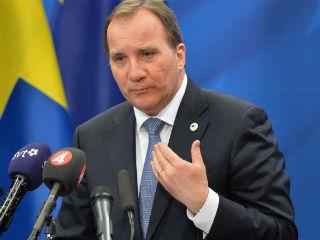
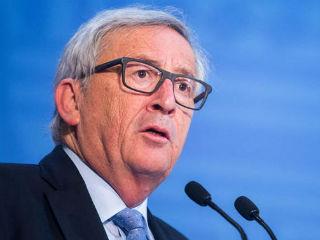
Europe’s economy is firmly on track and the President of the European Commission, Mr. Jean-Claude Juncker encourages us to leave the harbor and sail deep seas

Public grandstanding and high-profile interventions and declarations are not the only tools at the EU’s disposal. Policymakers, including MEPs should be seeking ways to engage in creative third-party mediation, which could include turning to trusted non-politicians, including non-Europeans, who can persuade Madrid and Barcelona to abandon confrontation in favour of dialogue and negotiation.

In a world of belligerent nationalisms, it’s not just Catalonia that needs cool-headed mediation

By: EBR | Tuesday, October 10, 2017

With Spain and Catalonia still locked in confrontation, cool-headed mediators are desperately needed to take the heat out of the escalating Catalan crisis

Digital innovations have not been used sufficiently at European level either. The European Commission has funded some pilot projects targeting youth e-participation. Some MEPs communicate digitally with their constituencies. However digital democracy agenda is largely missing from both strategic policy documents, such as the Commission’s Digital Agenda for Europe, and practical measures.

Digital democracy could engage citizens in Europe

By: EBR | Thursday, October 5, 2017

Digital technology has become a part of daily life for shopping, work and media consumption – and it is rapidly advancing into the physical world with the development of the Internet of Things. Less well-known are digital initiatives in democracy

 The key lies in the phrase “solidarity against reliable solidity”. Here in Germany, it also had been a long road until we found a solution for handling regions with different levels of development. At European level, this is no different. We must accept that there are member states which will still not be rich in the medium-term, but that at the same time there are also things we as Europeans want to achieve together.

European Parliament VP: ‘We must use the window of opportunity’ to deepen EU integration

By: EBR | Thursday, October 5, 2017

Current conditions are ideal to push the EU towards becoming a European federal state, according to one of the vice-presidents of the European Parliament, Rainer Wieland

UK business will be taxed much more in a future Labor government. Little surprise then that even Corbyn’s finance spokesperson, John McDonnell, told the party conference that his team was doing scenario planning for a massive run on sterling in the event of Labour winning power.

Europe’s populist revolt: A close-up

By: EBR | Wednesday, October 4, 2017

From Germany to the UK and Italy, populism tries to get the upper hand. Can it be contained?

Pierre Moscovici, Commissioner for Economic and Financial Affairs, Taxation and Customs, said: “Twenty-five years after the creation of the Single Market, companies and consumers still face 28 different VAT regimes when operating cross-border. Criminals and possibly terrorists have been exploiting these loopholes for too long, organising a €50bn fraud per year. This anachronistic system based on national borders must end! Member States should consider cross-border VAT transactions as domestic operations in our internal market by 2022. Today’s proposal is expected to reduce cross-border VAT fraud by around 80%. At the same time, it will make life easier for EU companies trading across borders, slashing red tape and simplifying VAT-related procedures. In short: good news for business, consumers and national budgets, bad news for fraudsters.”

European Commission proposes far-reaching reform of the EU VAT system

By: EBR | Wednesday, October 4, 2017

European Commission proposes far-reaching reform of the EU VAT system

Macron wants a eurozone ‘finance minister’ with control of a budget that would dwarf that of the EU. He believes this is needed to close the widening North-South gap between Europe’s rich and poor countries. Although German politicians generally dislike anything that looks like a mechanism for milking German taxpayers, until the elections there had seemed a growing consensus that the Federal Republic’s continued prosperity depends on maintaining Europe’s unity.

Give the regions more EU power to save the euro and defeat populism

By: EBR | Tuesday, October 3, 2017

Europe's political parties are defined by their place in the Left-Right spectrum, correct? Wrong

The need to multiply our visions for the future is more than a circumstantial exercise and should involve the wider citizenry. It’s a call to work on the very essence of our European imagination, including its emotional appeal. And we should not shy away from creating bold utopias, and fictional universes.

Political fiction, a form of European activism

By: EBR | Friday, September 29, 2017

Writing fiction, especially science fiction, can become an act of political activism. After all, as Giuseppe Porcaro asks, if we can’t imagine multiple future scenarios for Europe how do we expect to build a better one?

Among the 12 recommendations of the “Energy, a networked Europe” report that I presented to the President of the French Republic on 23 February 2015, five initiatives are sufficiently tangible to contribute to the emergence not only of a Europe that is a pioneer in the low-carbon transition, but also a Europe that makes sense in the eyes of its citizens.

Power to the people: Why the Energy Union must be close to citizens

By: EBR | Friday, September 29, 2017

The necessary ambition of a common energy policy must be backed up by tangible projects that can be readily understood by all European citizens

Taking in low-skill refugees, the CEE countries believe, only further worsens their ability to catch up with Western countries on incomes. Thus, it is not only the often-cited cultural and/or religious argument, but the labor market dimension that gives East and Central European governments reason to resist the EU’s attempts to have them share in the refugee burden.

The real reason why eastern Europe wants no refugees

By: EBR | Thursday, September 28, 2017

Despite shrinking populations, Eastern European countries are worried that taking in refugees is socially disruptive while providing no benefit in closing the income gap with Western Europe

He condemned as “absurd” the situation of the EU-Canada trade agreement that has been settled without transparency or without the citizens agreeing to it. He said the EU was “too slow, too weak, too inefficient” but that “he was not ashamed of the eurozone”.

What can Europe learn from Macron’s speech?

By: EBR | Thursday, September 28, 2017

Two hours and 40 minutes. Macron’s speech on Europe was three times longer than Jean-Claude Juncker’s State of the Union

Pages: Previous Next

EU Actually

The climate hysteria is officially over

N. Peter KramerBy: N. Peter Kramer

In his weekly column, N. Peter Kramer writes that the climate hysteria is officially over, a turn that doesn’t come as a surprise to insiders.

Europe

To ignore ageing’s threats to the young is to imperil Europe

To ignore ageing’s threats to the young is to imperil Europe

Giles Merritt reports on the vivid warnings of Debating Europe’s “Voice for Choices” report on ageing’s impact

Business

Hotpot, bubble tea and sportswear: China’s new exports take on the world

Hotpot, bubble tea and sportswear: China’s new exports take on the world

Step into pretty much any shopping mall in Singapore and you’re likely to find queues snaking outside shops with catchy names and bright-coloured branding.

MARKET INDICES

Powered by Investing.com
All contents © Copyright EMG Strategic Consulting Ltd. 1997-2026. All Rights Reserved   |   Home Page  |   Disclaimer  |   Website by Theratron