Edition: International | Greek
MENU

Home » Europe

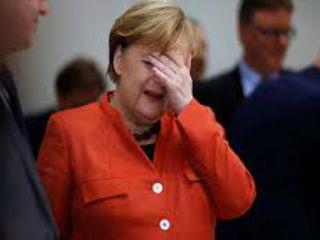
The EU needs a point of reference, and this role cannot but be assumed by the president of the European Commission. The EU cannot be allowed to be caught up in the power games of nations. Now is the time for all concerned parties to assume their historic responsibilities, set aside their selfish considerations and move forward.

EU needs leadership

By: EBR | Wednesday, July 1, 2015

Once upon a time in Europe there was a group of independent and well-developed states. Having fought against each other for centuries, they finally realised that in a globalised world they were not really independent and that it would be better for them to join forces.
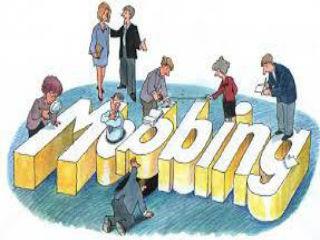
Above all, precautionary measures should be taken, in order for mobbing in the workplace to be decreased, if not eliminated.  Education needs to become more anthropocentric, based on the values and principles that emblazon the respect for others and the right to differ, in order for the humans to face their colleague as a companion in life and not as a competitor.

Mobbing in the workplace

By: EBR | Friday, June 26, 2015

A hostile working environment, in which offensive or insulting remarks, persistent criticism, personal abuse, or even physical abuse and threats prevail, is a reality for many employees in both public and private organizations and has become increasingly common in Europe over the recent years.
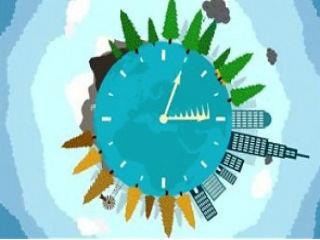
Coincidently, an important opportunity is being presented for Greece as the European Commission, since 2014, has started the legislative preparation for the official turn into a Circular Economy.

Circular economy and productive reform

By: EBR | Tuesday, June 23, 2015

If the country had the necessary production infrastructure, it could turn the Use of Sustainable Materials, an initiative supported by the EU, into a source of wealth.

Speaking not long ago to students in Taipei, I remembered how in my youth all the toys coming from China were “Made in Taiwan”. Then in the 1980s I witnessed the economic and industrial turnaround that upscaled the Taiwanese economy. The government’s policy was focused on technology, research and development, engineering, manufacturing and human resources.

The competitiveness of Europe is the priority

By: EBR | Monday, June 15, 2015

For Europe, there are lessons to be learned from Taiwan. When there is the political will that stems from consensus among economic and social actors on what to achieve, and when there is a consistent and a well-defined roadmap, delivery is possible. The competitiveness of a country is manageable.
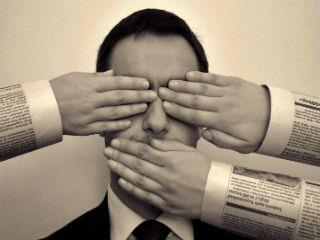
The main reason for concern is an unreasonably broad definition of "trade secrets". Companies could sue anyone who "unlawfully acquires, uses or discloses" a secret business information. Trade unions criticised that even informations about future mergers or redundancies could fall under the EU-directive.

Why the new EU directive on trade secrets protection is a threat to media freedom

By: EBR | Monday, June 15, 2015

A new EU-directive is likely to threaten investigative journalism throughout Europe. Its main objective is the protection against disclosure and theft of secret business information like patents, innovative technologies or recipes.
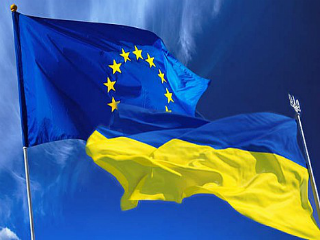
Ukraine, it is argued, has to resolve "huge" internal problems, establish genuine and lasting peace in Donbass and the rest of Ukraine society, solve all ethnic and inter-regional disputes and introduce "desperately needed" constitutional reforms.

Ukraine conflict puts spotlight on country′s "suitability" for EU accession

By: EBR | Monday, June 8, 2015

The current crisis of power in Kiev has now triggered demands by many other regions in trouble-torn Ukraine for autonomy and special status.

When a crowd of angry Americans threw 45 tons of tea into Boston harbor in 1773, their concern was the under-enforcement of the principle of ‘no-taxation without representation’ – that governments should not impose fiscal obligations on their citizens without them having a saying on it.

A European approach to corporate tax

By: EBR | Thursday, April 16, 2015

State aid rules however have little to do with convergence of fiscal policies, and the Commission has never said that this should ultimately be the outcome of its investigations. The idea of state aid control is not to prevent free-riding as such.

In his book The Geopolitics of Emotion, he identified the three basic sentiments of hope, humiliation, and fear as the predominant drivers that shape the geopolitics of the three main regional power centers.

Europe Has More to Fear than Fear Itself

By: EBR | Thursday, April 16, 2015

The French foreign policy analyst Dominique Moïsi in 2009 came up with a new set of analytical categories to make sense of the post-9/11 world.

Greek citizens voted en masse for Syriza. This is a cry of hope for a fairer society and a clear rejection of the austerity policy implemented by the European Union and supported by Antonis Samaras.

Europe must listen to its people

By: EBR | Thursday, April 16, 2015

Imposing reforms that are sometimes considered humiliating is the best way to jeopardize the construction of Europe, and plant the seeds of social devastation, populism and extremism.

Political economy – as it was then called – emerged in the eighteenth century, when the Scottish philosopher Adam Smith pursued “an inquiry into the nature and causes of the wealth of nations.”

Rethinking How Economies Work

By: EBR | Thursday, April 16, 2015

While many excellent economists have shed light on a wide variety of subjects, we still have only a sketchy grasp of how economies work – and what passes for economic “science” is often bunk.

The aim of the survey was to find out what the young people of Europe think about the European Union.

Results of the Erasmus Generation Survey

By: EBR | Monday, March 30, 2015

Think Tank ThinkYoung and Bureau Burson-Marsteller recently released the results for the Erasmus Generation Survey which they carried out late last year, as part of the Europe Decides Initiative.

Europe Crosses the Rubicon! It may be odd to use a Roman metaphor to describe a Greek political event, but in this case, it’s apt.

Austerity vs. Democracy in Greece

By: EBR | Friday, March 6, 2015

Just as Julius Caesar crossed the Rubicon River because he could, in spite of the warnings of the Roman Senate not to, so Alex Tsipras, leader of the anti-austerity party, Syriza, has decided to try to end austerity in Greece, in spite of Europe’s leaders saying he shouldn’t.

Throughout the past several years, the sports sector has continued to grow rapidly whilst its economic impact is often overlooked.

How Europe can learn from sports industry successes

By: EBR | Friday, February 27, 2015

Yet sport is one of those very rare and precious industries in the EU, dynamic, competitive, rapidly growing and a sector in which foreign markets are clamoring to buy our products and indeed invest in.

EurActiv Greece reports. After making its voice heard in the debate over sanctions on Russia, the new government in Athens is now making its opposition known to the EU-US trade deal, TTIP.

Syriza-led Greek parliament ‘will never ratify TTIP’

By: EBR | Monday, February 2, 2015

The newly-elected government in Athens has always been suspicious of the Transatlantic Trade and Investment Partnership (TTIP) and will use its Parliament majority to sink the EU-US trade pact, claims a former Syriza MEP now turned minister.

Although Turkey has been officially recognised as a candidate for full membership at Helsinki summit of European Council in 1999, accession negotiations which began as early as 2005 continued till today.

Turkey and the EU: What does interregional cooperation have to contribute to accession negotiations

By: EBR | Wednesday, January 28, 2015

Notably, Turkey serves for the future of Europe being founding members of the Council of Europe (CoE) since 1949, the Organisation for Economic Co-operation and Development (OECD) since 1961 and the Organisation for Security and Co-operation (OSCE) since 1973.

In the wake of new and potentially damaging "revolving door" revelations, European Union lawmakers are being urged to draw up new "conflict of interest " rules for former MEPs and commissioners.

Campaigners demand new EU rules in wake of new revolving doors revelations

By: EBR | Thursday, January 22, 2015

"Our work is tailored to the European decision-making structures and processes in all their commercial, cultural and political diversity. EUTOP has had a strong network of contacts among political decision-makers in Brussels and selected EU member states for more than 20 years".

The real problems of Europe are threefold – the lack of competitiveness, structural rigidities and over-indebtedness.

Greek Theater and Europe’s Future

By: EBR | Thursday, January 15, 2015

Why politicians welcome the Grexit debate – and why it will do little to solve Europe’s woes.

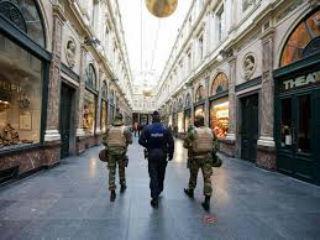
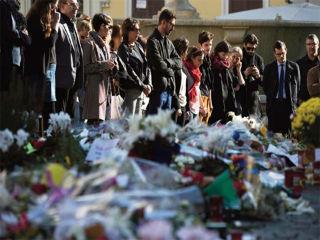
This is the most bloody attack ever carried out against journalists in France or anywhere in Europe.

AEJ Statement condemns ′barbaric and cold-blooded′ killings in Paris magazine attack; urges effective protection

By: EBR | Thursday, January 8, 2015

The Association of European Journalists utterly condemns the vicious, cold-blooded attack on the offices of the satirical magazine Charlie Hebdo in Paris which has left 10 media staff and 2 policemen dead and many others injured, according to reports.

Three potential scenarios that broadly reflect the range of potential outcomes.

3 Scenarios for Europe

By: EBR | Wednesday, December 17, 2014

After Europe's economic and political struggles, no one can be certain of the path from here, so three potential scenarios, that broadly reflect the range of potential outcomes, are being offered.

To ensure their energy security, the EU’s member states need to be able to help each other in times of need.

Energy security is within our grasp if the EU plays as a team

By: EBR | Monday, December 15, 2014

Adequate interconnection and reverse flow options are crucial, and a solid infrastructure is indispensable if Europe’s internal energy market is to be achieved.

Pages: Previous Next

EU Actually

Volkswagen is going to lay off 100.000 employees: EU’s automotive industry is in serious trouble

N. Peter KramerBy: N. Peter Kramer

In his weekly column, N. Peter Kramer, writes about the alarming decline of the largest industrial employer in the EU, Volkswagen. EU leaders and the entire automotive sector did not seem to know how to handle China.

Europe

Majority think EU is a "place of stability in a troubled world"

Majority think EU is a "place of stability in a troubled world"

While economic concerns grow, EU citizens value the peaceful, protective and cooperative nature of the EU.

Business

How Much Pressure Can European CEOs Take?

How Much Pressure Can European CEOs Take?

There was a time when the job of the CEO was difficult but relatively clear: grow the business, beat the competition, manage costs, satisfy shareholders, inspire employees and avoid major reputational mistakes. That world has disappeared.

MARKET INDICES

Powered by Investing.com
All contents © Copyright EMG Strategic Consulting Ltd. 1997-2026. All Rights Reserved   |   Home Page  |   Disclaimer  |   Website by Theratron