by
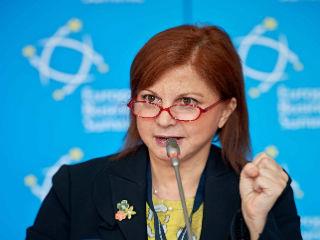
Hande Özsan Bozatli*
Turkey applied to accede to the
European Economic Community (EEC), EU’s predecessor, as early as 1987.
Notably,
Turkey serves for the future of Europe being founding members of the Council of
Europe (CoE) since 1949, the Organisation for Economic Co-operation and Development
(OECD) since 1961 and the Organisation for Security and Co-operation (OSCE) since
1973.
Moreover, by 1995 Turkey became a part of the Customs Union, which
allowed her to trade with EU member states without the customs duties normally
implemented on trade with non-EU countries.
Although Turkey has been officially
recognised as a candidate for full membership at Helsinki summit of European Council
in 1999, accession negotiations which began as early as 2005 continued till
today.
Irrespective of these negotiations
remaining unresolved in addition to ongoing questions as to whether Turkey will
succeed in achieving full member status, the regions of Turkey have already
started cooperating with the EU, since 2006, through the Assembly of European
Regions (AER).
This interregional cooperation has not always been a routine in
Europe; it has undoubtedly come a long way since the AER’s creation.
Established in 1985, AER has, for 30 years, been instrumental in unifying the
development and cooperation of regions in Europe by gradually developing cross
boarder programmes.
As the President of AER,
since 2013, I am convinced, now more than ever, that the regional level is key
to reinforcing and promoting the values of the EU and creating a strong Europe.
AER held the Autumn Bureau meeting in Ankara, Turkey, on 16-17 December 2014,
taking this as an opportunity, with the support of the Turkish EU Ministry, to
organise a gathering of all Turkish cities and metropolitan municipalities.
During this meeting it was made evident that the Turkish local actors are
admittedly interested in what AER has to offer, with specific reference to: Increasing the regions’ political influence
within the European institutions;influencing national decision-makers; Promoting regional opportunities and increasing
regions’ visibility; Facilitating
interregional communication.
Regretfully, Turkish partners did express their underlying doubts and fears as to the true value, and benefits that would come from the EU.
Regretfully, Turkish partners did express their underlying doubts and fears as to the true value, and benefits that would come from the EU.
They also resented the haste in which
Turkey is regularly condemned by EU representatives being ineligible for EU
membership.
Being a Turkish native,
as well as holding a position as a politician running a European political
organisation, places me in a symbolic and privileged position to be able to
pursue and direct the continued development of Turkey and EU relations;
the
development of which looks to be promising. We already represent over 200
regions and 35 countries, 40% of which are outside the EU.
AER offers its utter
support and expertise in order to make regional authorities a target when
promoting Europe.
The meeting with the Turkish local actors in Ankara
compounded once again that a bottom up
approach is extremely important, and hence targeting regional politicians
when pursuing the activities mentioned above.
Given that some Member
States may call for referendums to decide upon the accession of Turkey to the
EU, the role of regional politicians becomes much more important in influencing
individual citizens.
*AER President
 By: N. Peter Kramer