Edition: International | Greek
MENU

Home » Analyses

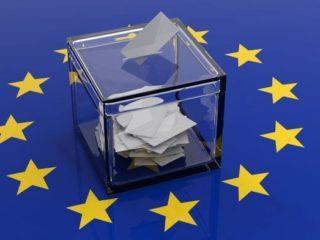
The IMF reckons Europe’s under-34s have less than 5% of the net wealth. Although as individuals we all welcome greater longevity, its downside is that parents no longer pass on their assets and savings at the same rate as before.Tinkering with taxation is the obvious way to correct this, along with doing far more to stimulate fertility in a Europe where couples average only 1.6 children. Revolutionary steps to subsidise childcare and home ownership could help to defuse the demographic time-bomb.The snag is that democracy is set to be the victim of demography. Across the EU, the under-40s will – within a decade or two – be outnumbered by their elders, and so most probably outvoted. Introducing policies that favour workers at the expense of pensioners is likely to be difficult, if not impossible.

Calling all meps: Think big to defy populist scare-mongering

By: EBR | Tuesday, April 9, 2019

Giles Merritt calls on mainstream candidates for the European Parliament to challenge populist rivals by focusing on the approaching ’generation wars’ due to Europe’s ageing

But after many nights in emergency rooms and too-long stays in hospitals, of watching my nieces slowly lose their father, I got a glimpse of what community looks like. It was the people who turned up before they were asked, to do things they didn’t have time to do. Neighbors who collected kids from school and came to hospitals to sit. Friends who stayed. Groups of people who materialized to make lunch for four kids for months because their parents couldn’t.

The only metric of success that really matters is the one we ignore

By: EBR | Friday, March 22, 2019

On a blustery March day five years ago, I locked arms with my mother and walked into a church in Maplewood, New Jersey to bury my brother. Bagpipes played “Amazing Grace.”
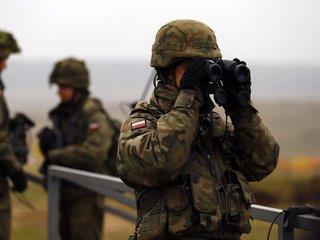
Yet in reality, there are several examples in which Germany undermines the architecture that was built after World War II and which brought stability, security, and prosperity to Europe.  The first is NATO. Germany is not pulling its weight when it comes to a serious commitment to burden sharing. Burden sharing is not a Trump mantra. Since the end of the Cold War, when defense budgets across Europe were slashed, Washington began to warn the Europeans that they had to spend more.

The Credibility of German Multilateralism

By: EBR | Tuesday, March 19, 2019

Berlin’s consistent calls to protect multilateralism in the wake of President Donald Trump’s verbal attacks on the post-1945 institutions often ring hollow
In their 2011 study of more than 45,000 crash victims over 11 years, researchers from the University of Virginia found women drivers were much more likely to be injured in a crash than men.  They said this was because car safety features had been designed for men. The positioning of head restraints, as well as women’s shorter height, different neck strength and musculature, as well as their preferred seating position, meant they were more susceptible to injury.

7 surprising and outrageous stats about gender inequality

By: EBR | Friday, March 15, 2019

Around the world, the achievements of women are being celebrated on International Women’s Day, which began back in 1911. But the day also highlights the work that remains to be done in order to achieve gender parity

Against the backdrop of news stories about how the web is misused, it’s understandable that many people feel afraid and unsure whether the web really is a force for good. But given how much the web has changed in the past 30 years, it would be defeatist and unimaginative to assume that the web as we know it can’t be changed for the better in the next 30.

The web is 30 years old. What better time to fight for its future?

By: EBR | Friday, March 15, 2019

Today, 30 years on from my original proposal for an information management system, half the world is online. It’s a moment to celebrate how far we’ve come, but also an opportunity to reflect on how far we have yet to go
The Belt and Road Initiative is the most significant diplomatic project of the twenty-first century, the equivalent of the mid-twentieth-century founding of the United Nations and World Bank plus the Marshall Plan all rolled into one. The crucial difference: BRI was conceived in Asia and launched in Asia and will be led by Asians. This is the story of one entire side of the planet—the Asian side—and its impact on the twenty-first-century world.

Why we're living in the 'Asian Century'

By: EBR | Friday, March 15, 2019

When we look back from 2100 at the date on which the cornerstone of an Asian-led world order began, it will be 2017. In May of that year, sixty-eight countries representing two-thirds of the world’s population and half its GDP gathered in Beijing for the first Belt and Road Initiative (BRI) summit
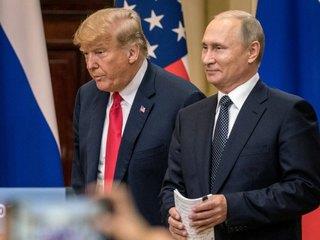
Autocracy flourished in 2018 because when Washington pursues a so-called realist policy of global retrenchment, it looks for dictators it thinks it can rely on.  This was Richard Nixon and Henry Kissinger’s strategy in the late 1960s and early 1970s. The famous Nixon doctrine, which aimed at reducing U.S. commitments overseas, put all of Washington’s chips on the Shah of Iran and the Saudi monarchy.

Springtime for Strongmen

By: EBR | Tuesday, March 12, 2019

The world’s authoritarians are on the march—and the West helped pave the way

Economists have been much sought after by businesses, governments, and society at large, their insights seen as useful in every sphere of life. Popularized economics and economic-type thinking have produced an entire genre of best-selling books. At the root of all this influence is the notion that economics provides the most powerful lens through which to understand the modern world.

The End of Economics?

By: EBR | Tuesday, March 12, 2019

Human beings are rarely rational—so it’s time we all stopped pretending they are

We predict that 2020 will be known for advanced phishing attacks, due to the number of new phishing kits available on the dark web. These kits enable people with only basic technical knowledge to run their own phishing attacks. With more tools available, phishing will become an even more dangerous attack method.

Here are the biggest cybercrime trends of 2019

By: EBR | Friday, March 8, 2019

Cybercriminals are using more advanced and scalable tools to breach user privacy, and they are getting results. Two billion data records were compromised in 2017, and more than 4.5 billion records were breached in the first half of 2018 alone

With nationalist policies and protectionist outlooks, populist leaders excel at the kind of rhetoric that plays well to supporters on their home turf while ratcheting up international tensions. But it can have a substantial impact on trade, destabilize financial markets and the oil sector, and provoke trade wars of the kind witnessed between China and the US.

The top 10 risks to the global economy, according to the Economist Intelligence Unit

By: EBR | Friday, March 8, 2019

The Economist Intelligence Unit (EIU) has compiled a list of what it regards as the top 10 global risks of 2019. It makes for sobering reading, with a number of active threats to stability and security only likely to get worse before they get any better
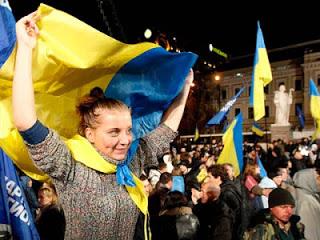
The near absence of Ukraine in the Western media in the run-up to an election that is of critical importance for Ukraine’s reform process means that many will be caught by surprise if one of two possible scenarios materializes: one, if Zelensky wins; or two, if the election result is contested, potentially pitting the top candidates and their supporters against each other.   The latter could happen if Zelensky wins and parts of society do not accept the outcome. It could also happen if either Poroshenko or Tymoshenko win and the losing candidate questions the result and the legitimacy of the winner.

Ukraine: What Comes After the Presidential Election?

By: EBR | Thursday, March 7, 2019

It is high time for Europe and the United States to pay much closer attention to Ukrainian politics and the whole range of possible outcomes of the elections ahead
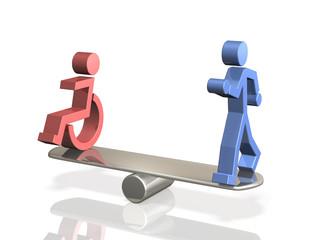
There is no room for complacency, however. ‘Gender deniers’ no longer lurk in the corners, they are in the spotlight. The push-back against women is serious. Take your foot off the pedal – even for a minute – and there’s a danger of slippage, of the return to old mindsets and of suffocatingly restrictive traditions.

''Gender deniers'', feminist foreign policy and the myth of ''STRONGMEN''

By: EBR | Tuesday, March 5, 2019

So-called "strongmen" may strut on the world stage but powerful women are now pushing back

Technical, economic, and social factors will determine the pace and extent of automation.  Continued technical progress, for example in areas such as natural language processing, is a key factor. Beyond technical feasibility, the cost of technology, competition with labor including skills and supply and demand dynamics, performance benefits including and beyond labor cost savings, and social and regulatory acceptance will affect the pace and scope of automation

A combined future of labour that works

By: EBR | Monday, March 4, 2019

Advances in robotics, artificial intelligence, and machine learning are ushering in a new age of automation, as machines match or outperform human performance in a range of work activities, including ones requiring cognitive capabilities
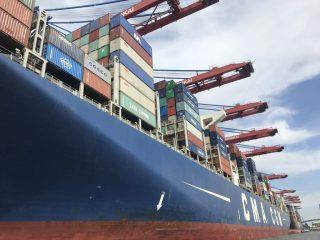
According to the project, probunkers will design, build and operate a fleet of modern, eco-friendly LNG bunkering vessels to brace the ever-changing needs of global shipping. At this stage, the company is interested to build seven (7) LNGBVs, which will operate in various ports worldwide, and invites companies to submit initial, concept design proposals, along with outline specification and General Arrangement for such type of vessel.

Probunkers invites proposals for building 7 LNG Bunkering Vessels

By: EBR | Monday, March 4, 2019

Full steam ahead for the company’s ambitious LNG Bunkering project. A world-class investment opportunity

Cabral talks to Greek News Agenda*about the post memorandum era for Greece stressing that the Eurozone adjustment programs were quite destructive to debtor economies like Greece’s and Portugal’s, because their objective was to make sure that these countries could service their debts in the short and medium term, regardless of whether the debt was sustainable and or could ever be fully repaid.

Economics Professor Ricardo Cabral: “Eurozone is confronting again its original sin”

By: EBR | Thursday, February 28, 2019

Ricardo Cabral is assistant professor of Economics, former Vice President, and former Economics and Management Department Head of the University of Madeira, Portugal. He holds a PhD in Economics from the University of South Carolina

For more than a decade, healthcare workers from doctors to hospital administrators have been warning EU governments that by 2025 there will be a dire shortage of qualified professionals. From top-flight surgeons to relatively humdrum nurses, there simply won't be enough of them.

Europe's ageing crisis: Coming soon to a hospital near you!

By: EBR | Tuesday, February 26, 2019

Giles Merritt reports on the dramatic shrinkage of Europe's doctors and healthcare professionals
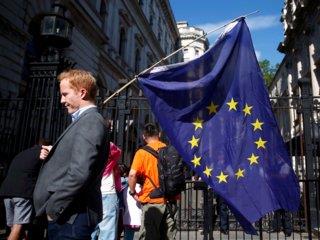
In short, this is about a game changer: by vastly expanding its diplomatic outreach and by setting up permanent military bases in the region (like the United States, United Kingdom, and France have done), Russia has altered several strategic parameters in the Middle East region to its advantage.  Similarly, Iran—through a policy sometimes called the “axis of resistance”—has developed its Mediterranean ambitions and reinforced its military involvement in Lebanon and Syria in a clearly anti-Western and anti-Israeli posture

Four Game Changers in Europe’s South

By: EBR | Tuesday, February 26, 2019

Iran, Turkey, Russia, and the United States are deepening their footprints in the Middle East. The EU must now confront this new geopolitical landscape

Prime Minister Netanyahu travels a lot abroad. February 21, he flies to Moscow for talks focused on Iran’s efforts to establish military presence in Syria. He will meet President Putin for the first formal talks since Russia blamed Israel for the downing of a military aircraft by Syrian anti-aircraft fire last year.    This will be the second meeting between the two leaders since Syria’s downing of a Russian intelligence plane in September, an incident Russia said Israel was indirectly responsible for and which strained Jerusalem-Moscow ties. Netanyahu and Putin met briefly in Paris in November on the sidelines of ceremonies commemorating 100 years since the end of World War I.

Bring the April elections in Israel a surprise?

By: EBR | Tuesday, February 19, 2019

Elections for the 21st Knesset, Israel's national parliament, are on April 9, 2019. At the moment there are thirteen political parties in the parliament divided over 120 seats. The big question is, will prime minister Benjamin Netanyahu be reelected?

Too many governments, for too many years, have shrugged off their responsibility. They have paid lip service to the importance of girls’ education - and gender equality - but then left the real heavy lifting to NGOs, philanthropists and the private sector.  Multilateral development banks are focused on the big picture issues of development such as energy, connectivity and climate change. But there can be no big picture development unless little girls grow up to be educated, emancipated and active women.

Thank heaven for educated girls:Why gender equality is key to sustainable development

By: EBR | Tuesday, February 19, 2019

Getting girls in classrooms is a key condition for implementing Agenda 2030. So how about if the EU made girls’ education a key condition when it provides countries with development aid?
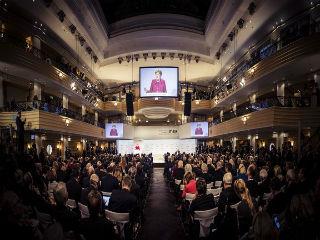
Zarif’s speech exposed the deep divisions between the United States and the Europeans over the Iran nuclear deal. Despite Chancellor Angela Merkel’s attempts on Saturday to explain why it was necessary to preserve the deal, while at the same time acknowledging Iran’s disruptive role in Lebanon, Syria, Yemen, and Gaza, there was no meeting of minds between both sides of the Atlantic.

Misplaced Nostalgia for the Old West

By: EBR | Monday, February 18, 2019

This year’s Munich Security Conference ended as it begun: a bickering West reluctant to address the new geostrategic realities

Pages: Previous Next

EU Actually

Even Fox News participates in boycott of the White House after excluding CNN

N. Peter KramerBy: N. Peter Kramer

In his weekly column N. Peter Kramer writes about President Trump’s denying CNN, Politico and MS reporters access to the White House press conferences. The three news media are going to court!

Europe

The Uncomfortable Truth About EU Enlargement

The Uncomfortable Truth About EU Enlargement

Before the next wave of EU enlargement takes place, the union needs to grapple with thorny questions of how power is distributed among its members.

Business

Businesscraft: Japan’s Quiet Discipline for a Fractured World

Businesscraft: Japan’s Quiet Discipline for a Fractured World

For almost thirty years after the end of the Cold War, geopolitics stayed away from the corporate boardroom. Geopolitical considerations belonged to the foreign ministry or to a dedicated risk committee back at headquarters, and rarely crossed a CEO’s desk.

MARKET INDICES

Powered by Investing.com
All contents © Copyright EMG Strategic Consulting Ltd. 1997-2026. All Rights Reserved   |   Home Page  |   Disclaimer  |   Website by Theratron
