Edition: International | Greek
MENU

Home » Analyses

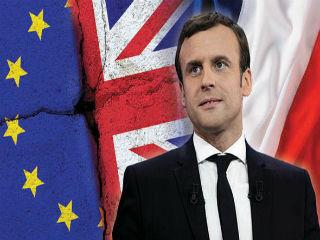
Sadly, acting as the biggest block to any social policy improvements in the EU isn’t only a Tory tradition. Yes, exploitative British bosses, traditional supporters of the Conservative party, have always been keen on minimizing their wage bill and avoid paying social security contributions. They have thus seen to it that many workers from poorer EU countries were “posted” to Britain.

Worker Rights: Macron Vs. Britain

By: EBR | Thursday, November 2, 2017

Macron’s important reform move on EU posted workers’ directive goes to complete waste in the UK

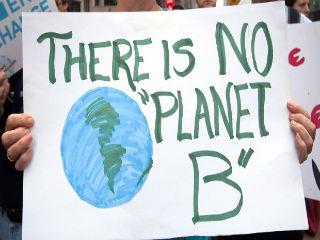
Protecting our planet through climate action on multiple fronts

By: EBR | Tuesday, October 31, 2017

Climate change is a scientific fact, and its effects are already being distinctly felt around the world, threatening human health, the places we inhabit, and the sustainability of our socioeconomic systems
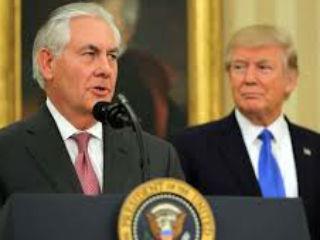
With White House aides such as presidential son-in-law Jared Kushner and others given a major role in foreign policy, the question of ‘who is responsible for what segment’ of national security remains an open one, said a senior official in the government of a close European ally, speaking on the condition of anonymity to talk about sensitive diplomatic issues. Unpredictability “may be a useful tool with adversaries,” he said, but with allies it creates ‘uncertainty and irritation’.

Rex Tillerson: puppet on a string of Trump?

By: EBR | Tuesday, October 31, 2017

How is US Secretary of State Rex Tillerson doing his job? The former chairman and CEO of Exon Mobil Corporation is in charge since February 1, 2017

Space could be the final frontier for the world’s digital divide

By: EBR | Monday, October 30, 2017

What would happen if we could send an SMS from literally any place on Earth to any other place on the planet?” That’s the best framework for impact I can think of for satellite communications in development

The New Silk Road: 8 steps to ensuring China’s $900 billion project is a success

By: EBR | Monday, October 30, 2017

The Silk Road was the name given in 1877 by the German geographer Ferdinand von Richthofen to the ancient network of trade routes linking China to central and western Asia, India and the Mediterranean region

Accelerating Europe’s digital transformation

By: EBR | Thursday, October 26, 2017

The digital and physical worlds are converging, a transformation led by technologies such as cloud computing and the ‘internet of things’ (IoT)
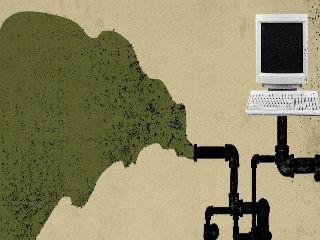
In the wrong hands, the misuse of surveillance-based personal data will have catastrophic consequences for us as individuals and for society as a whole. In an explicitly or implicitly totalitarian state, this kind of information could be used to predict and identify those people who don’t agree with certain government policies and sanction them even before they can exercise their democratic rights.

Digital fascism rising?

By: EBR | Tuesday, October 24, 2017

Any claim that we humans are (already) contending with a new form of – this time digital – fascism will immediately be discredited as overblown

The LIBE report sets a new standard for inflexibility and a refusal to embrace technology innovations, according to DIGITALEUROPE. ‘We need an ePrivacy regulation that ensures a high level of legal protection for confidentiality of communications, and one that enables digital innovation – not one that chooses one over the other’.

EP Report on ePrivacy is ‘unbalanced and lacks broad support’

By: N. Peter Kramer | Monday, October 23, 2017

Only a small majority of the European Parliament's Committee on Civil Liberties, Justice and Home Affairs (LIBE) voted in favour on the report on ePrivacy
The potential for technologies to enable smart societies is rising. For example, internet-of-things sensor applications are envisioned to deliver a wide range of services, from smart water to industrial controls to e-health. The market for smart technologies is predicted to be worth up to $1.6 trillion by 2020, and $3.5 trillion by 2026. Surely, given the size of the opportunity, increasing interest among governments and policy makers, and the explosion of relevant technologies, we can start to understand what smart societies are and establish standards and ideals to aim for.

The society of the future looks nothing like you might imagine

By: EBR | Friday, October 20, 2017

What is a “smart” society? While flights of imagination from science-fiction writers, filmmakers, and techno-futurists involve things like flying cars and teleportation, in practice smart technology is making inroads in a piecemeal fashion, often in rather banal circumstances
Smedegaard added,”As we are also seeing positive developments in the EU economies as a whole, we are confident about the future. This is good news and supports our plan of deploying larger and more environmentally friendly ships on our North Sea routes in 2019 and 2020. ”It is also good news for the customers, manufacturers, exporters and transport companies we serve. Continued growth in trade will enable them to grow or maintain their activities and the many jobs they create,” he says.

Cross-channel trade continues to grow despite Brexit fears

By: EBR | Thursday, October 19, 2017

The UK Government's recent initiative to maintain the free flow of goods to mainland Europe has been welcomed by DFDS, the leading cross-channel ferry operator
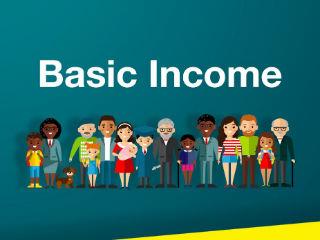
In terms of bare minimum, the adequate level of UBI is determined by the degree to which it would guarantee the financial means for the daily 2,500 calorie intake needed for survival. A higher level of UBI would also buy clothes and shelter. There are ongoing and planned basic income experiments in Finland, Kenya, the Netherlands, Ontario, Scotland, Uganda and the United States. In all of these, benefits do not go beyond the absolute poverty threshold. But poverty is a relative concept. People are poor if they cannot fully participate in the societies in which they live. This notion applies not only to affluent societies in Europe and in the US, but also to low and middle-income countries.

Basic income: Not a panacea, but a step towards a new social contract

By: EBR | Wednesday, October 18, 2017

Discussions about the current and future risks of technological disruptions and ensuing labour market insecurities have brought the idea of a universal basic income (UBI) to everyone’s lips

There are now an average of 500 demonstrations a day in China, albeit largely peaceful. The regime believes that the greatest threat emanates not from possible military attacks from foreign powers, but uprisings among their own people that could be triggered by a spark on social media.

Social media in China: The great distraction

By: EBR | Wednesday, October 18, 2017

Worried about social media helping to create popular movements, China runs an elaborate system of censorship and manipulation

From a strategic perspective, three main issues have to be addressed in a potential communication crisis strategy. The first one refers to the public safety component. Can the company and the manufacturers guarantee that the products based on the suboptimal steel do not create safety concerns for the consumers? If this is the case, what measures are put in place to immediately alleviate and address the public concerns? What are the best tools to reassure the public, to create the sentiment that ”we are all in this together” and to demonstrate that someone is well in charge of the whole situation?

Crisis reputation management: quick steps for Kobeiko and brand Japan

By: EBR | Tuesday, October 17, 2017

Corporate crises are the new norm. Every couple of months the world finds out about some corporate missteps which, given the involved companies, create panic on the international markets and make the stock indices turn red

First of all, Greece is the only country that has promoted a comprehensive active diplomatic agenda for stability and cooperation in one of the most important but also unstable regions in the world.

Greece as a strategic partner of the US in Southeast Europe and the Eastern Mediterranean

By: EBR | Tuesday, October 17, 2017

Today, Greece is finally coming out of a severe, deep recession that lasted more than 7 five years, cost a quarter of its GDP, resulted in 27% unemployment and led to an enormous brain drain of our most qualified young professionals

While China is becoming a rule maker in geopolitics, Taiwan has made considerable achievements in democracy, freedom, rule of law and human rights. The US is still probably Taiwan’s most important friend. The relationship, forged during World War Two and the Cold War, underwent its sternest test in 1979, when President Jimmy Carter ended US diplomatic recognition of Taiwan in order to concentrate on burgeoning ties with China.

Taiwan will continue to press for close cross-strait relations with mainland China

By: EBR | Monday, October 16, 2017

Dr. Chang Tien-Chin, deputy minister with the Mainland Affairs Council in Taiwan, was in Brussels to outline current relations between the two sides

Artificial Intelligence will clearly offer new possibilities in reconnaissance, identification, raising the tempo of operations and potentially in decision-making too. But the decision to engage in combat will always be a political decision, and as such it will always depend on whether or not humans actually want to delegate that responsibility to a machine.

Artificial Intelligence: The end of the human race?

By: EBR | Thursday, October 12, 2017

Artificial Intelligence can bring huge benefits for society. And despite the headlines, fears of AI taking over are nothing more than Holywood fantasy

The respondents themselves (based on their IP addresses) were located across multiple regions (see Figure 4) and were drawn from the upper ranks of their organisations. The organisations represented in the sample varied enormously in size and age. They also varied greatly in the number of layers in the hierarchy (from 1 to 33). By layers, we mean the number of bosses that stand between the most junior employee and the CEO. Figure 1 shows average layers for organisations in different size categories.

The shape of hierarchy and why it matters

By: EBR | Thursday, October 12, 2017

Today’s organisations are shaped more like Christmas trees than pyramids

Crises as opportunities. This idea is seen by many as a cliché, but it’s more like common wisdom seldom truly understood. Politics is, par excellence, the place of change and reinvention, often under pressure from events and public opinion. To use a paraphrase, politics abhors not a vacuum, but stability. Reinvent yourself or die politically is the motto (or the nightmare) of every true political leader. The propensity for change has taught politicians some valuable lessons: preach the need for change but never reform too much at once; take calculated risks; leverage flaws and imperfections; have people with various skills and social access in your team; take advantage of absence and silence and befriend unpredictability.

Political mindset: five lessons for CEOs

By: EBR | Monday, October 9, 2017

Government should be run like a business and politicians should follow what the business leaders are doing, matching their drive for efficiency and innovation

While China is already the world leader in drones - companies such Shenzhen-based DJI have 70% of global market share - it is coming up with increasingly innovative ways of dealing with the ever-growing desire for quick delivery from e-commerce. This month saw the testing of what appears to be the world’s first large cargo drone, while the market leaders continue to drive innovation and adoption in new segments - such as fresh food delivery - catering to China’s growing middle-class of consumers.

Seven things we learned about China in September

By: EBR | Friday, October 6, 2017

This month there was tremendous noise around the boom and bust of bitcoin exchanges and initial coin offerings (ICO), with lots of speculation around the reasons behind the government’s policy moves in this area

The coming decade will see more foreign chairs in Italy, Denmark and the U.K. Singaporean chairs, currently quite homogeneous in terms of being born and raised in Singapore, understand that as  boards become more diverse, the way they work will change. The current offline paradigm of decision making – in which decisions are made outside of board meetings – will have to be sent back to the board room.

How boards will look in ten years

By: EBR | Thursday, October 5, 2017

More women and a wider array of professionals are likely to fill future boards, while technology will play a bigger role in their work

Pages: Previous Next

EU Actually

Ukraine may buy for 6 billion euros Chinese drones with EU money

N. Peter KramerBy: N. Peter Kramer

In his weekly column, N. Peter Kramer writes about the Ukraine buying for 6 billion euros drones in China with EU money. Is it a threat for Taiwan?

Europe

Diplomacy intensifies over Cyprus

Diplomacy intensifies over Cyprus

United Nations secretary-general envoy Maria Angela Holguin will be in Brussels on Wednesday for meetings seen as important to European Union preparations for a possible revival of Cyprus reunification talks ahead of an expected visit by Secretary-General Antonio Guterres to Cyprus next week.

Business

How Much Pressure Can European CEOs Take?

How Much Pressure Can European CEOs Take?

There was a time when the job of the CEO was difficult but relatively clear: grow the business, beat the competition, manage costs, satisfy shareholders, inspire employees and avoid major reputational mistakes. That world has disappeared.

MARKET INDICES

Powered by Investing.com
All contents © Copyright EMG Strategic Consulting Ltd. 1997-2026. All Rights Reserved   |   Home Page  |   Disclaimer  |   Website by Theratron