Edition: International | Greek
MENU

Home » Analyses

Intelligence showed a positive linear relationship with leadership effectiveness up to a certain point. But the association flattened out and then started to reverse at an IQ of about 120.  When the leaders’ IQ scores rose to 128 or above, the association with less effective leadership methods was clear and statistically significant, the British Psychological Society notes.

Can being too intelligent make you a less effective leader?

By: EBR | Friday, November 24, 2017

Asking staff about the qualities of a good leader is a surefire way to get them talking
The biggest sticking point in COP23 has been on climate finance. Under Article 9 of the Paris Agreement, developed countries pledged to “provide financial resources to assist developing country Parties with respect to both mitigation and adaptation”, and to quantify every two years their paid contributions as well as level of financial support they will provide in the future.

Climate finance, the sticking point in COP23

By: EBR | Tuesday, November 21, 2017

Rich countries had pledged to raise $100 billion each year in climate finance for developing countries by 2020. As of September 2017, they had pledged just $10.3 billion. And the question of who should pay remains unanswered.

Why the amount of emails we’re receiving is stressing us out

By: EBR | Tuesday, November 21, 2017

Email is integral to the way that many of us work. Yet there is no universally accepted standard for its use, which leaves many of us struggling to find strategies that will help us work effectively without also overstressing or causing email fatigue

Today, we know the neoliberal policies initiated by Reagan and Thatcher have been successful at generating growth: the United States and the UK have outpaced others. But we also know that the same neoliberal policies have failed at redistributing resources and opportunity. If individual economic success is deemed the highest possible achievement, poverty becomes justified by someone’s lack of effort or ability.

How the American dream turned into greed and inequality

By: EBR | Friday, November 17, 2017

The American Dream is broken. Paul Ryan, speaker of the House of Representatives, recently stated that "in our country, the condition of your birth does not determine the outcome of your life."

Therefore, once again we stand on the brink of a technological revolution that will fundamentally alter the way we live, work and relate to one another. In its scale, scope and complexity, the transformation will be unlike anything human kind has experienced before.

New goals in a new era

By: Athanase Papandropoulos | Friday, November 17, 2017

According to the 96 years old French philosopher Edgar Morin, we live in the era of complexity
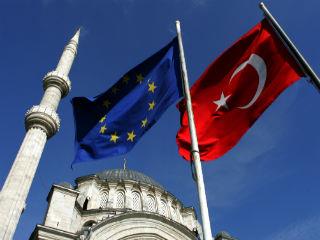
Looking ahead, as a deep political crisis unfolds in Turkey and instability continues to rise, Ankara’s tensions with European governments will likely dissuade European tourists from visiting in the numbers they once did, at least for the foreseeable future.

Turkey: Europe Out, Middle East In

By: EBR | Friday, November 17, 2017

As the primary source of tourists visiting Turkey shifts from Europe to the Middle East, a 150 year-long era comes to a close
We have locked ourselves into a cave of our own making. We have become tribal and defensive. The mainstream media is categorized as elitist and politicized, unable to carry out its vital role of truth-telling as the fourth estate in global governance. We opt instead for opinion based on personal experience, using the social platforms as equivalent or superior forms of communication.

Why the fake news bomb has exploded

By: EBR | Friday, November 17, 2017

We are just out of the field on a flash poll in the U.S. taken last week, with 1,000 members of the general population and an oversample of 113 Silicon Valley-based tech employees on the impact of fake news on trust in mainstream media

In today’s hyperactive digital age, attaining wisdom is a challenge. With tablets and phones and their various apps constantly vying for our immediate attention, it is increasingly difficult to find the time and mental space for making meaningful connections or engaging in the deep conversations, reflection, emotional awareness, empathy and compassion, necessary in its pursuit.

Why wisdom can’t be taught?

By: EBR | Thursday, November 16, 2017

In the pursuit of wisdom, executives may find themselves taking off their masks to become truly authentic and reflective leaders
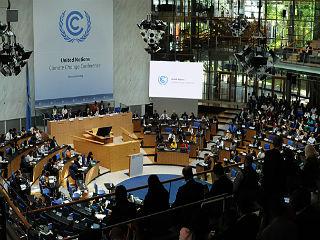
Embroiled in its own contradictions, the EU is already trying hard to convince Poland to ratify the second part of the Kyoto Protocol at COP23. The second European head of state to make his appearance, Emmanuel Macron, also failed to up his ambition.

COP23 in search of a leader

By: EBR | Thursday, November 16, 2017

Between coal-addicted Germany, France with its ideas but dearth of new commitments, and the EU entangled in its contradictions, the political weight of the COP23 turned out lighter than expected. EURACTIV France reports

The cyber security risk is growing as nuclear facilities become increasingly reliant on digital systems and make increasing use of commercial ‘off-the-shelf’ software, which offers considerable cost savings but increases vulnerability to hacking attacks.

Cyber security at civil nuclear facilities – understanding the risks

By: EBR | Thursday, November 16, 2017

Recent high-profile cyber attacks, including the deployment of the sophisticated 2010 Stuxnet worm, have raised new concerns about the cyber security vulnerabilities of nuclear facilities
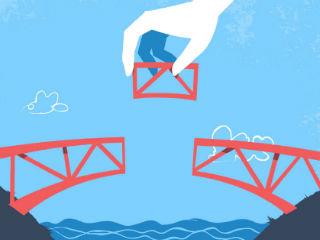
This presents science with a few key opportunities to start turning the tide. First, the scientific community needs to acknowledge that it has some problems. Honesty about the scientific method, why many studies produce flawed results and how science’s self-correcting mechanism works, would be a start.

How Academics Can Rebuild Trust in Science

By: EBR | Thursday, November 16, 2017

The tools for overcoming declining trust in science lie in science itself

These may look very sophisticated for the ”proud youth” of the Balkans, but it is a routine for students of the British espionage. But, on the other side of the Atlantic, things have gone even further. As we read, the American audience (that has chosen to be concerned about such issues rather than university asylum and political party notes) appears to be divided in terms of accepting this new trend towards the complete abolition of live classes in the university halls and their transfer to live presentations via Internet.

Learning in the digital age: is Greece enough capable and to what extend can follow the digital learning developments?

By: EBR | Thursday, November 16, 2017

There may be difficulties in accepting the digitization of services such as taxi in our country, but the civilized world continues the evolutionary race

It is clear that Tsipras believes that he can make headway by presenting his government as being friendlier to the weakest members of Greek society than any administration led by Mitsotakis’ party.

Greece: step back to the past?

By: N. Peter Kramer | Tuesday, November 14, 2017

In his first speech to the SYRIZA parliamentary group since the summer, Prime Minister Alexis Tsipras stepped up his effort to put distance between SYRIZA and New Democracy in voters’ minds in what many see as a pre-cursor for the political battle to come in Greece over the coming months
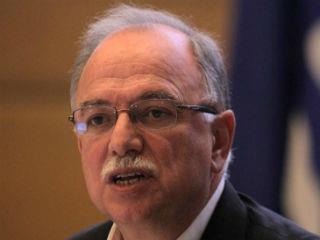
“If someone wants to make investments and create jobs he can do so through the structures of the European economy. With offshore companies one hides black money, launders money or avoids tax evasion. The political problem remains because what is legitimate is not moral and I think that the competent authorities must do all the necessary checks on the so-called Mareva-Gate,” the Syriza MEP pointed out.

Paradise Papers is an ‘opportunity’ for EU to tackle multinational tax evasion, says Greek MEP

By: EBR | Tuesday, November 14, 2017

The Paradise Papers has presented the EU with a golden opportunity to crack down on tax evasion by multinationals and the art of investing profits from cheap labour in tax havens practised by emerging economies, insists European Parliament Vice-President Dimitris Papadimoulis

Society is struggling to adapt as fast as technology is moving, leading to suggestions we need to slow the pace of change through regulation, or spread its benefits via things like taxes on robots.

5 issues that will shape the future, according to the experts

By: EBR | Monday, November 13, 2017

Our future’s bright: new technology promises solutions to the world’s biggest problems. But the future’s also frightening: accelerating change is disrupting every aspect of life

The Paradise Paper leaks, however, come at an appropriate moment. On 14th November 28 European countries have a unique opportunity to tackle this issue in negotiations on the 5th Anti-Money Laundering Directive. One of the remaining sticking points is the degree to which information will be made publicly available on beneficial owners of companies and trusts. Some of the biggest member states like Germany have been opposing  greater transparency in this area.

After Paradise Papers, it is high time for the EU to act

By: EBR | Monday, November 13, 2017

The Paradise Papers showed once again that anonymous companies are being used as a 'getaway vehicle' for criminality

Government-driven innovation is not, of course, a new concept. Take France. In the 1960s and 1970s, it pushed for the TGV, the high-speed train that was then a radical idea. Around the same time, the French and British governments absorbed the development costs of the Concorde supersonic airliner. In 1978, France’s national postal and telecommunications services started designing Minitel, one of the world’s most successful pre-World Wide Web online services.

Governments: the next heroes of innovation

By: EBR | Monday, November 13, 2017

As the world’s biggest buyers of goods and services, governments can play a starring role in the pursuit of knowledge-economy reforms

Buildings and monuments may last for hundreds, if not for thousands of years. Some valuable family heirloom may be passed down from generation to generation, a ring, a watch, a painting, a hand-written letter. And even though cultural objects do not possess a meaning by themselves, they literally are what we make of them and what we see in them.

Why culture matters: fostering identity through cultural heritage

By: EBR | Monday, November 13, 2017

A museum director’s reflections on vexing global issues such as identity, tolerance, conflict and war

Understanding China is daunting enough when you’re studying government papers or trying to keep up with the latest news. But the real challenge for China-watchers, even the veterans, is putting an ear to the ground and listening to what the people are talking about.

Your Guide To Chinese Social Media

By: EBR | Sunday, November 12, 2017

It's not just WeChat and Weibo

At the same time, poverty, inequality and rapid urban growth put increasing numbers of people in harm’s way and cause precarious living conditions, further driving future risk of displacement. What forces people to move is not simply the fact that they are in the wrong place at the wrong time; they have to flee because they are vulnerable.

Changing climate, shifting policies

By: EBR | Thursday, November 9, 2017

Just a few months ago, the World Bank did something remarkable. It recommended open-access migration to Australia and New Zealand for populations of Small Island States in the Pacific that will be most affected by climate change

Pages: Previous Next

EU Actually

Even Fox News participates in boycott of the White House after excluding CNN

N. Peter KramerBy: N. Peter Kramer

In his weekly column N. Peter Kramer writes about President Trump’s denying CNN, Politico and MS reporters access to the White House press conferences. The three news media are going to court!

Europe

The Uncomfortable Truth About EU Enlargement

The Uncomfortable Truth About EU Enlargement

Before the next wave of EU enlargement takes place, the union needs to grapple with thorny questions of how power is distributed among its members.

Business

Businesscraft: Japan’s Quiet Discipline for a Fractured World

Businesscraft: Japan’s Quiet Discipline for a Fractured World

For almost thirty years after the end of the Cold War, geopolitics stayed away from the corporate boardroom. Geopolitical considerations belonged to the foreign ministry or to a dedicated risk committee back at headquarters, and rarely crossed a CEO’s desk.

MARKET INDICES

Powered by Investing.com
All contents © Copyright EMG Strategic Consulting Ltd. 1997-2026. All Rights Reserved   |   Home Page  |   Disclaimer  |   Website by Theratron