


Obama: the new Nixon?
By: EBR | Wednesday, May 29, 2013
Is it possible to make a comparison between Obama and former President Richard Nixon? I'll take that challenge.

EP condemns fatal shooting of Taiwanese fishing boat by Philippine Coast Guard
By: EBR | Tuesday, May 21, 2013
The Taiwanese fishing boat ‘Guang Da Xing No. 28’ was fired upon by Philippine Coast Guard vessel MCS3001 in Taiwan’s Exclusive Economic Zone (EEZ) on May 9. Fisherman Hong Shi-cheng (65) was shot dead, and the boat was severely damaged.

Kristiina Ojuland: ‘Putin’s politics more and more like Stalin’s totalitarian politics’
By: EBR | Wednesday, May 8, 2013
Meeting the Estonian former minister again in her EP office after some three years, she sounds pessimistic, disappointed and concerned.
Minister David Lin: ‘Taiwan will not back down over Diaoyutai Islands’
By: EBR | Monday, February 4, 2013
A major territorial dispute is brewing in the East China Sea. The Republic of China (Taiwan) is committed to a peaceful resolution because at the heart of the dispute are islands that belong to Taiwan according to Taiwan. These islands are known as the Diaoyutai Islands.

Investing in 2013 - Rediscovering Romania
By: EBR | Friday, January 25, 2013
If you're an investor in Europe, in 2013, have a look at Romania. It's not a perfect country, but it is dynamic and it's looking for investment.

The Nordic Model and the European Crisis
By: EBR | Thursday, January 10, 2013
The crisis in eurozone has affected all countries in Europe. It reflects the lack of budgetary discipline and belief in the solvency of certain European states.

Taiwan Acts to Mitigate Climate Change
By: EBR | Monday, October 29, 2012
Mitigating climate change has a direct bearing on humankind’s survival and therefore poses a pressing challenge that the global community must face together.
New Trade Pacts Boost Cross-Strait Opportunities
By: EBR | Monday, October 8, 2012
Agreements are aimed at supporting Taiwanese businesses in mainland China.
Africa Rising - The Last Consumer Frontier
By: EBR | Friday, April 27, 2012
Nova Capital Africa Analytics (Nova), a subsidiary of Nova Capital Global Markets, announces the current and upcoming publications on the consumer and infrastructure sectors in Africa.

How to rebuild trust in the banks
By: EBR | Monday, February 13, 2012
Restoring trust in banking depends on policymakers to establish a stable and sustainable new regulatory framework and by bankers themselves to address flawed past governance and management practices, writes Simon Lewis, CEO of the London-based association for financial markets in Europe (AFME).
President of Taiwan Ma Ying-jeou re-elected!
By: N. Peter Kramer | Monday, January 16, 2012
Saturday January 14, President Ma Ying-jeou was re-elected by a comfortable margin, fending off a challenge from his main rival, Ms. Tsai Ing-wen. Recent polls had suggested the race would be very close, raising anxiety among those who prefer the status quo.
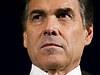
US Elections: Rick Perry’s Clenched Fists
By: Gianni Skaragas | Thursday, December 22, 2011
With the U.S. presidential election date on the horizon, this column will focus on the GOP frontrunners. Some of them were reluctant to declare their intention to run, while others hurried to cement their roles as bastions of conservatism or party gadflies, representing too many diverse interests.

Europe′s new populist leaders
By: EBR | Wednesday, November 16, 2011
Populist movements pick up significant levels of support by presenting themselves as ordinary Joes who are honest and up-front about society’s problems. The most successful leaders are those that can embody this folksy outsider image.
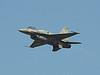
Opposition leader and upgrading F16 jets spark concerns about stability in the Taiwan Strait
By: N. Peter Kramer | Monday, September 26, 2011
For decades the Taiwan Strait, between the People’s Republic of China and Taiwan (Republic of China)) has been one of the world’s most dangerous potential flashpoints. Beijing calls Taiwan an inseparable part of its territory and insists that it must be unified.
President Ma: “Cross-Strait Peace, Global Tranquility.”
By: N. Peter Kramer | Monday, August 29, 2011
On the island of Kinmen on August 23, President Ma of Taiwan (Republic of China) marked the 53rd anniversary of the beginning of the Second Taiwan Strait Crisis.

The Global Governance Deficit: The Theater of the Absurd
By: The Globalist | Wednesday, August 24, 2011
Global governance in the 21st century is reminiscent of famous playwright Luigi Pirandello’s “Six Characters in Search of an Author.” As Jean-Pierre Lehmann explains, the actors continue to roam about the stage with no purpose — and the play may end up being a tragedy.

Eurobonds are the only answer to Europe’s crisis
By: EBR | Thursday, July 28, 2011
Eurozone leaders face a fundamental choice when they meet on Thursday. Either they declare, once again, that they stand ready to do “whatever is necessary” to overcome the eurozone crisis, or they actually do it.
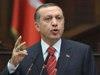
Is Prime Minister Erdogan Turkey′s new strongman?
By: BBC News | Tuesday, June 14, 2011
It is a time when incumbent leaders are being turfed out in Europe and when dictators and autocrats are facing popular resistance across North Africa and the Middle East.
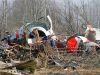
Accident investigation: the truth and nothing but the truth
By: EBR | Tuesday, May 31, 2011
It is easily taken for granted that a plane crash is followed by an inquiry, and after the initial shock has worn off we tend to trust the investigators and let them do their work in peace. Nobody is truly interested in the rules and regulations surrounding an air crash inquiry.
Obama and the Arab Spring
By: Stratfor - Strategic Forecasting | Tuesday, May 24, 2011
U.S. President Barack Obama gave a speech last week on the Middle East. Presidents make many speeches. Some are meant to be taken casually, others are made to address an immediate crisis, and still others are intended to be a statement of broad American policy.
 By: N. Peter Kramer
