Edition: International | Greek
MENU

Home » Analyses

Researchers from the City University of Hong Kong and the Sungkyunkwan University in Seoul identified a link between factors such as personal memories and users’ greater attachment to their smartphones.

The real reason you can’t put down your phone

By: EBR | Friday, September 1, 2017

Ever had that moment of panic when your smartphone is down to 1% battery and you don’t have a charger?

The World Economic Forum’s Global Agenda Council on Illicit Trade 2012-2014 estimated the global shadow economy to be worth $650 billion. While it’s difficult to be sure of the amount of business that bypasses regulators, WEF research from 2015 forecast that the cost to the global economy of counterfeiting alone could reach $1.77 trillion over the course of that year.

This developed country’s shadow economy is worth one-fifth of its GDP

By: EBR | Friday, September 1, 2017

Some countries have much larger shadow or unofficial economies than others. Greece's shadow economy is worth over a fifth of its total output, and Italy’s isn't far behind.

Mentoring your kids means letting go of a one-size-fits-all approach to kids’ tech use, and thinking instead about which specific online activities are enriching (or impoverishing) for your specific child. Mentoring means talking regularly with your kids about how they can use the Internet responsibly and joyfully, instead of slamming on the brakes. Mentor parents recognize that their kids need digital skills if they’re going to thrive in a digital world, so they invest in tech classes and coding camps. And of course, mentor parents embrace technology in their own lives—but thoughtfully, so they can offer guidance on the human (if not the technical) aspects of life online.

Yes, smartphones are destroying a generation, but not of kids

By: EBR | Friday, September 1, 2017

Quickly, now: Go rip a smartphone out of the hands of the nearest teen. If you have a teen child of your own, you can start there—or if you have kids under 13, you can take away whatever device they’re presently using

Always remember the people. They vote, pay their taxes and, naturally, have growing expectations, particularly if they have internet access and are exposed to varied networks and multiple sources of information. Ignoring legitimate citizen needs for reform amid their access to information will empower your opponents and, hey, by the way, people may grow to increasingly hate you.. Instead, you can empower people: listen, communicate, deliver. This is not whitewashing, it’s smart policy: if you want a legacy and not just millions in your accounts, grow with due care for sustainability.

5 commandments for tycoons and other power players in a shifting world order

By: EBR | Wednesday, August 30, 2017

From West to East and North to South, global power structures and mechanisms are shifting, confirming the premises of a fast emerging world order

Technological advances in recent years have sparked concerns within wider society that employers will look to swap human workers with robot replacements.

5 things we learned from one of the world’s biggest surveys of young people

By: EBR | Tuesday, August 29, 2017

Young people feel that they’re not being listened to by global decision makers. But with over half of the world’s population under the age of 30, it won’t be long before they will be making their voices heard

Inequality is preventing people with less income and wealth from reaching their potential in terms of education and invention. There’s also less entrepreneurship. Inequality also means the market for new goods shrinks. One study shows that if incomes are more equal among people, people who are less well off, buy more. Having this larger market for new products, incentivises companies to create new things to sell.

This theory about inequality might have just been debunked

By: EBR | Friday, August 25, 2017

A world where a few people have most of the wealth motivates others who are poor to strive to earn more. And when they do, they’ll invest in businesses and other areas of the economy. That’s the argument for inequality. But it’s wrong
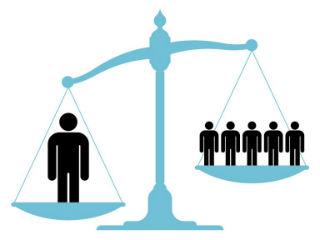
While a general lack of trust in the mainstream media might not be surprising, the data also reveals that, for the first time, there has been a decline in public trust of NGOs. In the US, China, Japan, Germany and the UK, trust in NGOs fell below 50%.

Three quarters of people think the system is rigged against them

By: EBR | Friday, August 25, 2017

The 2017 Edelman Trust Barometer found what it described as “an implosion of confidence” around the world
The overall amount of money in circulation shall be kept at bay by a negative interest rate. The underlying idea is to take money out of the system that is not being used, because it is desirable for the economy and society that money is being invested.

Upgrading today’s capitalism

By: EBR | Thursday, August 24, 2017

Capitalism in its current form is neither fair nor sustainable

Is it possible to overcome an aversion to networking? According to Stanford University psychologist Carol Dweck, everything boils down to having the right attitude. People who believe that certain talents are inherited avoid situations where those talents are challenged. For example, people who believe that singing skills are genetic avoid singing, and do not develop the talent. The opposite way of thinking is that the ability to do something is like a muscle that develops with training. In the words of Dweck, some people have a “growth mindset” while others have a fixed mindset.

Humans are hard-wired to hate networking

By: EBR | Wednesday, August 23, 2017

If you loathe the awkwardness and insincerity of networking, you’re not alone. But it needn’t be that way

The upside of all this for organisations, according to the Petriglieris, is that every portable self bears the indelible stamp of its birthplace. The depth of graduates’ psychic connection to institutions such as Blue belies the brevity of their tenure there. The Petriglieris call this “loyalty without membership”, an intangible tie that can yield concrete benefits. Think of the professional services firms that rely heavily on referrals from ex-employees, or research showing that staying in contact with former members makes organisations more innovative.

Today’s leaders require a new sense of self

By: EBR | Wednesday, August 23, 2017

What career transformation really means in a world with few if any guarantees

Fundamental change is inevitable. It seems that what needs to take center stage now is not how much money or power someone can accumulate, but how much he or she is benefitting others and the world. Apparently, our societies have largely lost track of this basic guiding principle.

The moral duty of the elites

By: EBR | Monday, August 21, 2017

It is the moral duty of the elite to avert global disaster

Four dangerous assumptions about human trafficking

By: EBR | Friday, August 18, 2017

We should be more realistic about how we identify and tackle the problem of human exploitation

Artificial Intelligence will transform universities

By: EBR | Thursday, August 17, 2017

Artificial Intelligence (AI) is a technology whose time has come

German political update: Merkel’s choice

By: EBR | Tuesday, August 8, 2017

Angela Merkel looks set for a comfortable win in next month’s German elections

How to make democracy work in the digital age

By: EBR | Monday, August 7, 2017

Digital democracy has the ultimate benefit that it supports society’s historical achievements

The top five soft power contenders have remained the same since the analysis was first published two years ago, but their order has changed. Germany, which has dealt with major issues including terrorist attacks and a wave of immigration, has fallen one place in this year’s index despite an improved overall score and widespread confidence in Chancellor Angela Merkel.

France becomes the world No 1 for soft power

By: EBR | Friday, August 4, 2017

France is the most powerful nation in the world. At least, it is when it comes to a certain type of power.

Board members usually have not discussed cyber risk with the management team. It is extremely important to have a dedicated discussion that ends with consensus and commitment. The conversation should go beyond the obvious. For example, leaders at manufacturing firms should consider all possible ramifications of supply chain interruptions and communication lapses. After the initial conversation, reassessments should take place on a semi-regular basis.

Cybersecurity: The role of the board

By: EBR | Friday, August 4, 2017

A three-step process for board directors to start improving cyber-oversight

Germany’s fears that the sanctions could affect European companies involved with Russia have barely registered in the US media’s coverage. Neither has the prospect of countermeasures by member state governments and the European Commission.

Will Germany be drawn into a trade war?

By: EBR | Friday, August 4, 2017

Washington’s decision to impose more sanctions on Moscow has been criticised by EU member states, particularly Germany

Companies contribute to this work through sectoral skills bodies and by using their supply chains to raise skill levels. Civil society agencies engage under-represented communities. Educational institutions offer improved work placements and refine the curricula to meet local needs. In this way, a wider learning culture can emerge in which risk and creativity are supported, and exclusion and inequality are addressed.

Lifelong learning helps people, governments and business. Why don’t we do more of it?

By: EBR | Thursday, August 3, 2017

Learning throughout life makes sense. Research shows it is good for your health, your wealth, your civic engagement and your family’s future prospects. It prolongs your independent life and enriches your quality of life

Switzerland’s Federal Constitution was completely changed in 1874. The importance of the cantons was lessened in favour of the country’s central administration. People moving between cantons were given full voting rights after three months, which was beneficial to those moving from rural areas to big cities at the time, and referendums at a federal level were introduced. The revision of the constitution had to be voted on too, of course, and was approved with 63% of the vote.

This is how Switzerland’s direct democracy works

By: EBR | Thursday, August 3, 2017

More than its snow-capped mountains and nifty, collapsible army knives, Switzerland is perhaps best known for its system of democracy

Pages: Previous Next

EU Actually

Ukraine may buy for 6 billion euros Chinese drones with EU money

N. Peter KramerBy: N. Peter Kramer

In his weekly column, N. Peter Kramer writes about the Ukraine buying for 6 billion euros drones in China with EU money. Is it a threat for Taiwan?

Europe

Diplomacy intensifies over Cyprus

Diplomacy intensifies over Cyprus

United Nations secretary-general envoy Maria Angela Holguin will be in Brussels on Wednesday for meetings seen as important to European Union preparations for a possible revival of Cyprus reunification talks ahead of an expected visit by Secretary-General Antonio Guterres to Cyprus next week.

Business

How Much Pressure Can European CEOs Take?

How Much Pressure Can European CEOs Take?

There was a time when the job of the CEO was difficult but relatively clear: grow the business, beat the competition, manage costs, satisfy shareholders, inspire employees and avoid major reputational mistakes. That world has disappeared.

MARKET INDICES

Powered by Investing.com
All contents © Copyright EMG Strategic Consulting Ltd. 1997-2026. All Rights Reserved   |   Home Page  |   Disclaimer  |   Website by Theratron