Edition: International | Greek
MENU

Home » Analyses

But the use of fiction necessarily poses big questions for anyone in the business of doing journalism. Does imagining future scenarios ultimately distract readers (and writers) from the real issues at hand? Will the imagined truth provoke deeper thinking, or be just another way to escape?

When truth in politics is stranger than fiction, fiction can help uncover truth

By: EBR | Monday, April 10, 2017

Hats off to those busy debunking fake news and digging for true dirt

Think of people’s mental faculties as a set of concentric circles. At the core is the very essence of who we are: our values, how we think, what’s important to us, our personality and our behaviours. Over this layer, our skills are formed. Are we adaptable? Can we build relationships? Are we fast learning, good at music, great at languages, can we see things from different points of view? Around this we form technical abilities: the gathering of facts, vocabulary, and the processes of life.

Forget coding, we need to teach our kids how to dream

By: EBR | Friday, April 7, 2017

Life is becoming increasingly less predictable. From the political volatility of Donald Trump and Brexit to the vast societal changes of globalisation, drastic, seismic change is in the air.

The question is how can things be back on track, both in terms of substance and perception: how can we restore trust in Good Governance and present to a global audience both a new social contract and the best practices and ways to achieve it?

The renewed case for good governance

By: EBR | Tuesday, April 4, 2017

It's enough to spend a few hours per day watching local, regional and global news to have a growing sense of a increasingly huge mess

Despite the China-bashing during Trump’s presidential campaign and a recent tweet from the US president that the meeting will be “very difficult”, there are encouraging signs that it could be a success. By agreeing to meet within Trump’s first 100 days in office, both sides have shown their intention to avoid worst case scenarios, and a recognition that it is this specific counterpart that can help achieve their respective goals.

Trump and Xi can make their summit a success – here are 3 things they need to do

By: EBR | Tuesday, April 4, 2017

This week US President Donald Trump will meet Chinese President Xi Jinping in a high-stakes encounter for both the global economy and their own political careers

The businessman-turned politician is as dismissive of the other opposition parties in Ukraine as the  government, saying, ”Unfortunately, today, except for the party ”For Life”, the other two, who consider themselves opposition, have already been in power. ”They returned, calling themselves opposition but they meet with the same people, continue to resolve matters in their own interests. They are all from the same Communist system - there are no new faces. People Yulia Tymoshenko and Petro Poroshenko were already at the same table 15 years ago but with different presidents. They can change nothing.”

Ukraine opposition leader outlines plans to revive country’s ailing economy

By: EBR | Tuesday, April 4, 2017

The leader of Ukraine's newest political party has proposed an ambitious manifesto, partly designed to tackle the country's ongoing economic ills

To harness the extraordinary power of the humanities, we must ensure they are widely accessible. Institutions like my own, as guardians of some of the world’s greatest cultural treasures, must work to share the joy and wonder of the humanities with the public. Otherwise, potential leaders of the future will lose out on the opportunity to learn from the humanities.

Why we need the humanities more than ever, by the President of Yale

By: EBR | Friday, March 31, 2017

In our complex and interconnected world, we need leaders of imagination, understanding, and emotional intelligence—men and women who will move beyond polarizing debates and tackle the challenges we face. To cultivate such leaders, we must value and invest in the humanities

Geography and Geopolitics must not be perceived however only at regional scale. Greeks do not live only on Greek territory, but globally as well, in the Diaspora. Although less visible, the Diaspora’s bearing on the fate of the country is very important, beginning with the very creation of the Greek State. The Greek Diaspora, in combination with the Greek merchant marine and the Christian-Orthodox international networks, many of which are Greek speaking, form an alternative geopolitical space which -in contrast to the Greek territory- rather than being influenced, exerts an influence on the dominant powers. Thus, in 1974, after the Cyprus crisis, the spontaneous mobilisation of Greek-Americans influenced US policy of military aid to Turkey.

Rethinking Greece: Georges Prevelakis on Contemporary Hellenism as a “cultural sediment” linking Europe with the emerging multipolar world

By: EBR | Monday, March 27, 2017

George Prevelakis is Professor of Geopolitics at the Panthéon-Sorbonne university in Paris and an Associate Fellow at the SciencesPo Center of International Research (CERI) in Paris. He specializes in European, Balkan and Eastern Mediterranean Geopolitics, in Diasporas and in Physical Planning

According to the Danes themselves, the key is to prioritize life over work. And when they are at work, they enjoy a high degree of flexibility. They can often choose when they start their working day and have the option of working from home. The lunch break is often at a designated time each day, enabling colleagues to interact and eat together, thus enabling them to leave their desks. There is a minimum five weeks’ paid holiday for all earners.

Denmark has the best work-life balance. Here’s why

By: EBR | Friday, March 24, 2017

"Something is rotten in the state of Denmark," goes the line in Shakespeare's Hamlet. But four centuries after the play was written, the analysis couldn't be less accurate. According to the OECD Better Life report, Danes have a better work-life balance than any other country surveyed

Fukuyama predicted that such restlessness and resentment would eventually need a political outlet – and when it came, it would be explosive. The anti-capitalist Left, however, was a busted flush. Communism was now a known fraud and failure, and post-Historical people driven by megalothymia would have no truck with its egalitarian pretensions, or its nakedly tyrannical realities. Far more threatening to the stability of liberal capitalist societies would be the emergence of demagogic strongmen from the fascistic Right, cynically feeding narrow self-interest and popular discontent, preying on human impulses for mastery and domination that the hollow comforts of consumer capitalism could not hope to appease.

The last hollow laugh

By: EBR | Friday, March 24, 2017

Since Francis Fukuyama proclaimed ‘The End of History’ 25 years ago, he has been much maligned. His work now seems prophetic

The theory goes that in a world of free capital flows, a country can have an independent monetary policy only by having its exchange rate float (Obstfeld and Taylor, 2004). While both emerging markets and advanced economies have increasingly opened their borders to financial flows, Rey argued in an influential speech to central bankers at Jackson Hole, Wyoming, in 2013 that the scale of financial globalization had called this theory into question.

Agent Provocateur

By: EBR | Monday, March 20, 2017

Jeremy Clift talks to Hélène Rey, professor of economics at the London Business School

Nostalgia about the Empire and the Commonwealth makes for good films and excellent television. But a walk down memory lane is no way to conduct business in the 21st century. Reviving the Commonwealth will not compensate for leaving the EU.

The Empire strikes back

By: EBR | Wednesday, March 15, 2017

As Britain prepares to leave the European Union, the glorious memory of ‘Empire’ is back. You know, the one where the sun never set?

The World Bank will use the proceeds to support the financing of projects that advance its goals of eliminating extreme poverty while minimising environmental impacts and enhancing gender equality and public health.

World Bank launches first bond linked to the SDGs

By: EBR | Wednesday, March 15, 2017

The World Bank’s International Bank for Reconstruction and Development (IBRD) has issued its first bond linked to the UN Sustainable Development Goals (SDGs) as part of the global effort to combat climate change, end poverty and promote equality

These are complex problems, and the solutions will not be simple. But a few broad paths to progress are already clear. We must work together with web companies to strike a balance that puts a fair level of data control back in the hands of people, including the development of new technology like personal “data pods” if needed and exploring alternative revenue models like subscriptions and micropayments. We must fight against government over-reach in surveillance laws, including through the courts if necessary. We must push back against misinformation by encouraging gatekeepers such as Google and Facebook to continue their efforts to combat the problem, while avoiding the creation of any central bodies to decide what is “true” or not. We need more algorithmic transparency to understand how important decisions that affect our lives are being made, and perhaps a set of common principles to be followed. We urgently need to close the “internet blind spot” in the regulation of political camp

3 dark trends that could destroy the web

By: EBR | Tuesday, March 14, 2017

Today marks 28 years since I submitted my original proposal for the world wide web

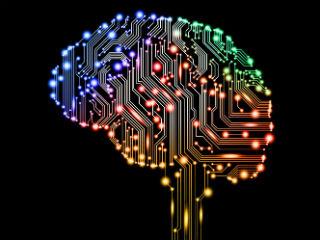
Citizen science – the convergence between science and society – already proved successful in EyeWire where people competed to map the 1,000-neuron connectome of the mouse retina. Also, the use of nanoparticles as coating of implanted abiotic devices offers great potential to improve the immunologic acceptance of invasive diagnostics. Brain-inspired neuromorphic engineering aims to develop novel computer systems with brain-like characteristics, including low energy consumption, adequate fault tolerance, self-learning capabilities, and some sort of intelligence. Here, the convergence of nanotechnology with neuroscience could help building neuro-inspired computer chips; brain-machine interfaces and robots with artificial intelligence systems.

How to ensure future brain technologies will help and not harm society

By: EBR | Tuesday, March 14, 2017

Thomas Edison, one of the great minds of the second industrial revolution, once said that “the chief function of the body is to carry the brain around.”

The conference programme was a highlight of the week, featuring 322 speakers from consumer brands, mobile organisations, mobile operators and industries including automotive, advertising, banking, health, NGOs, entertainment and education. Also European Commission Vice-President Ansip was present and stipulated the importance of the development of 5G, especially for Europe that, as he warned, can’t miss the boat as it did with 4G. Highly anticipated keynote speaker Reed Hastings, Founder and CEO of Netflix discussed how content is in the midst of a period of disruption and change. ‘In the era of content’, Huawei CEO Eric Xu highlighted, ‘gold being found on video. The role of mobile operators is shifting towards becoming digital content players’.

Reflections on MWC 2017 – The Next Element

By: N. Peter Kramer | Monday, March 13, 2017

The Mobile World Congress 2017 is over, it was – as usual- an overwhelming experience and probably ‘the biggest annual TMT show on earth’

What consumers want and expect from their energy providers has also evolved rapidly. A sizeable portion of today’s consumers (both residential and commercial) is increasingly focusing on reduced carbon emissions, increased choice, and higher reliability and security. While consumers may articulate a desire for these attributes and an appetite to engage in their energy usage, most of the grid-edge technologies are still in the very early stages of adoption, and even this early adoption requires a meaningful push from subsidies or regulation. In the past half century, reaching mass adoption for innovative products (penetration above 50%) has decreased to about 15 to 20 years and has relied on “rational adopters” who focus on cost and convenience.

4 ways to unleash the electricity grid of the future

By: EBR | Friday, March 10, 2017

The electricity industry is in the midst of a transformation, as technology and innovation disrupt traditional models from generation to beyond the meter

Women’s labour force participation varies around the world – from just 15% in Algeria all the way up to 88% in Tanzania. But whatever country we’re talking about, one thing stays constant: not a single one has managed to close its gender pay gap

A day without women? This is what it would look like

By: EBR | Friday, March 10, 2017

When you get to the office this Wednesday, look around. Do you spot anything different? Notice anyone missing? There’s a good chance you’ll see far fewer of your female colleagues than usual

So how might automation in the Fourth Industrial Revolution differ fundamentally from that in the past, preventing technological progress from being labour augmenting, at least in the short to medium term? Perhaps the main difference is the speed of technological progress and its adoption. The technologist Hermann Hauser argues there were nine new General Purpose Technologies (GPTs) with mass applications in the first 19 centuries AD, including the printing press, the factory system, the steam engine, railways, the combustion engine and electricity. GPTs by definition disrupt existing business models and often result in mass job losses in the industries directly affected. For example, railways initiated the replacement of the horse and carriage, with resultant job losses for coachmen, stable lads, farriers and coach builders. Most of these GPTs took several decades to gain traction, partly because of the large amounts of investment required in plant, machinery and infrastructure.

Should economists be worried about artificial intelligence?

By: EBR | Friday, March 10, 2017

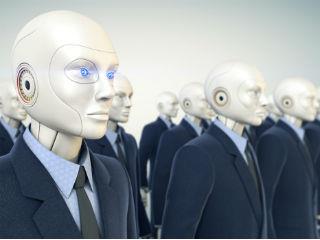
This post highlights some of the possible economic implications of the so-called “Fourth Industrial Revolution” — whereby the use of new technologies and artificial intelligence (AI) threatens to transform entire industries and sectors.

President Trump set out an ambitious agenda as he addressed a joint session of Congress, in a speech more notable for its tone than in substance. “The time for small thinking is over. The time for trivial fights is behind us”, Trump said in his hour-long speech.” No attacks on the steaming media, no attacks to the former Obama Administration or his opponent Hillary Clinton. He announced to create millions of jobs. He urged Congress to ‘act decisively’ to repeal and replace Obamacare. Trump promised ‘massive tax relief for the middle class’ and asked Congress to pass a $ 1trillion of dollar infrastructure package.

Trump claims ‘A new chapter of American greatness’

By: EBR | Wednesday, March 1, 2017

President Donald Trump has promised a ‘renewal of the American spirit’, in his first speech to Congress. He claims in his presidential address ‘new chapter in American greatness’

What is the Democrats future? It’s urgent that the party stops squabbling and recognise a few fundamental truths. If the party doesn’t understand these truths and fail to do what’s needed, a third party will emerge to fill the void.

Is there a future for the Democrats?

By: EBR | Tuesday, February 28, 2017

The American Democrats have chosen a new chairman, Obama’s labour secretary, Thomas Perez

Pages: Previous Next

EU Actually

Europe is terrified by a single sentence from Trump

N. Peter KramerBy: N. Peter Kramer

The current NATO conflict surrounding the Iran war is fundamentally different from previous ones.

Europe

Schinas in the hot seat: Can he restore trust in Greek agriculture?

Schinas in the hot seat: Can he restore trust in Greek agriculture?

Former Commission vice-president is tasked with managing a sector ravaged by scandal

Business

Emerging market champions pioneering new business models

Emerging market champions pioneering new business models

The growth of the developing world, which often overlaps with the Global South, is a story that can be read not just in GDP statistics, productivity growth or infrastructure access, but also in the development of local champions.

MARKET INDICES

Powered by Investing.com
All contents © Copyright EMG Strategic Consulting Ltd. 1997-2026. All Rights Reserved   |   Home Page  |   Disclaimer  |   Website by Theratron