Obama and the Arab Spring
By: Stratfor - Strategic Forecasting | Tuesday, May 24, 2011
U.S. President Barack Obama gave a speech last week on the Middle East. Presidents make many speeches. Some are meant to be taken casually, others are made to address an immediate crisis, and still others are intended to be a statement of broad American policy.
Who Should Rebuild Japan’s Cities?
By: EBR | Wednesday, April 6, 2011
There are currently 12,000 confirmed dead, 2,800 injured, and over 15,000 still missing from the terrible Tohoku earthquake and tsunami that struck Japan March 11. Experts estimate the economic loss will be $200 billion to $300 billion, or 4-5 percent of Japan’s gross domestic product.
What Intervention Looks Like
By: Foreign Affairs | Saturday, March 19, 2011
With Muammar al-Qaddafi now closing in on a final campaign to defeat the rebels opposing his regime, the world's attention has centered on what the United States and others should do -- or even can do -- to aid those who are trying to bring down the Qaddafi government.

A New Time for Corporate Transformation
By: EBR | Friday, March 4, 2011
Spurred by the need to find new cost gains in a waning recovery, corporate change is back on the agenda. Corporate transformation will not be a new phrase to most readers of these web pages. Iit is likely that more than one of you will have let a groan escape your lips when reading the headline.
Revolution and the Muslim World
By: Stratfor - Strategic Forecasting | Tuesday, February 22, 2011
The Muslim world, from North Africa to Iran, has experienced a wave of instability in the last few weeks. No regimes have been overthrown yet, although as of this writing, Libya was teetering on the brink.
Will Central Asia Follow Egypt′s Example?
By: The Globalist | Tuesday, February 22, 2011
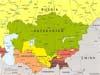
Will the chain reaction of protests crossing the Middle East now reach Central Asia? Most of the region's nations seem well insulated from the upheaval — but not all of them.

Arab democracy rising: international lessons
By: EBR | Wednesday, February 16, 2011
The popular revolts in Tunisia, Egypt and elsewhere in the middle east are driven by a profound democratic impulse. This represents both learning and test for international democracy actors, says Vidar Helgesen.

Global forces: An introduction
By: McKinsey Quarterly | Tuesday, January 4, 2011
Five crucibles of change will restructure the world economy for the foreseeable future. Companies that understand them will stand the best chance of shaping it. “I never think of the future,” Albert Einstein once observed. “It comes soon enough.”

The Top Headlines of 2010
By: The Globalist | Monday, December 27, 2010
From the economic recession to the World Cup in South Africa — and from the fiasco of the Commonwealth Games in India to the awarding of the Nobel Peace Prize to a Chinese dissident — we present some of the year's most significant economic, political and societal developments.

Taking Stock of WikiLeaks
By: Stratfor - Strategic Forecasting | Tuesday, December 14, 2010
Julian Assange has declared that geopolitics will be separated into pre-“Cablegate” and post-“Cablegate” eras. That was a bold claim. However, given the intense interest that the leaks produced, it is a claim that ought to be carefully considered.
Outcome of the Seoul G20 summit
By: Reuters | Friday, November 12, 2010
World leaders said they would work to tackle global economic "tensions and vulnerabilities" that have raised fears of currency wars and trade protectionism as they wrapped up a Group of 20 summit in Seoul. Following is a summary of what was decided

The Republicans strike back
By: The Economist | Wednesday, November 3, 2010
"TONIGHT," exulted Rand Paul, the Republican candidate for the Senate from Kentucky, "there's a tea-party tidal wave." And so, in almost all respects, it was: the Republicans, fired up by the enthusiasm of tea-party activists, look set to pick up some 60 seats in the House of Representatives.
Africa doesn’t need rescuing, just a square deal
By: EBR | Thursday, October 21, 2010
Nobody disputes the charge that Africa’s political leaders are often responsible for the continent’s troubles, says business tycoon Mo Ibrahim. But he argues that Western governments and corporations could do much more to redress the unfair practices that hinder Africa’s economic development.

What to do about the West?
By: Reuters | Tuesday, September 14, 2010
As sure as night follows day, a flurry of warnings that the global recovery is faltering is reviving the great debate whether Asia's economy can decouple from the West's.

ECFA: Equal consultation and mutual benefits
By: N. Peter Kramer | Tuesday, August 31, 2010
The end of June mainland China and Taiwan signed a tariff-cutting trade agreement, the so-called Economic-Cooperation Framework Agreement (ECFA) that aims to deepen economic ties and ease tensions between the two countries. The deal is a high point in the ‘cross strait’ policy of President Ma.
Sweet Europe, sour America?
By: Reuters | Monday, July 26, 2010
Investors are finding themselves with a new kind of balancing act -- one in which they have to juggle with three major regions posing three significantly different circumstances. Europe's bank stress testing, the focus of much of the past week's market focus, is but one ball in the air.
IMF challenges Asia to change its economic habits
By: Reuters | Tuesday, July 20, 2010
That warm glow and soft purring emanating from South Korea was the International Monetary Fund trying, yet again, to put the Asian financial crisis behind it. The IMF needs Asia on its side. The region will wield more clout at global institutions like the IMF and provide more of their funding.

New as it is, the Mediterranean Union needs an overhaul
By: Europe′s World | Wednesday, July 7, 2010
The painful transition from the Euro-Mediterranean Partnership to the new Union for the Mediterranean isn’t over. Roberto Aliboni outlines the direction it should go and warns the EU to take more of a back seat and let Arab governments decide the UfM’s future.
Germany and Russia Move Closer
By: Stratfor - Strategic Forecasting | Wednesday, June 23, 2010
The Germans do not want to lose the European concept. At the same time, they are trying to redefine it more to their advantage. From the German point of view, bringing Russia into the relationship would help achieve this.
The World teeters on the brink of a new age of Rage
By: The Financial Times | Tuesday, June 22, 2010
Far be it for me to make a dicey situation dicier but you can't smell the sulphur in the air right now and not think we might be on the threshold of an age of rage. Historians will tell you there is often a time-lag between the onset of economic disaster and the accumulation of social fury.
 By: N. Peter Kramer