What’s needed is a much more visionary EU industrial policy
By: EBR | Tuesday, December 30, 2014
Over the next five years, economic growth will mainly be generated outside Europe, so the key challenge will be to fashion and implement an industrial policy that strengthens Europeans’ global competitiveness and preserves our high living standards.

Israel′s nation-state law motion shatters fragile equilibrium
By: EBR | Monday, December 29, 2014
How can a country be a full democracy when it is defined as a Jewish one? The fact that I need a week to explain it shows how complex this issue is.

The CIA’s road to infamy
By: EBR | Monday, December 29, 2014
The Senate Intelligence Committee’s report on CIA torture contains little new to the attentive observer and nothing of major consequence.
The lost years and their importance
By: EBR | Monday, December 22, 2014
Politicians must acknowledge that time unfortunately cannot turn back. It is the only and the one of goods that cannot be reproduced but be at last self-destructed.
Redefining capitalism
By: EBR | Wednesday, December 17, 2014
While we have been correct to believe that capitalism has been the major source of historical growth and prosperity, we have been mostly incorrect in identifying how and why it worked so well.

Europe: Building a Banking Union
By: EBR | Monday, December 15, 2014
Without a substantial improvement in credit conditions, there cannot be a substantial economic recovery, particularly in the eurozone periphery.
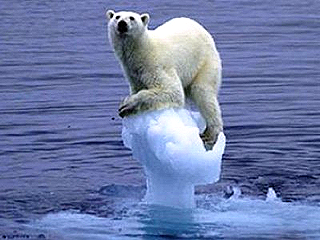
Integrating Taiwan’s Strengths into Global Climate Action
By: EBR | Monday, December 8, 2014
Scientists inform us that modern industrial development has caused carbon dioxide concentrations around the world to exceed the carrying capacity of natural ecosystems.
Japan rolls the dice: a report from Tokyo
By: EBR | Monday, December 8, 2014
On October 31, 2014, the government of Japan, through its subservient monetary arm, the Bank of Japan, made yet another desperate move.
Misrule of the few or how oligarchs ruined Greece
By: EBR | Monday, December 8, 2014
Just a few years ago, Greece came close to defaulting on its debts and exiting the eurozone. Today, the country’s economy is showing new signs of life.

No easy answers to Israel’s painful dilemma
By: EBR | Monday, September 29, 2014
In situations as complex as the Israeli-Palestinian conflict, which often seem insoluble, one sometimes envies the ancient Greeks, who invented deus ex machina — that artificial device that solved the entanglement of the dramatic plot.
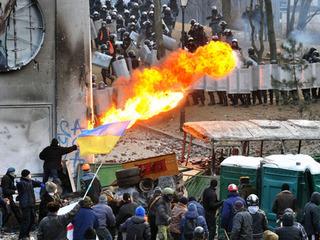
Experts say crisis demands closer monitoring of European gas supplies via Ukraine
By: EBR | Thursday, September 18, 2014
The EU is suffering from high energy prices and a lot of competitiveness due to the US shale revolution. The EU will no doubt produce some shale gas over time. However, on its doorstep the EU has the world’s largest gas resources on the territory of the Russian Federation

A European lost decade?
By: EBR | Thursday, August 28, 2014
Europe's economic woes resemble Japan’s situation in the 1990s, which led to a 'lost decade' of economic stagnation and deflation from which the country is still working to recover. Michael Heise asks whether Europe will suffer a similar fate.

Youth unemployment: regions should be given flexibility to use EU funds
By: EBR | Tuesday, June 17, 2014
An opinion drafted by Mattia Tarsi, Member of Italy’s Pesaro and Urbino Provincial Council, pointed out that the number of developers creating applications in Europe was expected to rise from 1 million in 2013 to 2.8 million in 2018
Experts back Bulgaria in dispute over South Stream Gas Pipeline
By: EBR | Wednesday, May 7, 2014
The rapidly unfolding crisis in Ukraine has put the spotlight firmly on another burning issue that has dogged EU/Russia relations for years - energy security.
International election monitors refuted suggestions of violations in the Crimean referendum
By: EBR | Tuesday, March 18, 2014
Our colleague Martin Banks was election monitor of the Crimea referendum on March 16. In this article he reports about the pressconference of the election monitors after the referendum
Crimeans turn to Russia to turn round "economic mess"
By: EBR | Monday, March 17, 2014
Our colleague Martin Banks was election monitor of the Crimea referendum on March 16. He had the chance to meet some interesting people and to hear opinions that usually not come through to the European media ...

An unholy mixture: surveillance, the law and a setback for journalism
By: EBR | Tuesday, September 3, 2013
We should not underestate the seriousness of the government's attacks on those seeking to expose its surveillance secrets. At stake is not only what the state is entitled to do to the public, but what journalists are entitled to do to expose it and perform the vital role of public watchdog

Mediterranean Gas Find: A Chance for U.S. to Break with Turkey
By: EBR | Wednesday, August 28, 2013
Politics and alliances in the eastern Mediterranean are shifting, and the region's security framework is splintering. The region is now divided as much within the Muslim world as between it and the non-Muslim states.
The New Sick Man of Europe: the European Union
By: EBR | Tuesday, May 14, 2013
The European Union is the new sick man of Europe. The effort over the past half century to create a more united Europe is now the principal casualty of the euro crisis, and the European project now stands in disrepute across much of the continent.

IF GERMANY LEAVES THE EURO ZONE
By: EBR | Friday, April 5, 2013
This time the situation is indeed very serious. A new party made its appearance in German politics and is composed of economistes, lawyers and Christian Democrat politicians who believe in the dissolution of the euro area before this, they say, breaks Germany.
 By: N. Peter Kramer