by
N. Peter Kramer
With the public increasingly at a loss to understand decisions taken by the European Union, the new president is determined to make the EESC once again a force to be reckoned with in the European debate. ‘This has to be our priority’, he said, ‘given the crisis Europe is now facing’.
As he takes up office as the EESC's 30th president, Henri Malosse is keenly aware of the disconnection between the EU and its citizens, a fact again brought home by the Greek and Cyprus crises. Convinced that one of the answers lies in a rebalancing of forces in Brussels, he wants the European Union's second assembly to do more to embody people's real expectations in areas such as job creation, combating youth alienation, protection of savings and access to health care. Striking was that before the usual ceremonial attention for predecessors and explaining that he had made Europe his passion and his life’s mission, President Malosse started his inaugural speech with welcoming the young people from the European schools whom he had invited to the session. ‘You have the unique privilege of a European education which teaches you tolerance and understanding of others. Very few Europeans get such an opportunity today. You must be our vanguard and our message bearers’, he told them. ‘Young people expect concrete action and initiatives for their future, not woolly strategies expressed in wooden jargon. We have to move away from the technocratic approach to EU-policy making’.
Mr. Malosse showed that he, a French member of the EESC since 1995, is aware of the role his institution is playing in ‘Brussels’. ‘We do a good job but the other institutions are only half listening to us. I would like to generate a ‘wind of change’ by improving the quality of our work and making it a top priority to follow up our opinions. I want us to make judicious use of a very powerful tool we have, own initiative opinions; to ensure that the concrete actions citizens expect are tabled before the European Council and the European Parliament. The new President continued with pointing to the power of the EESC: ‘Due to the way we are appointed, EESC members have tens of millions of citizens behind them!. To this end, the EESC will step up its capacity to anticipate developments, open up its work and scrutinise EU policies.’
‘EU’s citizens are growing increasingly sceptical of the Union’s ability to provide concrete and timely responses to their concerns’, EESC President Malosse continued. ‘Those who used to be Europe’s strongest supporters – farmers, businesspeople, craftspeople, retailers – are finding it more and more difficult to identify with overly detailed decisions which they mainly perceive as constraints’. He also mentioned workers and families, ‘austerity is the only thing they hear as their purchasing power shrinks. Saver confidence has been lost since the disastrous events effecting Cyprus’.
In Mr. Malosse’s opinion ‘the crisis facing Europe is first and foremost a crisis of estrangement between the EU and its citizens’. He wants a change and the role of the EESC is clear, it has to ensure that civil society has a voice in EU decision-making.
(President Malosse has served as president of the EESC’s Employers Group since 2006 and will be assisted by Vice-presidents Jane Morrice, former deputy-speaker of the Northern Ireland Assembly and an EESC member since 2006, and Hans-Joachim Wilms, European Affairs Officer, Trade Union for Construction, Agriculture and the Environment (IG BAU) and a German EESC member since 1994)
New EESC President Malosse put citizens at the heart of the EU public debate
The Frenchman Henri Malosse kicked off 2 1/2-year tenure as head of the oldest EU institution that represents civil society.
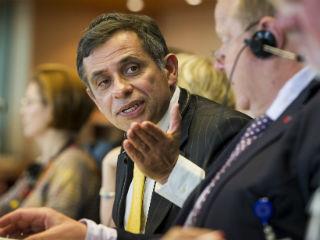
In Mr. Malosse’s opinion ‘the crisis facing Europe is first and foremost a crisis of estrangement between the EU and its citizens’. He wants a change and the role of the EESC is clear, it has to ensure that civil society has a voice in EU decision-making.
 By: N. Peter Kramer