by
Martin Banks
Growing concerns about alleged abuses of human rights and the rule of law in both countries will come under the spotlight at the 23rd Economic Forum which will take place on 3-5 September in Krynica, Poland.
The two-day event will be attended by some of the most significant figures from the world of European politics and business.
These included Jean Arthuis, head of the Finance Commission of the French Senate and former Polish Prime Minister Jan Krzysztof Bielecki.
This year´s theme, “Towards a New Deal”, refers to the economic, social and political transformations which have resulted from the global economic crisis.
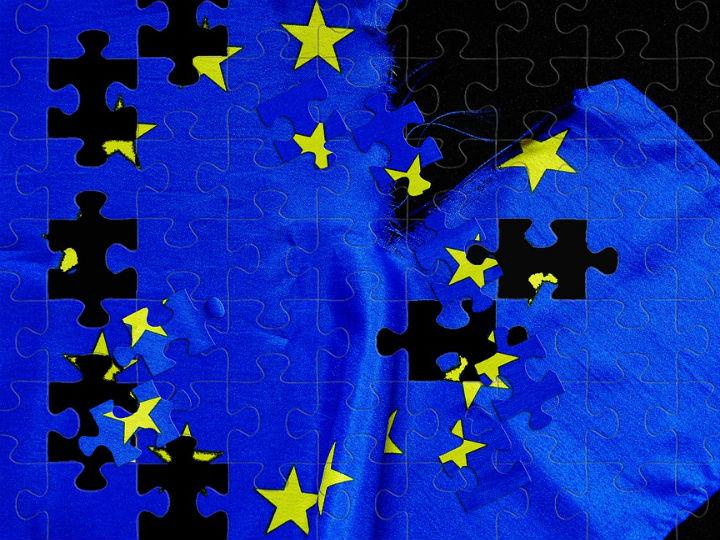
One of the main talking points will be challenges facing the European Union´s Eastern Partnership Policy which seeks to enhance the EU´s relationship with several Eastern European states,including Moldova and Ukraine.
This is expected to pave the way for new association agreements including deep and comprehensive free trade agreements with those countries willing and able to enter into a deeper engagement and gradual integration in the EU economy.
However, major concerns persist about the rate of progress being made by both Moldova and Ukraine on the reform process and their suitability for closer ties with the EU.
The United States Senate Committee on Foreign Relations,for instance, recently passed a resolution urging the Ukrainian authorities to release former Ukrainian Prime Minister Yulia Tymoshenko.
In addition, the committee recommends the EU make Tymoshenko's release one of the most important criteria for the signing of the Association Agreement with Ukraine at the upcoming Eastern Partnership summit in Vilnius in November.
Senior US Senator Dick Durbin, who tabled the resolution, said, "This resolution is simple. It calls on Ukraine to respect the recent European Court of Human Rights decision on Tymoshenko´s case and promptly release her from prison.
"Doing it will help Ukraine further solidify its membership in the communities of democracries."
Further concern has been voiced by Claude Moraes, a British Socialist MEP who has been responsible for steering changes to travel restrictions for Ukrainians through the European Parliament.
He acknowledges "current difficulties" in EU-Ukraine relations and has warned that before further liberalisation can take place the country must make progress on the rights of lesbian, gay, bisexual and transgender people as well as on the rule of law and democracy.
Human Rights Watch, meanwhile, has also documented the alleged failure by Ukraine to live up to its international obligations not to return people to countries where they face a risk of ill-treatment or torture.
In Ukraine, for example, Leonid Razvozzhaev, a Russian political activist who was charged with organizing mass riots during a May 2012 demonstration, was reported missing in October 2012.
He had last been seen outside the premises of a United Nations High Commissioner for Refugees’ (UNHCR) nongovernmental organization partner as he was in the process of seeking asylum.
He reappeared in custody in Russia two days after he disappeared from Ukraine. Later, he said that Russian investigators had psychologically tortured him so that he would confess, including by threatening to harm him and his children. He is currently in detention in Moscow, awaiting trial.
In July 2013, UNHCR issued a report on Ukraine as a country of asylum saying that Ukraine’s agreement with other former Soviet countries to cooperate in extradition of suspected criminals “can conflict with obligations under the 1951 [Refugee] Convention.”
UNHCR noted that “in 2012, Ukraine extradited a refugee who had been recognized both under the UNHCR mandate and by another state-party to the 1951 Convention.”
Similar concerns about alleged abuses of human rights have been voiced about Moldova, another party to the Eastern Partnership initiative.
The EU and the Republic of Moldova are currently negotiating an Association Agreement to succeed the PCA. This will significantly deepen Moldova’s political association and economic integration with the EU. The objective is to start negotiations on a deep and comprehensive Free Trade Area (DCFTA), a core element of the Association Agreement, as soon as Moldova is deemed to be ready to sustain the impact of far-r
eaching liberalisation of its trade with the EU.
But only last week, the human rights office of the United Nations spoke out against homosexual “propaganda” in Moldova and urged its government to repeal its laws.
A former Soviet republic, Moldova has aspired to join the EU since 2007 but it has consistently been criticised for failing to combat corruption and implement strong reform. Sexual minorities are still said to face persecution from a conservative population heavily influenced by the Orthodox Church and communists remain powerful in politics.
An EU source said, "It is clear that both countries need to up their game substantially when it comes to their record on human rights and the rule of law.Both are expected to face criticism on these issues at next week´s forum in Poland."
Vilnius will host the Eastern Partnership Summit from 28-29 November. The Eastern Partnership initiative also involves the EU’s co-operation with Belarus, Georgia, Azerbaijan and Armenia and is aimed at bringing the six post-Soviet countries closer to the EU.
Pressure mounts on EU´s Eastern neighbours amid growing concern over human rights violations
Ahead of a key economic summit in Poland next week, international pressure is mounting on both Ukraine and Moldova to do more to resolve ongoing problems.
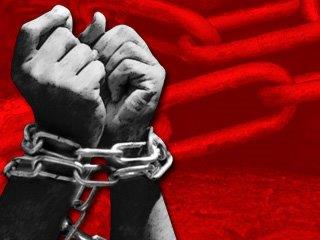
Major concerns persist about the rate of progress being made by both Moldova and Ukraine on the reform process and their suitability for closer ties with the EU.
 By: N. Peter Kramer