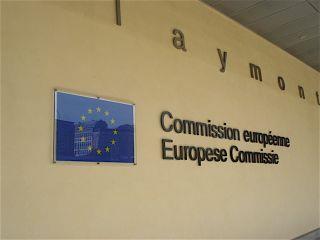
In April the UK, the Netherlands, Germany and Austria expressed their concerns about the influx of Bulgarians and Romanians from January 1 on; when restrictions on citizens of these two countries to have access to the labour markets of other EU countries will expire. Last week Commissioner Reding had finally an answer on the serious concerns: let’s help local authorities to understand EU free movement rules; and let’s top up the European Social Fund. The UK was ‘very disappointed with the scale and ambition’ of Reding’s solutions. A German government’s reaction was’ to launch discussions or to develop brochures won’t suffice’. The deal of the new German coalition is clear and what it will do depends on how smoothly the accession of Romanians and Bulgarians will go in January. Most probably Germany will cooperate with other countries outside the structures of the EU. Another signal that Merkel is ready to choose for intergovernmentalism, at least in this case.
The Netherlands’ Interior Minister Lodewijk Asscher expects that more Bulgarians and Romanians will come to his country than has been predicted. “The official predictions are low, but earlier predictions from the Commission weren’t correct either’, he said. Local authorities in the Netherlands are ready to defy EU rules by denying social security numbers to Romanians or Bulgarians who fail to pass housing and employment checks. The Dutch government agreement states that, ‘individuals who cannot speak Dutch will not receive social assistance benefit’.
It looks like Commissioner Reding’s solutions are too late anyhow. She knows and that’s why she said last week: ‘free movement in the EU is a right to free circulation; it is not a right to migrate in member states’ social security systems’. The question now is, did they hear in Bulgaria and Romania her saying that?
 By: N. Peter Kramer