by
Kristina Stoyanova*
Amongst a distinguished list of participants the President of the China Institute for Reform and Development, Chi Fulin, highlighted that “in the next six years the Chinese market will grow at lightening speed.” and in reference to trade and services “the growth will be astronomical.” As a result it became clear that Europe-China cooperation has become increasingly more dynamic in terms of economic demand.
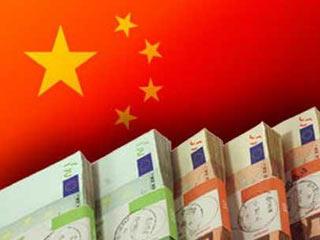
When looking at the trade relations, they speak for themselves. The exports of the 28 EU Member States to China accounted for 71 billion euro during the first half of 2013 and the imports from China to the EU were estimated to be 133 billion euro. China is the second biggest trading partner of the EU after the United States and the EU is China's biggest trading partner. Furthermore, efforts to reduce climate change and the common challenge of decreasing energy dependence have made the EU and China`s partnership crucial. Indeed, for this reason we need more cooperation, but not only on an economic level, but also on a cultural and educational one.
Youth cooperation
The issue of youth cooperation was addressed in the third session of the Forum where people-to-people ties were debated. Although a lot has been done in this aspect, still the main focus seems to lay more on trade and economic link. Fostering further cooperation with young people is key, as they are the ones who are the future of EU-China relations. Statistics show that the exchange of students between the two has increased almost 6 times since 2000, which has led to job creation, innovation and cultural cross-fertilisation. Furthermore, China and the EU expect student exchange interflow at 300,000 by 2020. This shows that the demand and interest of both China`s students and European students in cultural exchange has been rapidly increasing in recent years and will continue to grow.
‘Initiatives like the Entrepreneurship school organised by ThinkYoung in Hong Kong, Shenzhen and Brussels are crucial’, says Andrea Gerosa, the co-founder of ThinkYoung*. `The school helps young entrepreneurs to get one step closer to fulfilling their dreams as well as encourage cultural and educational exchange and understanding. We are proud to present our 10th edition next year from the 5th till 9th of January in Hong Kong and Shenzhen`.
ThinkYoung was also invited to attend `China-EU High Level People-to-People Dialogue` held in Beijing, where the Chinese Vice Premier Liu Yandong and the then European Commissioner for Education, Culture, Multilingualism and Youth Androulla Vassiliou, stressed the necessity of further cultural cooperation. Through its projects and its Entrepreneurship school, ThinkYoung aims at creating debate for the issues young people from both Europe and China are facing. The school allows both young Chinese and European entrepreneurs that want to create their own start up and have innovative ideas to work together. The school gathers more than 300 students from Europe, China and other continents to work, socialise and spend time together. It allows them to share their culture and experience with each other.
Concluding
The EU and China are becoming ever more engaged in economic and trade cooperation as both can greatly benefit from such type of relations. However, the need for cultural, educational and youth exchanges are ever growing as well. It becomes apparent that we need even more programmes and initiatives involving the young people from EU and China. The effort towards greater cooperation and understanding between them is a crucial step in fostering EU-China relations. One should not forget that the young people of today are the political and economic leaders of tomorrow.
*Kristina Stoyanova is External Relations Officer of Think Young, a non-profit organisation that operates in Brussels, Hong Kong and Geneva. The focus is on young people and their needs, working on topics such as education, entrepreneurship, EU-Asia relations, environment and EU enlargement.
 By: N. Peter Kramer