by
N. Peter Kramer
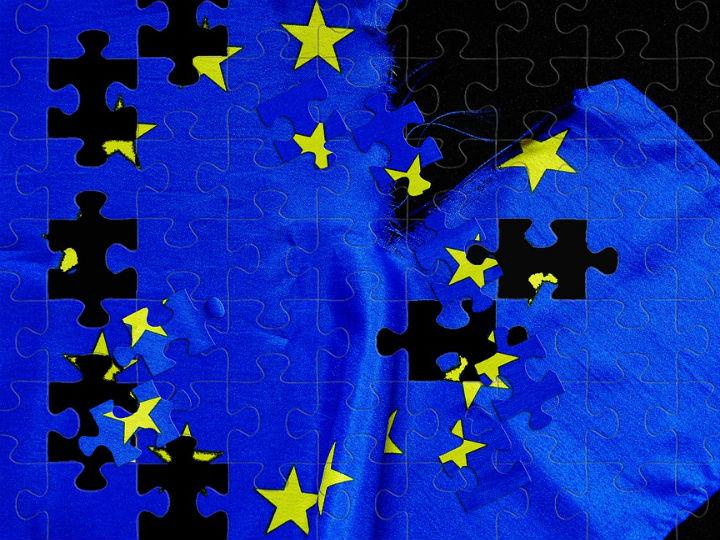
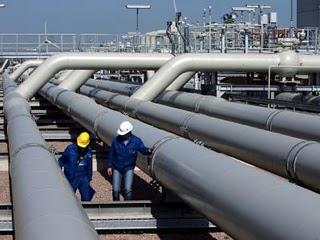
On December 1, Putin scrapped the South Stream pipeline project to supply gas to southern Europe without crossing Ukraine.
Citing EU objections, he instead named Turkey as the preferred partner for a massive alternative pipeline. Turkey’s president Erdogan, standing next to his Russian colleague, nodded friendly assent.
Seven EU member states - Austria, Bulgaria, Croatia, Greece, Italy, Romania, and Slovenia - which were to have hosted Russia’s South Stream gas pipeline have to start looking for other ways to improve their energy security.
The seven countries’ energy ministers have already held talks in Brussels with EU energy Commissioner Maros Sefcovic (Slovakia).
They tasked him “to clarify” Russian leader Vladimir Putin’s statement that EU anti-monopoly laws made the project unappealing.
The seven member states pointed out that if the pipeline is in line with EU law, it would be advantageous because it diversifies supply routes.
South Stream also offered countries along its route – all of them struggling with budget deficits - the prospect of much needed transit fees and jobs from construction.
Serbia, a candidate EU member state, also on the South Stream route, was warned a few months ago by the European Commission not to cooperate with Gazprom.
The poor country stood to make more than a billion euros just from construction of its leg of South Stream. However, the European Commission likes to stick to the EU policy of thwarting Russia wherever possible!
The report of the International Energy Agency (IEA), warning that the European Union will remain dependent on Russian pipeline gas imports for the ‘foreseeable’ future, must have been bitter for the seven member states.
As European domestic fossil fuel production continues to decline fast, especially in Denmark and the Netherlands, gas imports are expected to increase between 2020 and 2030, according to the IEA’s 2014 review of EU energy policy.
Also the UK seems to be in problems. Britain’s offshore oil
industry has entered old age. Production has fallen 37 percent from 2010
levels. It is clear that Putin’s sinking of South
Stream gives the EU a serious headache…