The European Commission is looking for ways to cut the reliance of more member states on Russian oil and gas as the conflict in Ukraine chills relations with the Kremlin.
But Hungarian Prime Minister Victor Orban has different ideas about this than the Eurocrats in the Berlaymont. Hungary wouldn’t support amending the EU’s charter to create an energy union, Orban told reporters in Budapest last week.
The country will also refrain from re-selling Russian gas to Ukraine; the plan would require involving the EU in bilateral relationships. ’For us, this would be abdicating our sovereignty’, he said.
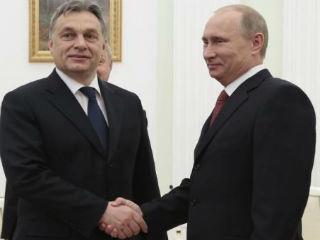
Last week Orban hosted Russian President Putin for talks about more bilateral energy deals. The two presidents reached in Budapest a new gas-supply agreement and agreed to avert a 3 billion-euro gas payment by rolling over unused volumes from a 20-year-old contract that expires this year.
The new agreement will ensure gas supplies for as many as five years, making a new long-term contract unnecessary, according to Orban.
An oil-expert explained that the new deals are in line with Hungary’s interests not to lock in a set price amid gas-price volatility.
Hungary currently pays $260 per 1,000 cubic meters of gas. That compares with an estimated $270 average in Europe.
Hungary was among the countries that suffered from disruptions in gas shipments as Russia halted deliveries twice in the past decade.
Russia supplies at least 60 percent of the country’s consumption according to the International Energy Agency.
Orban often cited Hungary’s energy dependence for opposing stiffer EU sanctions on Russia.
Aside from his criticism of the sanctions, Hungary defied the EU to support South Stream, a Russian-backed pipeline that would have circumvented Ukraine.
Putin canceled the project last year, citing the EU’s opposition. The Hungarian leader also rankled some of his EU counterparts and the government in Kiev with a call for autonomy for ethnic Hungarians in Ukraine, echoing similar demands for the Russian minority by the Kremlin.
Orban has widened Hungary’s energy cooperation with Russia since he returned to power in 2010.
Last year, he agreed with Putin on a loan of about 10 billion euros to expand Hungary’s nuclear power plant and Russian state-owned gas exporter OAO Gazprom stored 700 million cubic meters of the fuel in the country.
Gazprom is open to boosting this amount, Orban said.