by
Radu Magdin*
Nowadays, Moldova‘s new executive still faces periodic protests, but not as powerful and well organised as it used to be. Medium term political stability is not only desirable but also possible.
The new Government, run by Petru Filip, has begun a series of reforms in order to manage short and medium term plans for the country. This is why we can fairly state that the political riddle regarding Moldova’s future close to an end. Less guessing, less instability, more appetite for reforms and modernisation.
In terms of concrete steps, the prosecutor’s office reform has begun, corruption is Moldova‘s biggest plague and people expect justice after the billion dollars stolen from the country's banks. General prosecutor Gurin resigned in a possible show of trust regarding the beginning of a new, reformed era.
At the same time, it remains to be seen if what is agreed on paper will also transform into a concrete reality, this being valid also for the new judicial agency responsible for special cases.
Political turmoil is not yet over, a key test being the parliamentary election of a new President, somewhere between March and May this year. President Timofti is at the end of his 4 year mandate, and his replacement may face a delay also because people want a directly elected President.
The country‘s finances are getting back on track as well, financial aid, while conditional, is on the way: Romania’s Government approved the 60 million euros loan, part of a larger 150 million loan, thus giving a positive endorsement regarding trust in Chisinau. The IMF and the European Commission are next in line.
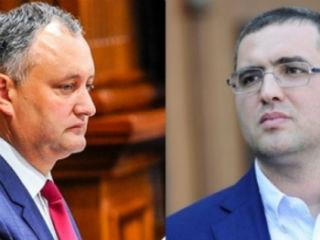
A new political poll suggest that the pro-Russian parties lead the political scene in terms of favourability with 19.8% for Renato Usati and his party, followed by the socialists – Igor Dodon with 12.8%.
If elections would be organised next week in Moldova, the 6% limit to accede in Parliament would be met, on the pro-European side, by the DA civic platform (Dignity and Truth) and Maia Sandu’s party. Pro-European parties that currently compose the government – PD (the Democratic Party) and PL (the liberal party) would not manage to obtain the necessary votes: 4.3% for the democrats and 1.2% for the liberals.
Leanca’s party, the PPE will snatch 3.7% (also insufficient); meanwhile, ex-premier Vlad Filat’s party is facing a dramatic drop in trust (over 14%) and has only 0.5% in vote intention. So, the challenges for this Government are big and need to be met fast.
*Radu G. Magdin is Strategy Consultant and CEO of Smartlink Communications
 By: N. Peter Kramer