Shaping European politics after the "No" to the European Constitution.
The No to the "Treaty establishing a Constitution for Europe" by the French and the Dutch referendum voters, which brought the ratification process to a halt, has been interpreted by many as predominantly a communication problem between European political leadership (i.e. the political elites of the EU countries together with their offspring, the leadership of EU institutions) and the peoples of the individual EU countries.
In our view telling the peoples of the individual EU member countries what the EU is all about by publishing detailed activity reports of the various EU institutions such as the European Parliament, the European Commission the European Council, the European Court of Justice the European council of the Financial Ministers the European Central Bank, the European Investment Bank etc. will not constitute a satisfactory answer for them.
What the peoples of the EU member states sense is that EU Institutions and policies are gradually alienating them from their respective political leaders.
They expect from their national political leaders jobs, maintenance of the inherited welfare system and preservation of their cultural identity in the neighborhoods where they live. These expectations have not been fulfilled in the last 15 years or so. Unemployment or the fear to lose one's job is the most serious threat Europeans face with no remedy in sight. Voters are disenchanted as they see their influence on their political leaders shrinking substantially, because EU provisions such as the Stability and Growth Pact restrict to inefficiency deficit spending policies to prevent recessions at member country level. Most governments entered the Maastricht accord with their public debt and budget deficit being on the upper limits foreseen. Thus at recession times they are deprived of the anticyclical intervention options that were more readily available to them in the past, when inflation as a byproduct of business cycle stimulating policies was considered the lesser evil. Furthermore the imposed discipline on public debt and budget constitutes for EU governments a more urgent reason to lower their traditionally generous spending for welfare than the adverse demographic development. Reforming social security is the most difficult single issue with no easy solution in sight.
In the past fifty years or so the welfare state as practiced by the European social democracies has gradually institutionalized a special relationship between voters and their political leaderships, which in simplified terms consists of voters organized in powerful interest groups asking for and political leaders responding by providing a variety of financial and social benefits, within the limits set by the particular society's general understanding of applied economics. Organized voters, have learned from past interventionist practices that their welfare depends on the extend they can ascertain that legislators will pass regulating or protecting laws favorable to them or at least, in case of conflicting situations not disfavoring them substantially. It is understandable that voters are reluctant to shed this kind of political influence especially if it is accompanied by loss of job security or even unemployment, as it happens frequently when state owned enterprises are privatized. The pain felt is understandably aggravated when governments argue that EU contractual obligations limit their options to respond to popular demands. People show no understanding when political decisions at EU level reduce or interrupt flow of subsidies leading to a closing down of unprofitable enterprises employing them or to reduction of their farming income. Europeans see with horror their governments reducing employment in the public sector, at a time when job prospects in the private sector are not becoming brighter. Businesses are restructuring by cutting down jobs more frequently than before in order to survive within the competitive markets, some of which are created through newly passed legislations following provisions of the Single European Act.
In the past 15 years political resistance of member country constituencies against EU stimulated economic reforms has slowed down the entire economic liberalization process. The recent German elections were pushed forward one year ahead of time because the Chancellor was confronted with resistance from within his own party, against his plans to restructure critical parts of his county's economy. The outcome of the elections indicates that the German Public gave no clear answer to the tantalizing issue, being as indecisive and divided as before. Angst, uncertainty and suffering in Germany and elsewhere in the EU is prolonged as reform plans degenerate in a process with no end in sight. Success for the EU's vision about the European economy appears to be less then certain.
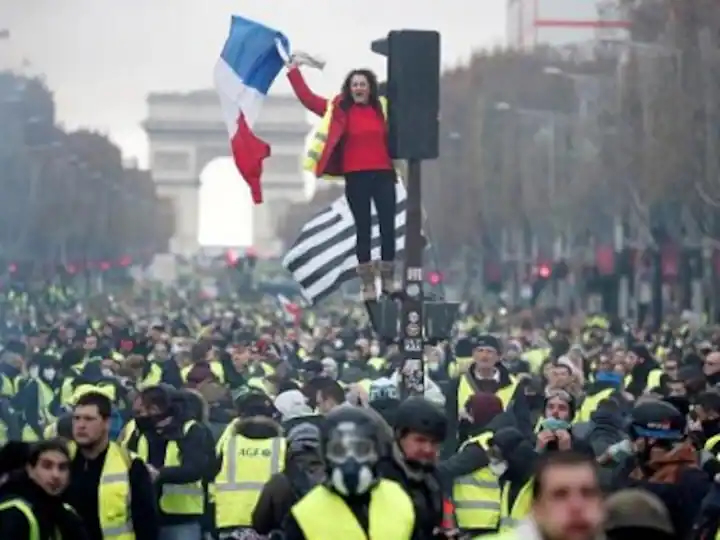
Nearly all EU member country constituencies share feelings of distrust and aversion towards the consequences of market liberalization on the job markets as a consequence of the Single European Act (Single Market) and the limitations on their governments' fiscal and monetary policies imposed by the Stability and Growth Pact (SGP). The peripheral, the smaller and the new countries being in many ways at the receiving end of the EU are more prepared to accept what they consider as necessary evil in order to draw the profits derived from their EU membership which range from political stability, democratic rule of law, and massive importation of institutional and administrative know - how to the access to EU's markets and the financial assistance to converge. The central and the bigger countries most of which are founding members tend to forget the motives that led them to the creation of the then Common Markets. Their constituencies are more self assured, their countries are the producers of EU's institutional and administrative output, they see no external threats beyond terrorism and they face no immediate threats of political instability in their internal regimes. As a consequence they see no reason why to have their standards of living lowered and resent being gradually stripped of the unprecedented variety and magnitude of welfare benefits their social democratic regimes have been providing them in the last fifty years. They resent losing all that in the name of what they term as neoliberal economic policies administered by appointed EU policy managers. The early October strikes in France and Belgium indicate that people might be more willing than in the past to mobilize and actively resist EU inspired reforms.
The picture is different in the realm of EU's political elites. Up to the 1970ies the European Common Market has been kept split apart by the welfare economic policies applied inside the national borders. Keynesian economics provided the justification to socially minded governments to extend policies of stimulating demand and employment beyond the originally conceived anticyclical purposes. The resulting stagflation aggravated by the petroleum crises of the 1970ies together with the rediscovery of the merits of economic liberalism in the US, UK and other English speaking countries led to a petty renaissance of economic rationality in the minds of the European political elites. It became obvious to them that a common European market can be only a free market liberated from all sorts of restrictions to the free movement of goods (non tariff), services and labor and undisturbed by the uncoordinated out of the particular political power balances evolving in each member country. The Single Market Act, the treaty of Maastricht initiating the EMU and the SGP introduced by the treaty of Amsterdam to enhance budgetary discipline within EMU are creations of sound scientific thinking aiming at creating economies of scale in managing public goods common to the member countries. The European political elites proved themselves capable of conceiving and producing sound economic policies when acting in domains not directly controlled by their organized constituencies.
It is interesting to note that the decision making limitations imposed at member government level concerning monetary policy delegated to ECB have not been stigmatized as negatively affecting their sovereignty. In the realm of public finances, EMU member governments have avoided delegating authority to EU institutions. Under the euphoria of the favorable business cycle before 2001 they have considered themselves capable of managing the financial discipline imposed by the SGP through coordination. Contrary to their expectations the economic downturn after 2001 showed that the pact could not be maintained in many countries under the pressure of organized constituencies demanding relief. In 2003 the European Council suspended the application of SGP for France and Germany who were breaking it in past years. In response, the European Commission is currently working on amending SGP in order to improve coordination and monitoring of economic policies after a proposal of the Council of Economic and Finance Ministers of March 2005 endorsed by the European Council.
Past achievements in advancing sound economic policies confront the European political elites with the dilemma they have been avoiding in the last decade: Should they continue managing the financial affairs of the Union by the costly and uncertain process of coordination through the traditional bargaining among their independent selves? Or should they draw the consequences, enter the federative path and allocate some budgetary policy competencies to the EU in order to achieve higher efficiency in policy coordination through the resulting economies of scale and externalities? The failed attempt to establish a constitution for Europe whose original purpose was to initiate some direct control on EU institutions by member country constituencies, might be interpreted as a signal that the European people are not willing to accept entering the federative path.
In our view the time is ripe for the European peoples to begin getting directly involved in the process of policy making in Europe. The political elites cannot continue indulging in managing EU's economic affaires without substantial involvement of their constituencies. It became obvious that decoupling of electorates from policy decisions taken through negotiations among member country political leaders has backfired. Policy decisions taken at EU level are already affecting day to day life of citizens to a point that it becomes imperative to involve them by extending the policy creating processes to Europe's grassroots. The political parties of the member countries are the most appropriate institutions to fulfill this purpose.
Socialist practices of the past have traditionally placed redistribution of wealth in the center of domestic electoral politics. The creation, maintenance and growth of wealth were felt not to concern the peoples. Organized voters of most European countries still believe that it suffices for their welfare to actively demand and obtain fringe benefits from their respective governments. Whether the (ideally public) enterprises they work for make profits or not is not their concern. In the last fifteen years political parties in Europe, with few exceptions, have failed to extend the logic of wealth creating economics to their constituencies. Political leaders chose the easy way out. They have been keeping their electorates at home at safe distance by letting them indulge in the traditional redistributive struggle, while taking the correct economic policy decisions at EU level.
In our opinion the voting down of the "Treaty establishing a Constitution for Europe" by the French and the Dutch constituencies should be interpreted as a demand for more direct involvement in the political decision making of EU. And there are both ways open for this purpose:
a) The federative way that many in Europe feel is premature to enter and
b) The timely involvement of the constituencies in the EU political decision making through their domestic political parties.
b) Parties seeking mandates from their electorates should present them, next to their domestic policy plans, with the policy positions they intend to support at the negotiating tables of the EU coordinating institutions. Party political programs should include items outlining in sufficient detail their intentions concerning EU policies, at the cost of slowing down the decision making speed. Discussing EU policies at grassroots levels will reduce the democratic deficit presently felt by many and will open the way towards federative governance in time to come.
 By: N. Peter Kramer