Edition: International | Greek
MENU

Home » EU Actually

Draghi between Scylla and Charybdis

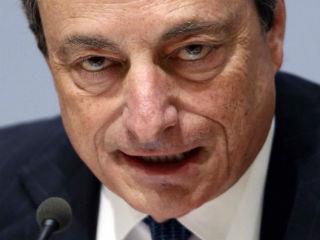
A month after announcing a half-trillion-euro extension of the European Central Bank’s ‘quantitative-easing’ programme and hinting the bank would do little for most of 2017, its president, Mario Draghi, is in the spotlight amid an anti-European Union backlash

By: N. Peter Kramer - Posted: Monday, January 16, 2017

 It has sparked criticism especially in Germany. Recent ECB policies combined with rising inflation are ‘catastrophic’ for Germany, said Markus Soeder, a close ally of Chancellor Angela Merkel. The German economy certainly doesn’t need a stimulus by the ECB. But elsewhere in the Eurozone, criticism focuses on the ECB failure to revive the many sluggish economies.
It has sparked criticism especially in Germany. Recent ECB policies combined with rising inflation are ‘catastrophic’ for Germany, said Markus Soeder, a close ally of Chancellor Angela Merkel. The German economy certainly doesn’t need a stimulus by the ECB. But elsewhere in the Eurozone, criticism focuses on the ECB failure to revive the many sluggish economies.

by N. Peter Kramer

Politicians in Germany, France, Italy and The Netherlands, which all face general elections this year, have recently stepped up attacks on the ECB, complaining it is doing too little, or too much, to support the Eurozone’s €10 trillion economy. In all four countries, mainstream parties face pressure from Eurosceptic challengers expected to win a substantial share of the vote. The ECB president has pledged to ‘keep a steady hand’ through this turbulent political year. Pressure mounts on him to show a next move.

The lack of positive economic prospects across the Eurozone, where unemployment rates vary from more than 20% in Greece and Spain to 4% in Germany, is fuelling nationalist sentiment. While most southern EU member states still stagnate economically, growth in Germany accelerated to a five-year high of 1,9% in 2016, and it posted a budget surplus for a third straight year, the first time that has happened in at least four decades, according to data published last week.

In the Eurozone, inflation surged to a three-year high of 1,1%. It has sparked criticism especially in Germany. Recent ECB policies combined with rising inflation are ‘catastrophic’ for Germany, said Markus Soeder, a close ally of Chancellor Angela Merkel. The German economy certainly doesn’t need a stimulus by the ECB. But elsewhere in the Eurozone, criticism focuses on the ECB failure to revive the many sluggish economies.

Differences between the economies of the Eurozone seem to be unbridgeable by a monetary solution. ‘The euro is threatening the future of the European Union’, Nobel Prize winner Prof. Joseph E. Stiglitz wrote in his book of the same name.

READ ALSO

EU Actually

European Parliament challenges member-states with an additional budget increase of 10 percent

N. Peter KramerBy: N. Peter Kramer

In his weekly column, N. Peter Kramer writes how the EP opposes Commission’s proposal to cut back on traditional programmes such as agriculture and cohesion

Europe

The EU–India Deal Is Done. Africa Must Be Next

The EU–India Deal Is Done. Africa Must Be Next

The EU-India FTA deal showed Brussels can move when the stakes are high; Africa is the real test of whether Europe can protect its economic security in a more fractured world.

Business

Where Romania can build excellence: the sources of future competitiveness

Where Romania can build excellence: the sources of future competitiveness

Romania has been, for most of its recent history, a story of potential deferred. The standard account of Romanian competitiveness, to the extent one exists in international business literature, is a cost story: cheap labor, low corporate taxes, a large domestic market for Central and Eastern European standards.

MARKET INDICES

Powered by Investing.com
All contents © Copyright EMG Strategic Consulting Ltd. 1997-2026. All Rights Reserved   |   Home Page  |   Disclaimer  |   Website by Theratron