President Nicolas Sarkozy has promised to get his country working again after more then a decade in which it seemed only to snooze under his predecessor Jacques Chirac. It is too early to say, but unemployment has already fallen and the growth forecast is up, as is business confidence. However, the hardest reforms are still to come and social unrest in autumn will be a test for Sarkozy’s determination to press on.
Sarkozy’s matchless dynamism – hence his nickname ‘hyper-president’- appears to be paying dividends in France. A special summer session of the French parliament was ordered to push through a package of laws that will cut axes for those who pay mortgages and work overtime, lower the maximum amount of tax to which an individual can be liable to 50% of their income. The new legislation will also make it obligatory for labour unions to provide minimum public transport services during strikes. Unemployment benefit will depend on active job hunting. The notorious French bureaucracy is being streamlined and 23.000 posts will be left unfilled next year.
It seems to be having an effect: the business climate indicator went up and unemployment has fallen to 8%, the lowest in nearly a quarter of a century. Growth was forecast at 2,25% this year, up from 2% last year, but Sarkozy hopes that the reforms will push it higher. The French economy would enter a virtuous cycle of higher growth, falling unemployment and shrinking deficits, the President hopes.
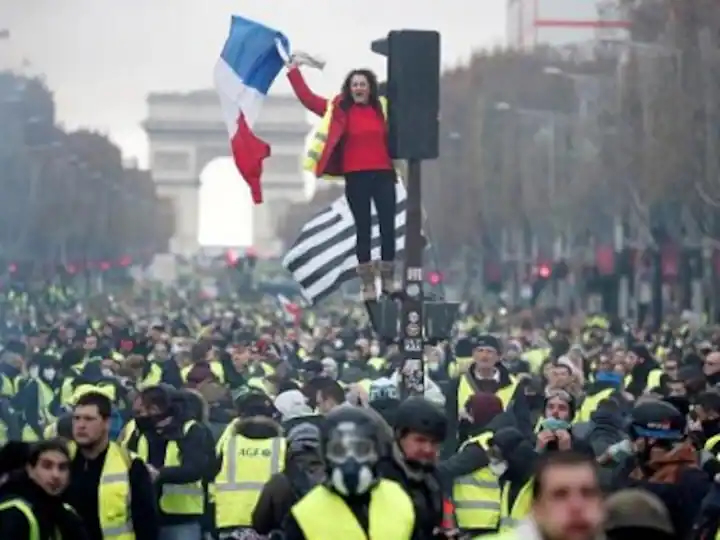
A big test of his ability to change France will come in the autumn when protests against reforms can be expected. But in most advanced economies, such as France, public opinion about unions has swung from support to suspicion. A brief unannounced rail strike in mid-April was considered as a big electoral plus for Sarkozy who said: ‘It is unacceptable that the French people should be held hostage by strikes’.
Potential foreign investors have been heartened by Sarkozy’s pro-market attitude. His appointment of Christine Lagarde, an American-educated lawyer, as his finance minister emphasises this. She shares the presidents aversion of the 35-hour working week and recently said; ‘France is a country that thinks. There is hardly an ideology we haven’t turned into a theory. Enough thinking already, let’s roll up our sleeves now!’.
During his first appearance in the EU summit of head of states and governmental leaders, two weeks after his election, Sarkozy almost single handed resurrected the European constitution. Less successful was his campaign to bring the European Central Bank under political control in order to help French exports against an extremely strong Euro. Such thinking didn’t find many supporters among his colleagues. Particularly German Chancellor Angela Merkel, at that moment EU-President, wasn’t amused by it.
In spite of his remarkable activism, Nicolas Sarkozy, is facing criticism, even from supporters, that his government is not reforming as boldly as promised and retreats on its most controversial measures. He has been accused of watering down some of the reforms that he promised during his campaign and for not going further in his first three months in office. ‘Le Monde’, one of the leading French newspapers, concluded bitterly in an editorial: ‘Our hyper-president is not Superman: like his predecessors he must pull back on his campaign promises.’
For French reformers who saw Sarkozy as the country’s hope for a redynamised economy, his first three months in office have been disappointing. He tried to free the labour market by abolishing tax on overtime, but he compromised with the unions on his pledge for minimum service during strikes. He has given France’s universities more autonomy, but compromised with the unions on student selection and fees.
At the end of Sarkozy’s first 100 days in office, August 23, serious storm clouds appear to gather over his election campaign pledges. But opinion polls show that President Sarkozy is more popular then ever, not only in his party, the UMP but also among supporters of the opposition.