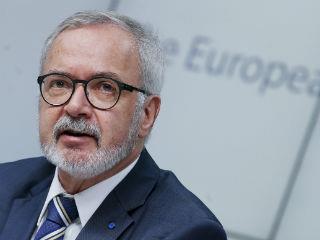
“Many people feel left behind by the economic recovery and fear for their jobs in times of globalisation and digitisation,” Hoyer said at a Brookings Institution event in Washington D.C. “We cannot champion competition and open markets without ensuring equal opportunity and social mobility.”
According to President Hoyer, this is a good time to reflect on Europe’s history and its “tremendous achievement in terms of institutional innovation, economic stability and multilateral cooperation that delivers peace, productivity and prosperity”. In spite of these achievements, he admitted that Europe currently faces considerable challenges. “Chief among them is a destabilising sense of uncertainty since the beginning of the global financial and sovereign debt crisis. The Brexit vote confirmed the severity of the disenchantment and showed us that the EU’s narrative of multilateralism and openness no longer connected with important parts of the population.”
“We have achieved a certain degree of financial stability. But we have overlooked the cost for the common citizen. This led to a widespread disenchantment and disengagement with our institutions and their processes,” Hoyer said. For the President of the EIB – the EU bank – Brexit also showed the dangers of using the European Union as “scapegoat for all kind of troubles”.
Hoyer presented the Investment Plan for Europe, EIB’s support to small and medium-sized companies and the ‘Skills and Jobs - Investing for Youth’ programmes as “concrete results that show the impact of our work on Europe’s future”, and stressed that the EU must find better ways to communicate such results to citizens. “Every part of financing by the EU bank is complementary to others, as the EU bank is a crowding-in bank,” he stated.
On a global level, Hoyer said that strong multilateral institutions will be needed to support sustainable growth. “If the US weakens its commitment to multilateralism and its institutions by seeking out bilateral agreements and enforcing protectionist measures, then this will make the global cake smaller, not larger. If you leave a group of strong friends you don't get stronger - you get a little more lonely. An agenda where protectionist measures, such as tariffs, are used to promote domestic investment would deal a severe blow to the progress made over recent decades. To us in the EU, which is based on multilateralism and freedom of movement, this is anathema.”
The President of the EIB delivered this speech at the ‘Europe today and in the future’ event organised by the Brookings Institution. After Hoyer’s speech, Homi Kharas, senior fellow and co-director for the Global Economy and Development programme, engaged in a conversation with the President of the EU bank. The event concluded with an audience question and answer session.
 By: N. Peter Kramer