by
Giles Merritt*
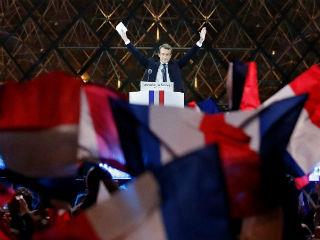
Macron’s path to the French presidency has been one of phenomenal good fortune as rivals unexpectedly fell by the wayside. At the same time, winning a dramatic election victory without the support of a conventional party and with no Members of Parliament points to some significant shifts in France’s political landscape.
Next month’s elections to the National Assembly will give a clearer guide. If the candidates who will campaign under the banner of Macron’s new and untested En Marche! movement become a substantial parliamentary bloc, then France’s new president will indeed be a trend-setter. If not, the country and Europe as a whole will be entering a period of dangerous volatility.
Until mid-June, Marine Le Pen’s defeat must be seen as no more than a check in the advance of her extreme right-wing National Front party. With a third of the 30 million or so votes cast, Le Pen represents the anger and despair of many people in France who reject the European Union and European integration, and who blame globalisation for their ills.
In Brussels and across Europe, Macron’s win has been greeted with understandable relief. It’s seen as an end to the string of unexpected upsets that began with the UK’s Brexit referendum and then led on to the election of Donald Trump as President of the United States.
But a setback for populism doesn’t necessarily mean its defeat. Macron’s enthusiastically pro-European stance as a presidential candidate now needs to be endorsed by French voters in the coming round of parliamentary elections, and then turned into solid EU policies than can reverse the Union’s decline.
Emmanuel Macron’s pre-election stance on EU-related issues has been unambiguous. He has been among those who advocate the creation of a eurozone budget to be controlled by a eurozone finance minister, and the floating of Eurobonds to boost economic convergence and narrow the EU’s north-south gap.
Tackling the eurozone’s serious vulnerabilities is essential, and at first sight the arrival of President Macron in the Elysée Palace opens the way to a relaunch of the Franco-German partnership that is key to success. However, getting the Paris-Berlin ‘locomotive’ back on track will not be easy.
Germany’s political leaderships on both the left and the right want France to speedily undertake labour market deregulation and a radical reform of its welfare systems. In return, Macron and whatever type of government he’s able to form will want a major relaxation of Berlin’s restrictive, austerity-led eurozone policies.
With Germany’s own parliamentary elections in September now looming, there won’t be a clear indication of Berlin’s approach to eurozone policies until late autumn. In the meantime, President Macron needs to move fast to stake out his strategies and put together the inter-party alliances that will form his ‘cohabitation’ government.
His presidential powers will enable him in exceptional cases to push legislation through without parliamentary approval, but realistically he needs a working majority of at least 289 votes in the 577-seat lower house. Today, even though their own candidates for the presidency were so abjectly humiliated, the Socialist Party and the centre-right Republicans dominate the assembly with 280 and 194 seats respectively.
If the largely untried and inexperienced parliamentary candidates being fielded by En Marche! are somehow able to convert their leader’s presidential triumph into a parliamentary landslide, then France’s politics are going to be revolutionised. But if the longstanding party loyalties of French voters still hold sway, Emmanuel Macron’s presidency risks being little more than a Pyrrhic victory.
*Founder & Chairman of Friends of Europe, foreign correspondent for the Financial Times for 15 years and subsequently was an International Herald Tribune columnist on EU affairs for 20 years
 By: N. Peter Kramer