by
Wendel Trio*
“Heatwave Lucifer is making Europe ‘hot as hell’.” “One of the worst droughts in decades devastates South Europe’s crops.” “Wildfires destroy homes, cause evacuations in Greece, Portugal.”
These are just a few examples of this summer’s numerous news headlines about the rise of extreme weather events across the continent. All over Europe the havoc caused by soaring temperatures has featured prominently both in the news and in our everyday conversations.
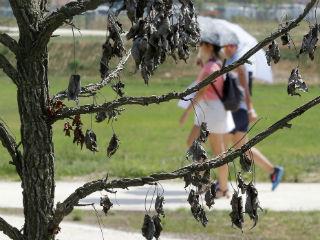
It has been a disastrous summer for Europe and its people. Many have sweltered in record-breaking temperatures, water sources have evaporated, wildfires have been raging, severe thunderstorms with hail and tornadoes have damaged homes and disrupted traffic, hospital admissions and heat-related deaths have spiked.
Most articles have linked the increased frequency and severity of extreme weather events to climate change. There is a growing awareness that climate change is affecting everyone here and now and that it is caused by carbon emissions from using fossil fuels and unsustainable farming.
What is lacking is a call for scaling up action to keep global temperature rise to 1.5°C, in line with the Paris Agreement on climate change. Negative impacts of climate change can no longer be avoided. But the level of damage it will cause depends on the adequacy of the response by our governments. Holding warming to 1.5°C is our best chance to avoid exposing much more people to a much higher risk.
While any further warming comes with dangerous impacts, there is a substantial difference between restraining temperatures to 1.5°C and to 2°C. The former would significantly reduce the damage to our life-support ecosystems. It would halve the risk of species extinction, reduce the risk of severe droughts in Europe and prevent the melting of large areas of permafrost.
The EU’s contribution to limiting climate change will be decided upon in the next months, through the negotiations of the EU’s climate and energy policies for the coming decade. These include the Emission Trading Scheme, the Effort Sharing Regulation and the Clean Energy Package.
What is currently on the table is not enough to hold warming to safe levels. In the Paris Agreement, governments recognised that the contributions they had prepared for the Paris talks, which included the EU’s pledge to reduce emissions by at least 40% by 2030, are too low for staying below 2°C.
To close this gap, the United Nations Environment Programme (UNEP) called upon all countries to reduce their 2030 emissions by at least another 25%. Staying below 1.5°C would require even steeper emission cuts.
The EU’s pledge needs to be raised well beyond the current mediocre offer in the context of the UN Climate Summit in 2018, when global leaders will gather to assess progress in the implementation of the Paris Agreement. The new policies must contain a review mechanism, to ensure the legislation adapts to the increased EU targets accordingly.
Science is brutally clear: we cannot afford negligence. If no further action is taken and global temperature increases by more than 3°C, climate damages in the EU could amount to at least €190 billion.
A new study released this summer proves that if we do not keep temperature rise to a safe level, Europe is likely to regularly suffer from heatwaves with temperatures of above 40°C. Some regions of Eastern Europe may even be hit by new super heatwaves of above 55°C.
Heatwaves are the most deadly weather-related hazard in Europe. Another recent study estimates that if we do not take decisive action to reduce greenhouse gas emissions, deaths from weather disasters, heatwaves most of all, could increase 50-fold by the start of the next century.
This means they could kill 152,000 people a year between 2071 and 2100 — up from 3,000 a year now.
The thought that the current extreme weather events could be so much more extreme in the future is terrifying. But there is also a great deal of hope: avoiding these dangerous levels of climate change is still just about possible, and brings about numerous benefits for health and employment as well as economic stability.
*Wendel Trio is Director of Climate Action Network (CAN) Europe, an environmental pressure group
**First published in EurActiv.com
 By: N. Peter Kramer