Edition: International | Greek
MENU

Home » World

The role of carbon pricing, taxing & trading in emissions reduction

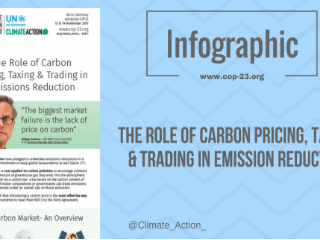
The latest infographic from Climate Action explores the role of Carbon Pricing, a methodology for reducing the global-warming emissions, through a market overview, a challenges and opportunities analysis as well as practical examples of leadership demonstrated by governments and the private sector

By: EBR - Posted: Friday, September 1, 2017

A carbon price is a cost applied to carbon pollution to encourage polluters to reduce the amount of greenhouse gas they emit into the atmosphere. These can either be a carbon tax- a tax levied on the carbon content of fuels, or cap and trade- corporations or governments can trade emissions allowances under an overall cap on those emissions.

The latest infographic from Climate Action explores the role of Carbon Pricing, a well-favoured methodology for reducing the global-warming emissions, through a market overview, a challenges and opportunities analysis as well as practical examples of leadership demonstrated by governments and the private sector. 

A carbon price is a cost applied to carbon pollution to encourage polluters to reduce the amount of greenhouse gas they emit into the atmosphere. These can either be a carbon tax- a tax levied on the carbon content of fuels, or cap and trade- corporations or governments can trade emissions allowances under an overall cap on those emissions.

Putting a price on carbon emissions and internalising the costs of environmental damage is, by many, the best way to overcome the current market failure of climate change, and move from concern to action. All but 3 nations have pledged to undertake emissions reductions in a collaborative commitment to keep global temperatures to well below 2°C.

A sneak peek at the facts:
  • The total value of carbon market in 2017 is $52bn, an increase of 7% from 2016.
  • Sweden: A Shining example. Since Sweden introduced a carbon price in 1990, CO2 has reduced by 22%, whilst GDP has grown by 58%.
  • Climate Leadership Council proposed: ‘The Conservative Case for Carbon Dividends’, a carbon tax starting at $40 p/ton and rising each year- the $250 billion in revenues generated after 10 years would be redistributed as quarterly cheques to every U.S household.
This infographic is brought to you by Climate Action and UN Environment, hosts of the 8th Sustainable Innovation Forum, which will be held alongside COP23 in Bonn, Germany. To register to attend this event click here.

To download the infographic click here.

READ ALSO

EU Actually

It is high time to rein in AI

N. Peter KramerBy: N. Peter Kramer

In his weekly column N. Peter Kramer writes about the global discussion about Artificial Intelligence, the need for quick regulation, and points to international treaties from the 20th century.

Europe

EU Fails to Learn the Lessons from Ceuta

EU Fails to Learn the Lessons from Ceuta

The aftermath of the Ceuta crisis shows Europe has drawn the wrong lessons. Rather than doubling down on failed migration policies, the EU needs to address the underlying roots of such episodes.

Business

Businesscraft: Japan’s Quiet Discipline for a Fractured World

Businesscraft: Japan’s Quiet Discipline for a Fractured World

For almost thirty years after the end of the Cold War, geopolitics stayed away from the corporate boardroom. Geopolitical considerations belonged to the foreign ministry or to a dedicated risk committee back at headquarters, and rarely crossed a CEO’s desk.

MARKET INDICES

Powered by Investing.com
All contents © Copyright EMG Strategic Consulting Ltd. 1997-2026. All Rights Reserved   |   Home Page  |   Disclaimer  |   Website by Theratron