


by
Aline Robert
Macron’s trip to Greece this Thursday and Friday (7-8 September) is dripping with symbolism. Beyond visiting his 12th EU head of state in ten days, the French president will talk about Europe.
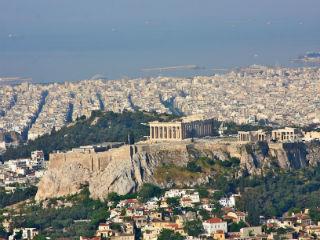
For this, he has chosen the Pynx hill, where the citizens of ancient Greece discussed democracy and governance. And where Socrates gave his lessons.
Athens, for Macron, is the “symbol of our collective errors”: the debt crisis; the eurozone crisis, which has seen growth stagnate for ten years; and the crisis of democracy, which is reflected in the decision made by non-representative institutions. Europe’s poor management of this series of crises is its failure. From the sale of the port of Piraeus to Chinese investors to the chaotic management of the refugee crisis, Greece is the epitome of the “polycrisis”.
But Macron has a plan.
On the question of the economy, the French president is not the saviour Greece has been hoping for. Cautious to keep good relations with Berlin, Macron is not travelling to Athens bearing gifts to help the struggling economy through its loan repayments.
But he will talk about his plan for eurozone reform: a common European budget. The EU’s southern member states have been enthusiastic about the idea so far, keen to recover some budgetary breathing space, which they have cruelly lacked since the crisis.
However, the latest proposals from Germany’s Finance Minister Wolfgang Schäuble on a “European Monetary Fund” do not exactly match what federalist Macron has in mind. “Relaunching investment, yes, but individualising decision making in a structure outside the European Commission, no,” sources close to the president have said.
To counter the German position, Macron needs massive support from elsewhere in the EU. He is also counting on Greece and most of the other southern member states to back his proposal for a eurozone finance minister.
Greece, Italy and Spain are also on board for Macron’s two-stage democratic reform of the bloc.
The first stage concerns the election of some 50 MEPs from transnational lists, beginning with the 2019 elections.
Assuming that Brexit remains on schedule, the UK’s 73 European lawmakers would be replaced by around 50, chosen not for their nationality but for their political programme and their party. The aim is to strengthen the European nature of the elections while respecting the European Parliament’s principle of degressive proportionality.
France supports Italy’s proposal on this subject, and according to the Financial Times, Paris has already secured the support of Greece and Belgium. Other countries – such as Germany – remain unconvinced. But it is worth noting that this reform would require the modification of the electoral act by the European Council.
Democratic conventions from January to August 2019
The third angle of Macon’s attack on the EU’s democratic crisis is focused on the citizens themselves: he plans to organise democratic conventions on EU reform in all the countries that want to participate.
According to EURACTIV.fr sources, this exercise will begin in January, using techniques tested by the En Marche election campaign, such as public forums, door-to-door and internet surveys to “give material to all parties in September 2018 ahead of the European campaign”.
This tight timetable should enjoy the full logistical and financial backing of the European Commission, which is eager to sound out the European population and improve its credibility. But many traditional parties feel threatened by this wave of renewal.
*First published in EurActiv.com
*First published in EurActiv.com
 By: N. Peter Kramer
