


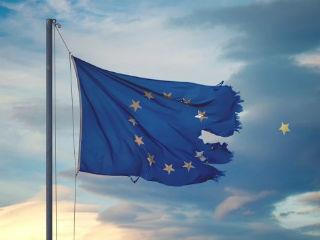
The refugee crisis goes on; eastern European countries, especially Poland and Hungary (but they are not alone) persist in not taking their share. This leaves Italy, with its weak economy, and Greece, emaciated by EU politics on their own to find a solution for the inhuman situation. Meanwhile the Commission is powerless, and the Council divided.
Negotiations on the Multiannual Financial Framework (MFF) post 2020 started recently. The problem is what to do with the financial gap once the UK has left the EU. Member States like Germany (by far and away the biggest payer) and The Netherlands (the biggest payer pro capita) show no appetite to step in and fill the gap. But Poland (the biggest receiver by a long run), Hungary and other Member States on the ‘EU big money drip’ do not want to hear about less money.
Commission President Jean-Claude Juncker, probably still under the influence of New Year festivities, has already chosen the side of the receivers and proposed a rise in budget. His argument? At the moment, the EU budget costs the equivalent of the price of one cup of tea per EU citizen and we have to realise that the EU is worth much more than a cup of tea. Brilliant!
A third, seriously dividing subject, is of course Brexit. In 2018 trade negotiations start. The consequences for Member States individually must become clear; for their national economies in terms of employment, industrial benefits, export position and so on. The Netherlands, Belgium, Germany (with its powerful car industry) and some Scandinavian countries will throw their weight into negotiations and will not leave it to Brussels eurocrats.
The euphoria when Trump’s decision on the Paris climate deal made the EU believe it was the undisputed world leader in the climate field and a shining environmental example for the rest of the world, also seems to be over. The EU decided that coal will remain of huge (polluting) importance in some member states and targets for renewal energy are postponed from 2020 to 2030. The EU spin doctors have become silent…
Externally, the EU is ringed by ambitious leaders, notably in Russia and Turkey. The Chinese and US Presidents are singularly unimpressed by EU leaders Tusk, Juncker, Tijani and Mogherini; and EU’s national leadership have their own problems not least erstwhile EU rock Merkel. And Macron? He has yet to prove he is more than a talking head.
Happy New Year!

