By N. Peter Kramer
Is NATO dying? Walter Russel Mead, leading columnist of the Wall Street Journal, says yes. His opinion is based on the decision of the German government to keep defence spending as low as 1.25% of gross domestic product (GDP) for the next five years.
This decision is not at all driven by fiscal urgency. Germany is expected to have a balanced budget after many years with an annual surplus. It is a clear political choice. Germany prefers to continue its cooperation with Russia on the controversial Nord Stream 2 gas pipeline.
NATO and the US are not any longer important to Germany as they used to be. Irritation about President Trump influences German foreign politics. But the recent decision by the Merkel government is more profound. Not only Republicans as President Bush Jr and late Senator John McCain called Germany to show its commitment to NATO by spending 2% of GDP on defence, as the NATO rule is. But also Democrats including President Obama asked for it.
By refusing to come close to meeting NATO’s spending target, ‘Berlin is thumbing its nose at Donald Trump and the United States’, Mead wrote. But Germany is also blowing of its main allies, France and the UK.
And not to forget its eastern neighbours, including Poland and the Baltic States. They want desperately a stronger and better-funded NATO. As neighbours of Russia, these countries remain being enthusiastic about the military alliance.
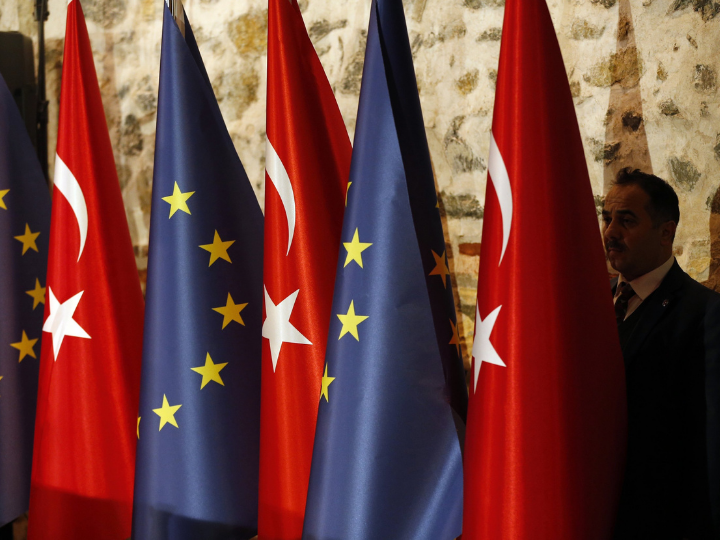
According to Walter Russel Mead, Germany is not alone in distancing itself from NATO. Turkey’s plans to buy S-400 missiles from Russia, and Italy’s decision to have a closer relation with China, are showing a diminishing value placed on the trans-Atlantic alliance.
The conclusions of the WSJ columnist are quite cynical. ‘Although political support for NATO is in recession, its bureaucratic structures remain robust. There are battalions of generals, flocks of ambassadors, and armies of paper shufflers who intend to defend their jobs as long as they get paid.
Unintentionally, perhaps, NATO has found a new function: a grand experiment to see how long a bureaucratic structure of cooperation can prolong the existence of an alliance when its key members no longer believe in it’. It looks like the near future of some EU institutions.
With the words ‘in Moscow and Beijing, conclusions are being drawn’, ended Mead his column in the WSJ.