
By Rosamond Hutt*
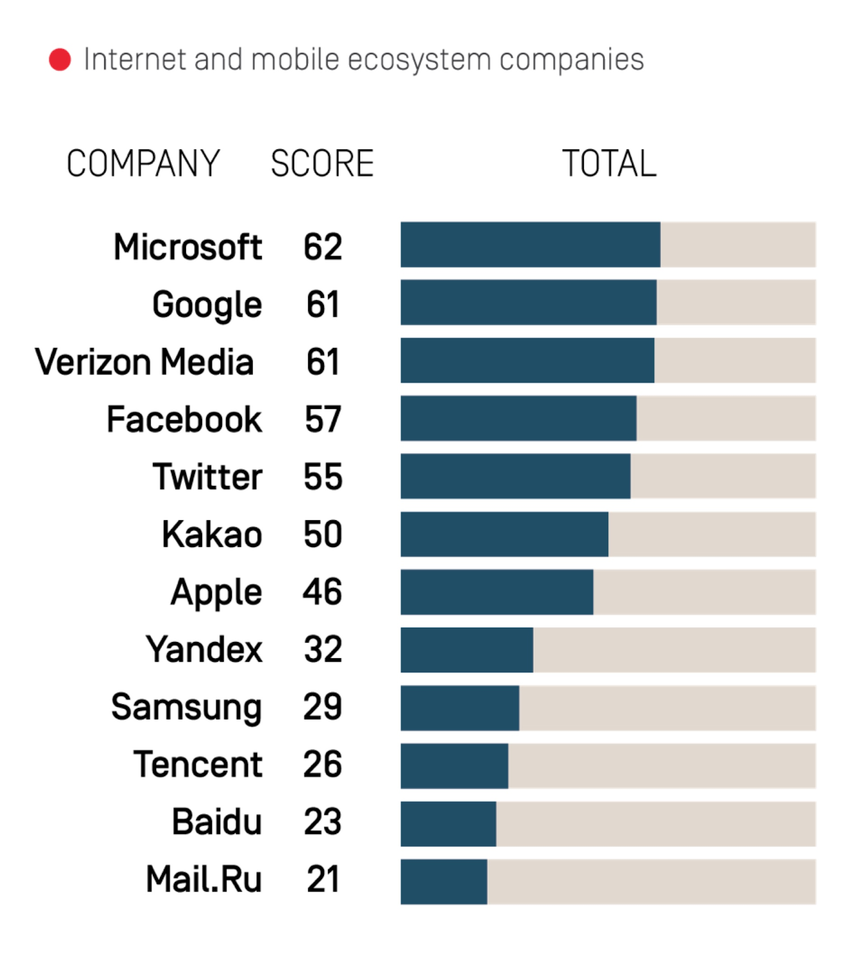
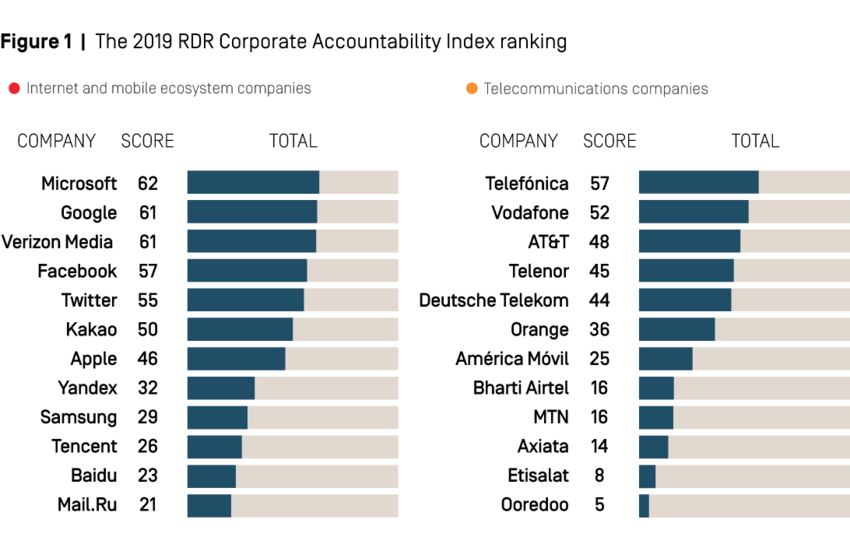
Microsoft has edged past Google to reach the top of a ranking that grades the world’s tech giants on their respect for internet users’ rights.
The 2019 Ranking Digital Rights (RDR) Index evaluates 24 of the world’s most powerful internet, mobile and telecommunications companies on their publicly disclosed commitments and policies affecting freedom of expression and privacy.
Microsoft’s number one position among internet and mobile ecosystem companies (firms that produce software and networked devices) is mainly due to “strong governance and consistent application” of privacy policies across the four services – Bing, Outlook.com, Skype and OneDrive – evaluated in the study.
Google and Verizon Media are tied for second place, and Facebook maintained fourth position. Until toppled by Microsoft this year, Google had held on to the top spot since the first RDR Index in 2015.
In the ranking of telecommunications companies, Telefonica overtook last year’s leader Vodafone. The Spanish multinational disclosed significantly more than other firms in the ranking about policies affecting freedom of expression and privacy, according to the study’s authors.
Low scores
More than half of the world’s 4.3 billion internet users use digital platforms and services provided by the 24 companies in the 2019 index.
But when it comes to respecting their users’ human rights, even the leading companies are falling short in key areas.
Across the world people are in the dark about how their personal information is collected, secured and used and what they can and cannot say online.
Although the situation has improved, and many companies are disclosing more about their policies and practices relating to privacy and freedom of expression, they still have further to go to meet their responsibility to protect users’ rights, the report’s authors say.
Only eight of the 24 companies in the index scored 50% or above.
“If people lack the information necessary to understand how state and non-state actors exert power through digital platforms and services, it is impossible not only to protect human rights – but to sustain open and democratic societies,” they write.
“Transparency is essential in order for people to know when users’ freedom of expression or privacy rights are violated either directly by – or indirectly through – companies’ platforms and services, let alone identify who should be held responsible.”
*Senior Writer, Formative Content
** First published in weforum.org
 By: N. Peter Kramer