by Jorge Valero
Disagreements persisted after the Netherlands continued to insist on strict conditions for soft loans to hard-hit countries like Spain and Italy under the eurozone bailout fund, the European Stability Mechanism (ESM).
Ministers also differed on whether to issue joint debt known as ‘coronabonds’ as part of a wider recovery plan to overcome the severe recession that the coronavirus will cause.
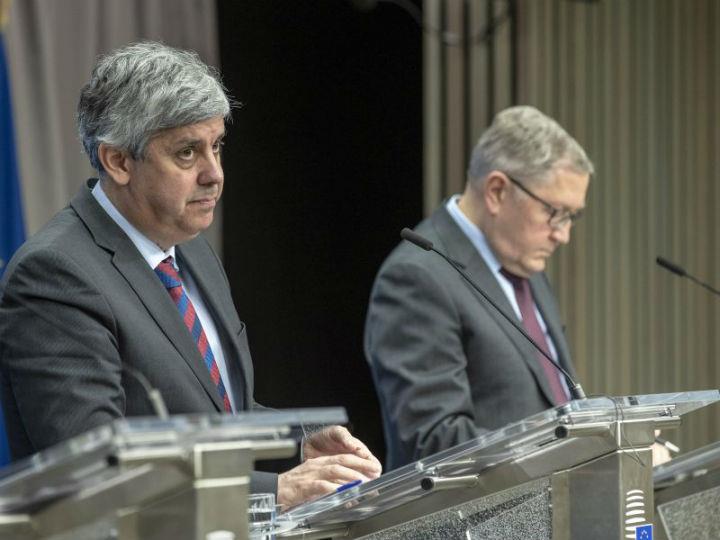
“After 16h of discussions we came close to a deal but we are not there yet,” said Eurogroup President Mario Centeno on his Twitter account. The teleconference will resume on Thursday.
Before the meeting started, national and EU officials were hopeful that an agreement could be reached on a series of loans and guarantees to protect the European economy from the damage caused by the coronavirus.
The package included a liquidity injection totalling around €500 billion aimed at national governments (via the European Stability Mechanism), companies (through the European Investment Bank), and workers (via the European Commission’s new SURE instrument).
The Eurogroup was also going to discuss the recovery plan that should follow this liquidity package, to kick start the economy once the pandemic recedes and countries lift the confinement measures.
But ministers failed to make a breakthrough during a long teleconference which started on Tuesday 4pm. The discussion broke on several occasions to draft proposals seeking to bridge what one official described as “big differences”.
Italy and Spain rejected the strict conditions that The Netherlands wanted to impose on governments seeking to tap into the eurozone’s bailout fund, according to one national diplomat who spoke to EURACTIV on condition of anonymity.
Austria and Finland supported The Hague in requesting conditions for accessing the ESM but were “less vocal,” another diplomat explained.
Germany and France made a final push early on Wednesday morning to try and broker a compromise that could later be presented to EU leaders, who were expecting a decision from the Eurogroup.
The compromise would have left the ESM conditionality chapter open in order to let EU leaders continue the discussion over the wording. But Spain opposed this alternative.
Klaus Regling, the CEO of the ESM, had earlier backed proposals to set aside up to €240 billion from the bailout fund’s warchest for eurozone countries seeking support, with very light conditionality rules common to all.
But The Hague demanded a country-specific memorandum of understanding with “growth enhancing” reforms that governments should implement once the pandemic is under control.
Finance ministers and EU leaders already failed to reach an agreement already two weeks ago on a European response to the economic fallout from the COVID-19. The virus is expected to trigger a deeper recession than in 2009, when the EU economy fell by -4.3%
EU member states have recognised this. Leaders in Berlin, Paris and Madrid alike concur to say the coronavirus is the biggest challenge Europe has faced since World War II. But they continue to disagree on European solidarity mechanisms to weather the storm.
For a group of nine countries, including Italy and Spain, Europe should not only provide liquidity through instruments like the ESM but also share the costs of the recovery by issuing joint debt, or ‘coronabonds’.
Spain’s economy minister, Nadia Calvino, told reporters before the meeting that the Eurogroup should give a “clear signal” to work “as soon as possible” on a proposal to issue “joint debt” that she says will be necessary to finance the recovery.
But the ‘coronabonds’ continued to be a taboo for a handful of countries, including Germany, The Netherlands, Austria and Finland.
As an alternative to finance the recovery, the Commission is working on an updated multi-annual financial framework (MFF) that will be presented later this month.
*first published in: www.euractiv.com
 By: N. Peter Kramer