by Hans Izaak Kriek*
The deal averts what would have been a fourth consecutive election in just over a year as the country fights its coronavirus outbreak.
The agreement came as a surprise to most media pundits. On Monday morning, it appeared that talks had reached a dead end after Gantz walked out on a meeting with Netanyahu.
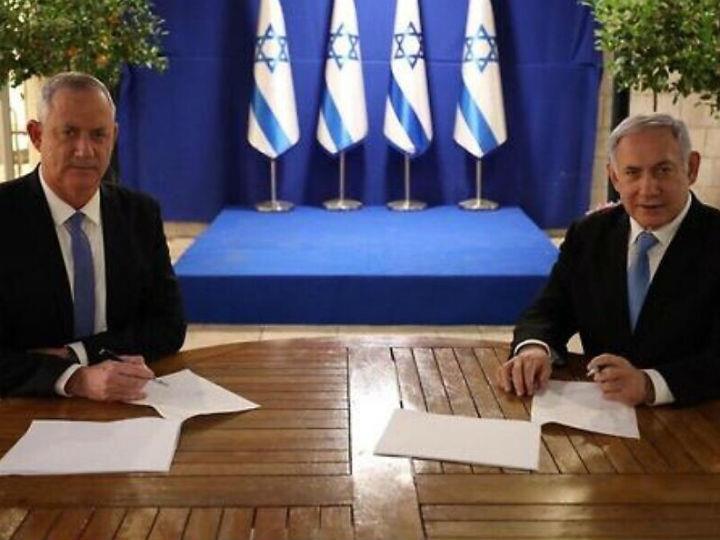
Prime Minister Benjamin Netanyahu and Blue and White leader Benny Gantz announced Monday that they have forged a deal to form an ‘emergency’ government’, ending months of political paralysis.
The deal averts what would have been a fourth consecutive election in just over a year as the country fights its coronavirus outbreak.
According to the agreement, the three-year period has Netanyahu serving as prime minister for the first half, and Gantz taking the job for the second half.
After the last vote on March 2 ended in a stalemate, Netanyahu and former Chief of Staff Gantz agreed late last month to try to form a unity government because of the burgeoning coronavirus crisis.
The talks have dragged on and stalled several times since, sparking concern that the collapse of a deal would force the country into new elections.
Although Netanyahu came up short in the last elections despite leading the party with the most seats, the coalition agreement returns the long-serving leader to the premiership, defying critics who predicted his downfall and restoring his reputation as a political wizard.
The deal likely required major compromise by both men. During three bitter campaigns over the past year, Gantz and his Blue and White party vowed never to serve in a government under Netanyahu so long as he faces a slew of corruption charges.
Netanyahu, meanwhile, would likely be forced to step aside and allow Gantz to serve as prime minister for part of the time, if the coalition manages to survive long enough.
Last month’s election, just like the campaigns last September and April, ended with no clear winner. But with a slight majority of lawmakers endorsing him, Gantz was given the first shot at building a coalition government.
The glue holding together Gantz’s different backers was their shared animosity toward Netanyahu. The opposition leader had begun to move forward with legislation that would have disqualified the indicted Netanyahu from serving as prime minister in the future.
But with the virus crisis worsening, and his own shaky alliance fraying, Gantz made an about-face late last month and accepted an offer from Netanyahu to pursue a joint government to deal with the pandemic. The move drew heavy criticism from Gantz’s supporters and tore apart his Blue and White alliance, leaving him with a faction roughly half its original size.
The collapsing talks encouraged those members of Gantz’s party who split with him over his decision to enter a unity government with Netanyahu. Moshe Ya’alon, a former political partner, urged him to cut off the talks.
Avigdor Liberman of the Israel Beiteinu party tweeted earlier on Sunday, “Benny Gantz, this is your moment of truth. As someone who knows Netanyahu better than anyone, I estimate that he won’t sign a coalition deal with you, not today, not tomorrow.”
But against what appeared all odds, Prime Minister Benjamin Netanyahu and Benny Gantz signed an agreement for a unity government. The breakthrough came shortly before the start of the Holocaust Remembrance Day.
*International political commentator for European Business Review and editor-in-chief at Kriek Media International
 By: N. Peter Kramer