by Vlagyiszlav Makszimov
The EU should reconsider its ‘all or nothing’ approach on sanctions imposed on Russia for its role in the ongoing conflict in eastern Ukraine, as well as its annexation of Crimea, a new report from the International Crisis Group suggests. The Brussels-based think tank calls for the easing of certain sanctions in exchange for Russian progress towards peace in Ukraine.
“Inflexible sanctions are less likely to change behaviour,” said Olga Oliker, Europe and Central Asia programme director. “Because of that, we urge considering an approach that would allow for the lifting of some sanctions in exchange for some progress, with a clear intent to reverse that rollback of sanctions if the progress itself is reversed.”
“That doesn’t mean easing sanctions before there is progress, it has to be tit-for-tat and progress has to come first.”
“It also cannot mean the wholesale lifting of sanctions when there is a bit of progress, so it can’t be ‘all for a little,’” Oliker added.
The current European stance is that sanctions related to the conflict in Donbas can only be lifted once the 2015 ceasefire deal, signed in Minsk, is fully implemented.
“There is only one and very clear way to consider lifting sanctions – if Russia ceases its intervention and aggression against Ukraine,” Lithuanian MEP Andrius Kubilius (EPP) told EURACTIV.
“In Moscow, the feeling is that it has done everything it could to implement Minsk and the rest is in Ukraine’s hands,” said Oliker. “Therefore, the Russian narrative is that sanctions will never be lifted.”
The report suggests granting Moscow access to certain capital markets or limited technologies in the oil sector in exchange for success on Russia’s part in pressuring its proxies to honour a ceasefire and provide access to monitors.
This can act as an incentive and a credible signal that sanctions can be eased, the report states.
Since various sets of sanctions have been imposed over Russia’s annexation of Crimea and its role in the Donbas conflict, the EU member states have shown unanimity in renewing sanctions every six months.
Critics fear that if sanctions are lifted, European unity may not persist to reimpose the lifted sanctions, in a scenario in which Russia was to backtrack on progress made.
“The problem is that maintaining unity on policy that is not working is a limited victory,” said Oliker. “The unity is absolutely important but what you also want is an effective policy.”
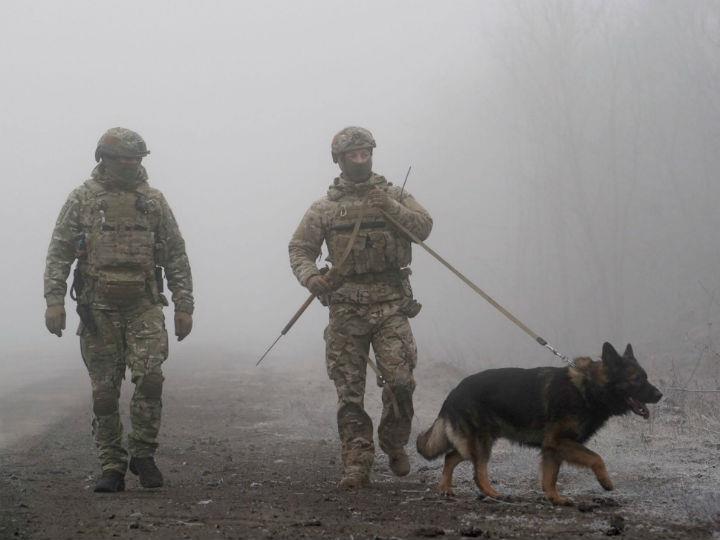
Four years on, a full ceasefire in Donbas, controlled by pro-Russian separatists, is yet to materialise. Russia blames Ukraine for what it says is a failure to implement its commitments under the Minsk agreement.
Besides successful prisoner exchanges agreed between Russia and Ukraine, brokered by France and Germany at the Normandy summit last December, there has been little progress in recent years.
On Saturday (24 April), Russia’s long-serving foreign minister Sergey Lavrov said that he does not expect any result from the upcoming Normandy ministerial video conference scheduled for later this week.
A major roadblock in the implementation of the Minsk deal has been the sequence of events supposed to bring an end to the conflict that has so far claimed more than 13,000 lives.
Kyiv wants to first regain control over its border with Russia before local elections in the war-torn region can be held, while Moscow believes that elections must come first.
*first published in: www.euractiv.com
 By: N. Peter Kramer