As the EU looks set to open membership negotiations with Turkey at the end of next week, over a third of its citizens are opposed to further enlargement of the 25-nation bloc.
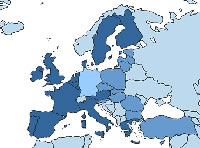
Conducted in October and November, just months after the Union expanded by 10 countries, the poll shows that 35% of citizens are against further enlargement - with 53% in favour and 12% saying they do not know.
Those against enlargement rises to 43% when citizens only from the 15 'old' member states are considered, according to a eurobarometer poll published on Friday (10 December).
Austrians and Germans have the highest percentages of citizens against enlargement (62% and 57% respectively) - both countries have common borders with new member states.
In France, where President Jacques Chirac has been fighting rising sentiment against Turkish EU membership - fifty-one percent said they are against further enlargement.
This contrasts starkly with new member states, which tend to be strongly in favour of more EU expansion - with Poland at 78%, Lithuania at 76% and Slovenia at 75%.
Replying to a question about whether respondents had been specifically asked about Turkey, EU Communications Commissioner Margot Wallstrφm, who was presenting the results, said no.
However, she added all EU institutions will have to "invest in creating more information and building the cultural bridges between Turkey and the European Union".
"To me that is the absolute key to success for further enlargement because there is so much ignorance and lack of information", said Mrs Wallstrφm.
The EU is expected to take on Romania and Bulgaria in 2007 while Turkey is not expected to join until at least 2015 - a decision on whether to open negotiations with Ankara will be taken at the EU summit on 16-17 December.
The survey also showed that 56% of respondents thought that membership of the EU was positive.
They were also more prepared to trust the European Parliament (57%) than the European Commission (52%) - while unemployment was their biggest worry.
The survey was conducted by eurobarometer between 2 October and 8 November 2004.
 By: N. Peter Kramer