by Andre Curvelo Campos
The European Commission reiterated on Thursday (11 March) that the remaining seven EU member states have to submit their national recovery plans by the end of April in order to access the funds.
Last week, 20 of the 27 member states had already submitted draft plans, “or large parts” of them. Only Austria, Ireland, Lithuania, Luxembourg, Malta, Estonia and the Netherlands have not done so yet.
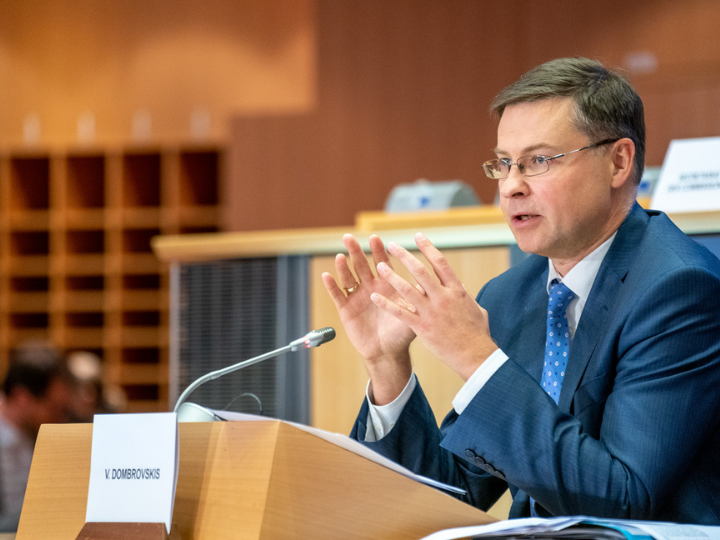
In a debate in the European Parliament about national recovery plans, the Commission’s Executive Vice-President, Valdis Dombrovskis, also underlined that “the implementation of the plans will only be a success with the support of social partners and civil society at all stages of the process”, which is why Brussels has ensured that they are properly involved.
“For this reason, the Recovery and Resilience Mechanism regulations contain stern clauses in this regard,” he said, pointing out that “member states’ plans must include a summary of consultations with stakeholders, for example with local and regional authorities, social partners, civil society organisations or youth organisations.”
Dombrovskis underlined that “it is not only about holding public consultations”, but also translating the proposals and contributions of the participants into the plans.
“Member states also have to explain how the plans reflect the contributions of stakeholders. Given the scope and objectives of the mechanism, this is more than logical. For example, member states have to explain how the plans contribute to improving cohesion by taking into account local, regional and national disparities,” he continued.
Dombrovskis also stressed that “it will also be vital to involve local and regional authorities, social partners and civil society in the process of putting the plans into practice in the years ahead”, saying this was “crucial to help translate ambitious objectives into concrete policy initiatives that will benefit people and businesses on the ground”.
He said that “the Commission is currently working very intensively with member states to help them improve and finalise their recovery and resilience plans as soon as possible” so that the first disbursements can take place in July.
Having concluded the public consultation in Portugal, Antonio Costa’s government, which had already submitted a first ‘draft’ to the Commission in October 2020, continues to negotiate with the EU executive on the final details of its Recovery and Resilience Plan, which it should formally submit to Brussels in the coming weeks.
Portugal’s (preliminary) RRP, to access EU post-crisis COVID-19 funds, provides for 36 reforms and 77 investments in the social, climate and digitalisation areas, totalling €13.9 billion in grants.
Portugal also has an important role in the approval process of the 27 national plans at the European level, as, they also have to be approved by the EU Council, under the Portuguese presidency until 30 June.
European sources have told Lusa that Brussels prefers if member states formally present their plans only after they have been fully agreed with the Commission, in order to ensure a rapid approval process.
*first published in: www.euractiv.com
 By: N. Peter Kramer