by Andrea Januta*
A growing number of climate economists say the world should take “immediate and drastic action” to tackle climate change, according to a survey published.
Failing to do so could cost the world some $1.7 trillion a year by the middle of this decade, escalating to about $30 trillion a year by 2075, according to estimations by the 738 economists from around the world surveyed by New York University’s Institute for Policy Integrity.
“People joke about how economists can’t agree on most things,” said Derek Sylvan, the institute’s strategy director and one of the authors of the survey. “But we seem to find a pretty strong level of consensus” on the economic importance of climate action.
Three-quarters of respondents strongly agreed that drastic action should be taken immediately, compared with just half of economists polled by the same institute in 2015.
For another question on reaching net-zero emissions by 2050, two-thirds said the costs of investing toward that global goal would be outweighed by the economic benefits, which would include preventing natural disasters, preserving coastal infrastructure and assets and protecting food supplies.
To avoid catastrophic climate change, scientists say the world needs to reach net-zero emission by 2050 -- meaning people are adding no more emissions to the atmosphere than they are removing.
Sylvan said he was surprised that so many saw net-zero action as “economically desirable, even on the pretty short timeline that we’re talking about.”
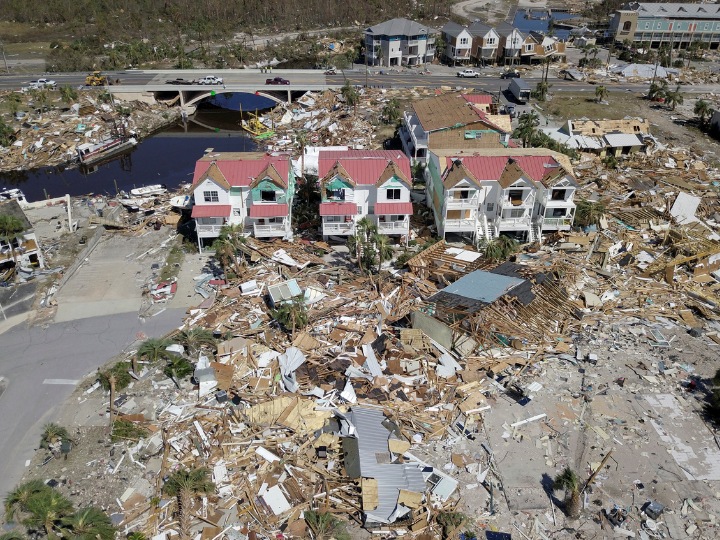
Most of the international climate economists questioned for the survey in February said they had become more concerned about climate change over the last five years. The most common reason they gave was the escalation in recent extreme weather events, which have included climate-linked wildfires and heat waves.
The world saw more than 7,300 major natural disasters between 2000 and 2019, which killed some 1.2 million and cost $3 trillion in damages, according to the U.N. Office on Disaster Risk Reduction. That compares with about 4,200 disasters, leading to 1.19 million killed and $1.6 trillion in losses during the 20 years previous, the data show.
“Some places are more exposed, and current levels of income matter a great deal,” said Michael Greenstone, an economist at the University of Chicago and the director of the Energy Policy Institute at Chicago.
The fallout from climate change will impact people and nations
Economic disparities make it hard to apply simple cost-benefit analyses, he said. For example, a poor family will feel economic losses more acutely than a wealthy family.
“How do we think about a dollar of climate damage to (billionaires) Bill Gates or Jeff Bezos versus a family of four living below the poverty line? I think as a society we have to make a judgment about that.”
*Business Reporter, Reuters
**first published in: www.weforum.org
 By: N. Peter Kramer