by Joana Gomes
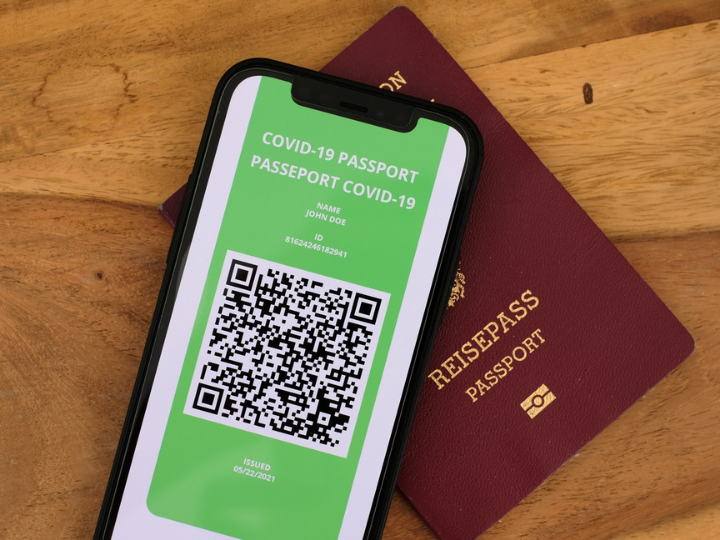
European lawmakers have called on the EU to build upon the digital vaccination certificate as a major step forward in facilitating movement within the bloc during the pandemic by harmonising criteria for the imposition of coronavirus restrictions across member states.
“The digital certificate is a great achievement on the one hand, but on the other, when we see that member states, by their own decision, set the restrictions they want – such as the case in which Germany decrees quarantine even in the case of Portuguese citizens who have already been vaccinated – this shows that the certificate is not working as it should,” said MEP Paulo Rangel (PSD).
“It is not a question of having or not having restrictions”, but of having “the same rules for each country”, following a “common agreement,” he said.
“It is clear that if we look at the current pandemic picture and the Delta variant, there will be a need to adopt some restrictions. The problem is the criteria of the restrictions […]. For example, if we have 240 cases per 100,000 [inhabitants], we can require quarantine or this or that behaviour. This should be standardised, harmonised”, he said. This issue is “a failure of the document” and “could kill it”, he continued, stressing that he still has some hope that it can be improved.
He also criticised the fact that the European Council had not considered the European Parliament’s call for free testing of COVID-19 during the negotiations on the certificate, insisting that “they should not be paid for, they should be free.”
Speaking in the same session, Slovenian MEP Klemen Groselj of the Renew Europe group agreed with Paulo Rangel, saying it was necessary “to get all EU citizens the same access” to COVID-19 tests.
“The discrepancies are huge. In some countries, the cost of a PCR test is something like €30. In other countries, it is €100 or more,” he said.
Klemen Groselj also agreed with the Social Democrat MEP on the need for “a set of rules that says “at this certain level of infection, these and these measures apply to the whole of Europe, in each member state’” and then sets out the restrictions.
“This digital certificate represents a kind of promise to the EU population that this means free movement, but as we see so far, this is not the case,” he said, saying he hoped the three European institutions “could find the solution that will be most practical” for European citizens.
At the same conference, Pedro Silva Pereira (PS) considered that the digital certificate “was a great achievement” of the Portuguese presidency of the EU Council, highlighting the fact that Europe now has an instrument that will bring “additional value” by facilitating travel and movement of people.
The Socialist MEP admitted, however, that “it is true that not enough coordination of national rules on travel has been achieved.”
He went on to say that “maybe this can be done in the future, but I remind you that in any case, in the Schengen area rules, we also have exceptional clauses that allow for different solutions according to different circumstances.”
Pedro Silva Pereira said it was preferable “to have harmonised rules on travel arrangements”, but this may not be “possible in time”, and it is “impossible” to prohibit countries from adopting exceptional rules for exceptional circumstances.
“I believe that the digital certificate can now improve the current system,” he concluded.
MEPs took part in a press conference on Tuesday (29 June) titled “EU Council presidency: What has Portugal achieved? What should Slovenia achieve?” organised by the European Parliament in Portugal and the European Parliament in Slovenia at the end of the Portuguese presidency of the Council of the European Union.
*first published in: www.euractiv.com
 By: N. Peter Kramer